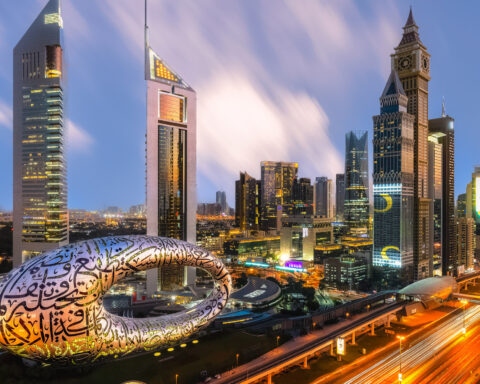

Sharm El Sheikh spent decades building one of the world’s most recognizable resort destinations — billions of dollars of hotels, infinity pools, and dive centers stacked along the Red Sea coast. Then someone climbed a rocky cliff above the Old Market, threw down some Bedouin cushions, lit a few hundred candles, and quietly built the most culturally significant place in the entire city. Nobody planned Farsha. That’s exactly why it won.
The Blueprint And The Soul
Let’s get the history straight because it matters. Sharm El Sheikh isn’t an ancient city that grew slowly over centuries the way Cairo or Alexandria did. It’s a constructed destination — deliberately, strategically assembled by the Egyptian government from the 1970s onward as a tourism economy on the Sinai Peninsula coast. The Bedouin communities who’d lived along this coastline for generations didn’t vanish when the development arrived. They got absorbed into the margins of a city built on top of their geography, their traditions, their relationship with this particular stretch of Red Sea shoreline.
Naama Bay came first as the flagship strip. International hotel chains followed. Dive operators, glass-bottom boats, airport expansions, nightclubs with imported DJs.
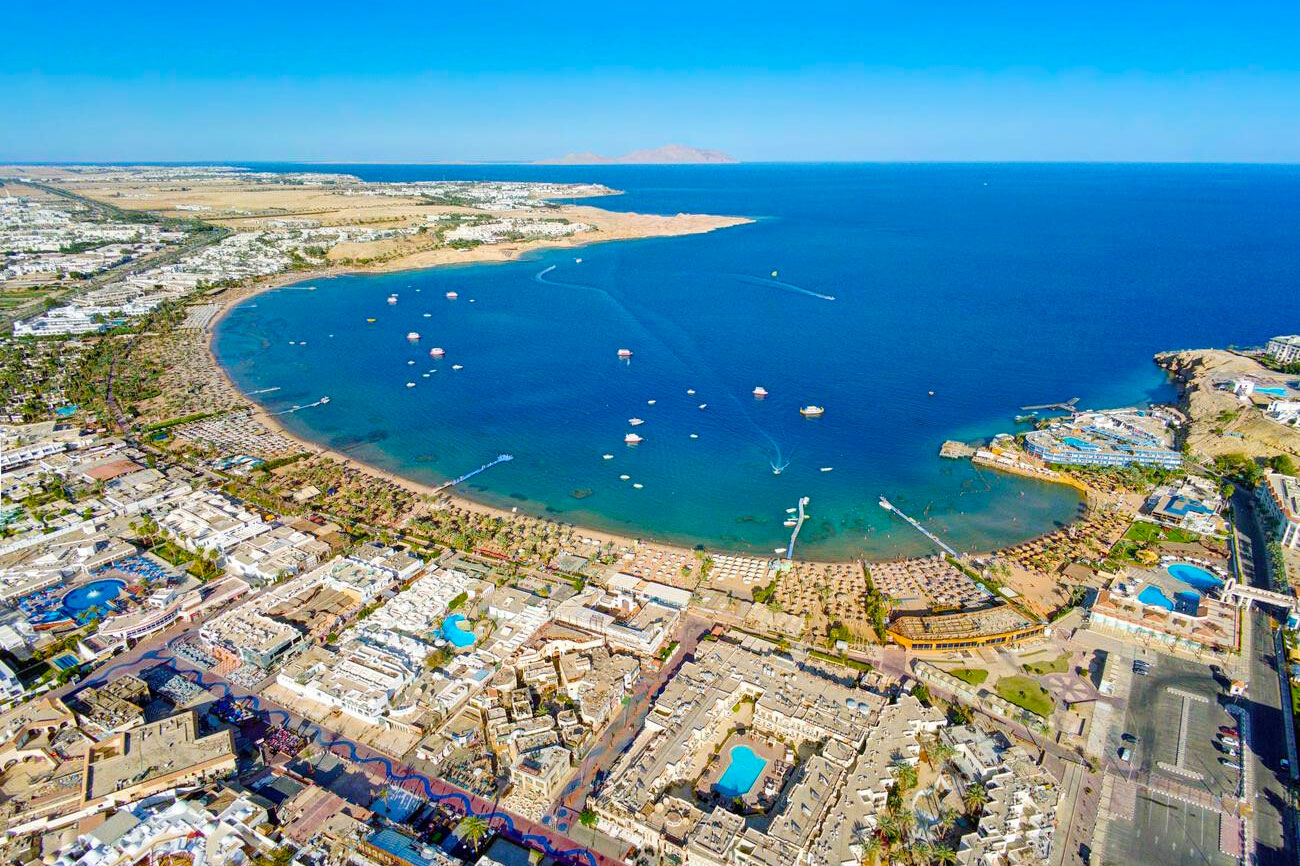
By the 1990s, Sharm was receiving millions of tourists annually and projecting a very specific image outward: sun, coral reef, package holiday, accessible luxury. Clean. Legible. Deliberately depthless, yea.
Sharm El Qeblya — the old quarter — sat mostly ignored through all of this. Too rough, too local, inconveniently textured for the resort corridor’s ambitions. And somewhere in that ignored old quarter, on a clifftop above a market that tourism forgot to sanitize… Farsha appeared. No grand opening, investor deck or even…branding exercise. Just a place that started existing and kept existing, honestly. That’s not a quirky origin story.
The Arabness The Strip Forgot
Walk through Naama Bay and count how many things feel specifically, unmistakably Egyptian. The answer comes back nearly empty, trust me. The architecture is international, menus are translated and adjusted for foreign palates while hospitality has been trained out of any particular cultural identity and into a global service standard, legible to tourists from everywhere and belonging to nowhere.
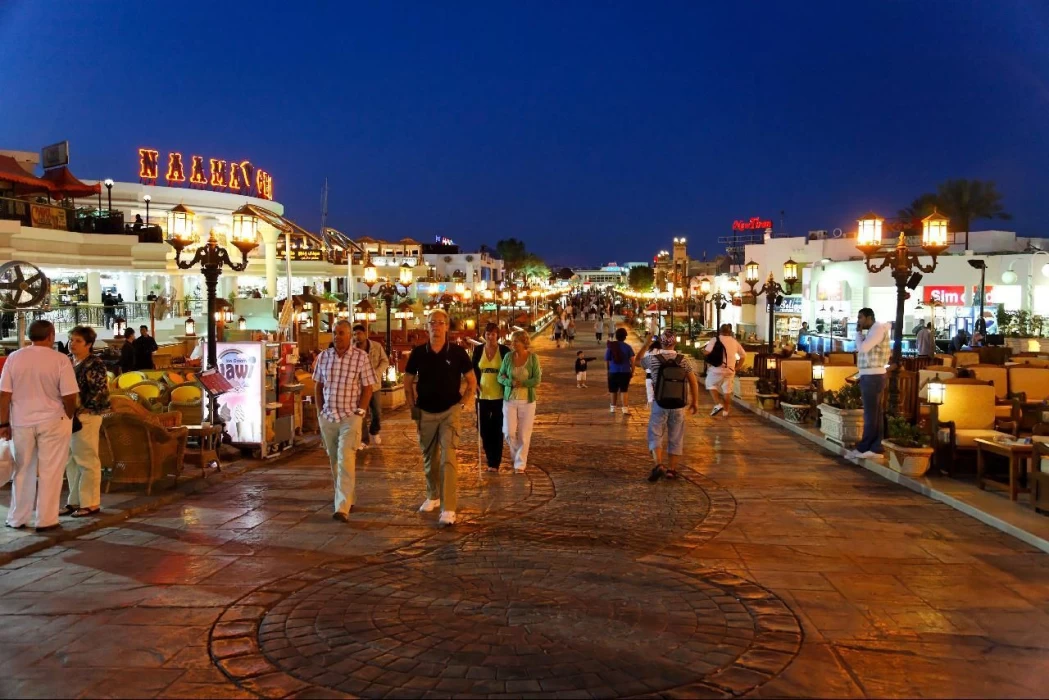
Farsha does the opposite of all of that — without making a single announcement about it, which is the thing.
The name itself: farsha. Arabic for mattress, cushion, for the simple act of putting something soft on the ground and inviting someone to sit. That’s the entire hospitality philosophy in one word — not luxury, not spectacle, not service… just sit down, you’re welcome here. That’s Bedouin logic: the desert tradition of the open tent where the arriving stranger becomes the guest who must be received before any question is asked of them.
The shisha isn’t an aesthetic prop either. It’s a social technology Arabic cultures have used for centuries to slow time down, to create conditions for real conversation, to make sitting together feel purposeful rather than accidental. The mint tea isn’t a menu item — it’s a greeting. You don’t order it so much as receive it, the way you’d receive it in someone’s home in Cairo or Alexandria or any small Sinai village that still operates on the hospitality logic the resort strip quietly erased.
What Farsha preserves, without ceremony or announcement, is an entire cultural grammar that Naama Bay traded away for something more internationally palatable. That trade-off usually gets called modernization but Farsha calls it something else just by existing the way it exists.
You Have To Earn It
Most visitors treat the walk to Farsha as a logistical inconvenience — the thing you endure before you get there. That’s the wrong way to read it.
You descend into the Old Market first. And the Old Market is everything Naama Bay isn’t — loud, aromatic, unpolished, alive in a way that resort corridors specifically can’t replicate because they’ve optimized all the friction out of existence. Spice stalls with open sacks of cumin and dried hibiscus.
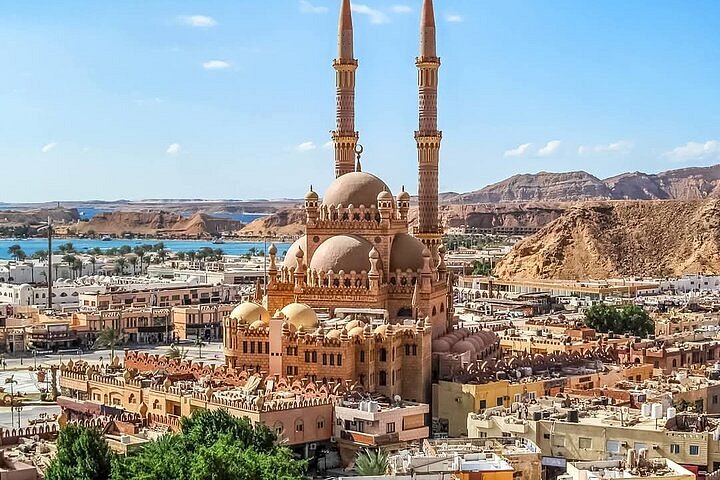
Men playing backgammon on plastic chairs outside tea houses that have occupied the same spot for thirty years. The smell of charcoal. Arabic at normal conversational volume, not adjusted for foreign ears.
You move through all of that and then you climb. The path is rocky and uneven and there are no real signs because Farsha has never needed to advertise itself — not once, not in all the years it’s been up there on that cliff. You follow instinct or you follow someone who’s been before, someone who walks with the specific confidence of a person who knows something you’re still finding out.
By the time you reach the top you’ve already left the resort city below — not physically, you can still see it, still hear the faint bass from Naama Bay if the wind is right — but something in you has crossed over. The noise stops mattering. The speed drops out of your body. That walk doesn’t just take you somewhere. It changes what you arrive as, trust me.
The climb filters people too — not by money or status or what you’re wearing, but by intention. Everyone who makes it up that path wanted to be there badly enough to find it. That changes every conversation possible between the people sitting on those cushions. Every single time.
Nobody Designed This And That’s The Whole Point
No interior designer touched Farsha. No mood board, no concept document, no lighting consultant, no brand strategist billing by the hour. And yet every single sense is accounted for in a way that hospitality groups spend millions trying to manufacture and almost never actually pull off.
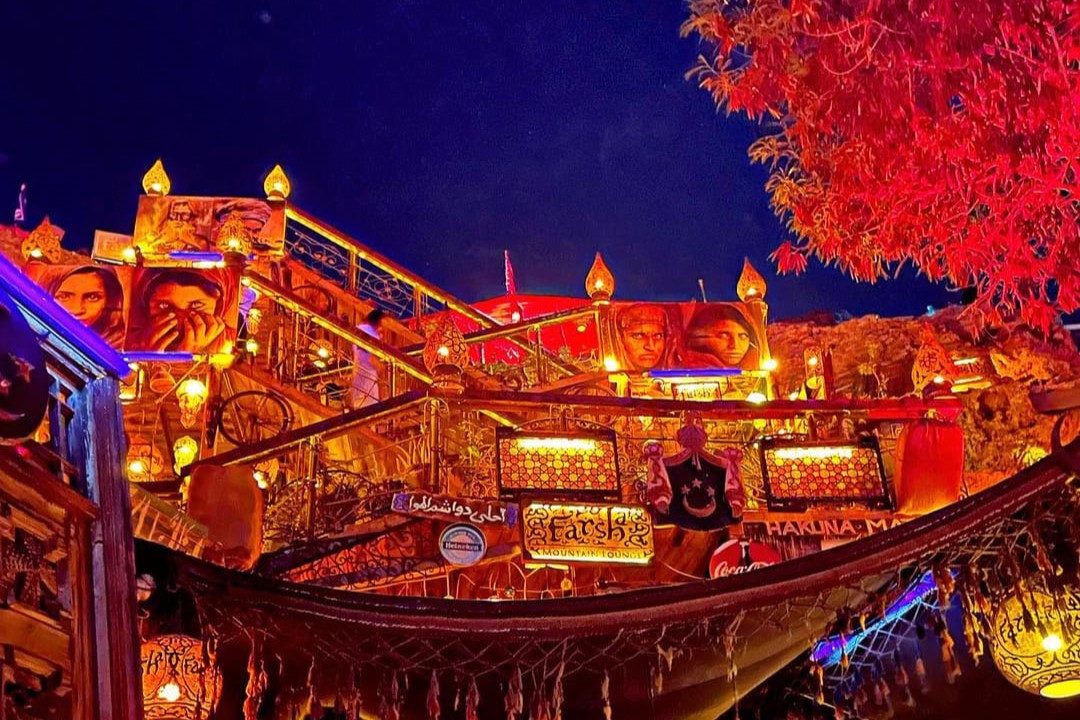
The smell arrives first — shisha smoke and sea air colliding in a combination that has no right to work as beautifully as it does. Then the light: not the aggressive brightness of a venue trying to be seen from the street, but the warm directional glow of hundreds of candles and fairy lights strung across rough stone, creating pockets of illumination that make every face look like it belongs in a painting from another century, yea. The sound is near-silence — wind off the Gulf of Aqaba, the faint presence of water somewhere below, conversation at actual human volume. No playlist, DJ or curated soundscape piped through hidden speakers. Just the sounds of a clifftop at night above an old port city, honestly.
With the texture of rugs under your hands, the slight too-hot burn of the mint tea glass that you hold anyway and the weight of the shisha pipe settling into your grip; You are physically, sensorially present — and you feel the difference the moment you sit down.
Nobody worked this out. It just arrived. Real atmosphere isn’t about what you add — it’s about what you’re brave enough to leave out. Remove the noise, the brightness, the speed, the optimization… and what remains is the thing people were actually searching for the whole time, yea.
What Farsha understood — without ever sitting down to understand anything, because nobody planned any of this, it just arrived — is that atmosphere isn’t addition. It’s subtraction. Remove the noise, the brightness, the speed, the optimization… and what remains is the thing people were looking for the whole time. Every single time.
The Myth Is Getting Heavy Now
Here’s the part nobody wants to say out loud. Farsha is legendary now. That word gets used carefully because it means something specific: the place has accumulated enough stories, enough returned travelers, enough “you have to go” conversations whispered across dinner tables in Berlin, Cairo and London to exist as much as a myth as a physical location. People arrive now with enormous expectations built from other people’s enormous experiences. That’s a dangerous weight for any place to carry, yea.
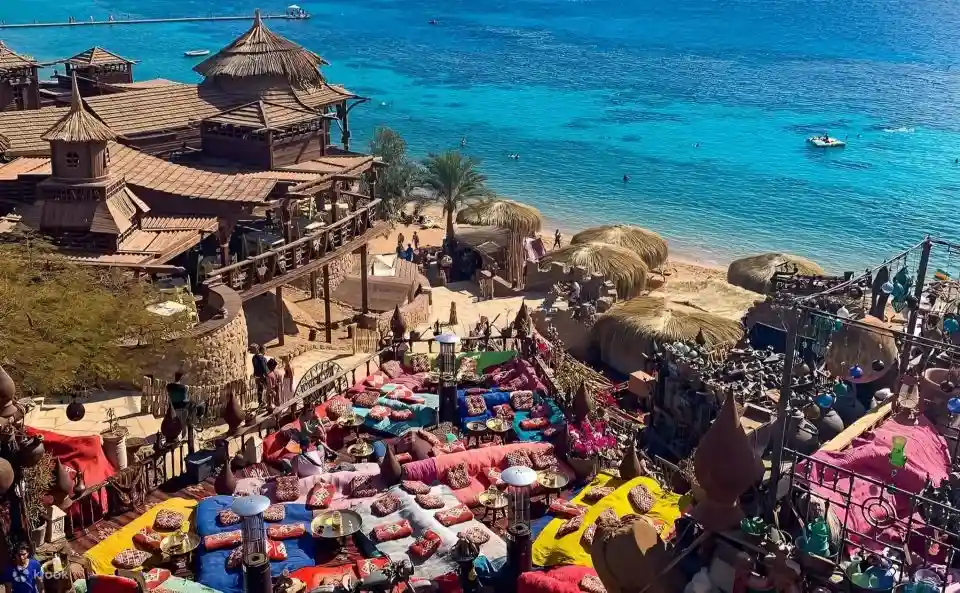
The question isn’t whether Farsha is still good. It is, honestly. The question is what happens to a place when its discovery becomes its burden — when the thing that made it feel special was the quiet sense of finding something not designed for everyone… and then everyone finds it.
The regulars feel it already, the people who came ten years ago and returned last year, noticed the crowd getting louder, more performative, phones raised before cushions are even properly found. They feel a mild grief that’s difficult to articulate because the place hasn’t technically changed. Same rugs, candles and same mint tea served in the same too-hot glasses. But the collective intention in the room has shifted, and the people who loved it earliest feel that shift in their bones.
This is the mythology problem every genuinely beloved place eventually faces. Farsha survived terrorism scares that emptied Sharm of tourists entirely. It survived COVID, political instability, every economic contraction Egyptian tourism has weathered since the 1990s — and it survived all of it with its character intact because those crises kept it small, kept it for the people who loved it enough to show up anyway.
The threat isn’t crisis anymore, it is the threat of its popularity. And popularity, honestly, is much harder to survive with your soul still attached.
The Bottom Line
Farsha didn’t set out to preserve Bedouin hospitality culture or to resist the homogenization of a purpose-built resort city. It didn’t plan to create a path that filters visitors by intention or demonstrate that real atmosphere is subtraction rather than addition. It didn’t set out to do any of it… it simply put cushions on a clifftop and kept the candles lit.
Everything else — the cultural weight, the historical argument, the sociological collision happening on those rugs every single night — arrived on its own because the place was honest enough to let it. And in a city built almost entirely on manufactured experience, that honesty is genuinely the rarest thing of all, yea.
Go on a clear night, climb the path an then… order the mint tea.
See you at Farsha.