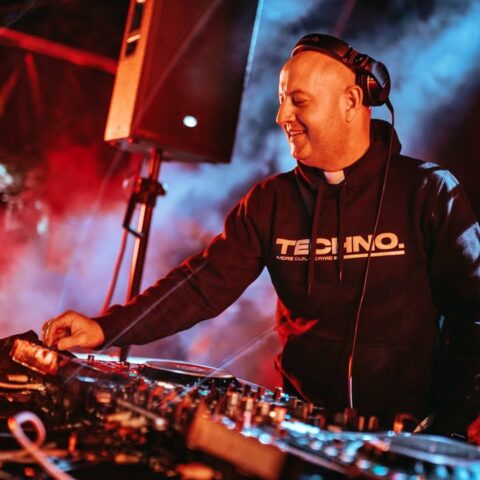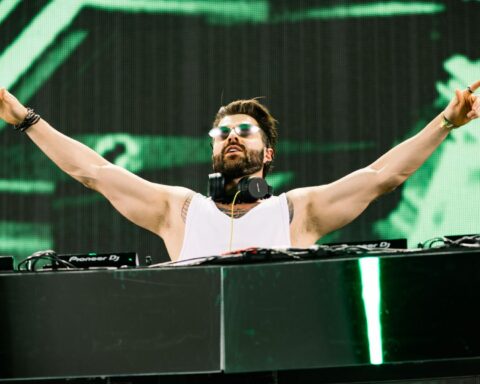

For the seventh consecutive year, Alok took over Salvador Carnival and commanded 2 million people in one street — officially breaking the Guinness World Record for the largest street event on the planet. The Guinness people showed up with their clipboards and Salvador just kept dancing.
Spend enough time watching how the music industry talks about moments like this and you start to notice a pattern — the numbers always arrive first, the story almost never does and the gap between those two things is usually where everything that actually matters lives, honestly. Because what happened in Salvador on February 20th isn’t really a story about a record… it’s a story about a city that has been doing something sacred in its streets for generations, and a DJ who understood that well enough to show up seven years in a row without trying to change it, and what happens when genuine cultural belonging produces a number so large that Guinness has to drive down and take notes about it.
Why Seven Years Is the Whole Point
Here’s what gets buried under the headline every single time: Alok didn’t break this record by showing up once with the right production budget, the right crowd infrastructure and the right marketing push behind it… he built toward it across seven consecutive Februaries in the same city, on the same streets, in front of a crowd that kept growing because the people already in it kept bringing people who hadn’t been yet, which is an entirely different thing and a much harder thing to manufacture than any festival promoter would like to admit.
In an industry where lineup announcements rotate constantly and exclusivity deals shuffle talent between competing stages every summer, seven straight years at Salvador Carnival is almost an act of defiance — it means Alok stopped being a booking and started being part of how that city understands February, and that kind of relationship doesn’t get built through strategy, it gets built through showing up and choosing this when you could be somewhere else.

The Crowd Doesn’t Lie
People who’ve attended multiple editions describe the difference in a way that’s worth paying attention to — the first time, you’re processing the scale, the heat, the full-body experience of that many people moving in the same direction at once, and your brain is so busy cataloguing what’s happening that you’re almost watching yourself have the experience rather than actually having it. Rodrigo from São Paulo who has attended four consecutive years put it simply in a post that circulated widely after the record announcement: “The first year I went to watch. Every year after that I went to belong to it” — and that shift, from observer to participant and then… to something that doesn’t have a clean word for it yet, is exactly what Alok has been building in Salvador for seven years without announcing that he was building anything at all.
Salvador Was Already Sacred Before the Record Existed
Let’s get the context straight because it matters before you understand why any of this carries the weight it does. Salvador’s Carnival is not a concert that happens to take place in a city — it’s what the city becomes for seven days every February, when the everyday infrastructure quietly folds itself away and something older, louder and more honest moves into the streets in its place. African-Brazilian roots made audible and kinetic, axé rhythms that trace back centuries, candomblé culture, blocos that have been moving through those same streets for generations before anyone arrived with a production truck or a wristband scanner. The city doesn’t host Carnival so much as it is Carnival, at its most alive and most itself.
When Alok first brought electronic music into that space, he didn’t impose anything onto a culture that was already complete without him… rather, he found the frequencies where his sound and Salvador’s soul were already fluent in the same language and a crowd raised on percussion that goes back centuries responded to bass music built on percussion without needing a single person to explain the connection to them. A cultural journalist based in Bahia who covered the 2024 edition wrote something that has stayed with me since: “He’s not playing for Salvador. He’s playing from it” — that distinction, which sounds small on paper, is the entire reason two million people were standing in that street and not somewhere else.
What the Number Can’t Actually Tell You
Guinness World Records exist to make the extraordinary legible, to give scale a number that travels through feeds and pastes onto headlines and reaches people who weren’t there — and the honest problem with that is the number describes the container while saying almost nothing about what was inside it, which in this case is the thing that actually matters. Two million people is more than the entire population of Vienna or Hamburg or Brussels, and compressing all of those people into the street grid of one Brazilian city on a February night when the air is warm, thick and electric… then dropping four-on-the-floor underneath all of them simultaneously produces an experience that doesn’t survive translation into attendance figures, honestly.

People who were there this year describe the moment the crowd synchronizes — that instant when two million individual people find the same rhythm and move as a single organism — in terms that keep reaching past the language available to them, and they almost always land on something physical rather than emotional: the ground humming back, the air pressure changing, your own heartbeat becoming indistinguishable from what’s happening around you. A Brazilian music journalist described standing deep in the crowd as feeling like being inside one enormous exhale — not one person’s exhale, but a whole city releasing something it had been holding all year — and when the drop lands into that particular kind of collective silence, whatever happens next has no category in any dictionary that the word “concert” usually lives in.
The record proves the scale, which is real and worth celebrating. But nobody standing in Salvador that night will tell their children about the Guinness certificate — they’ll try to explain what it felt like, reach for words, find them insufficient, and eventually say you had to be there; which is the most honest thing a person can say about something that cannot be transmitted, only lived.
He Keeps Choosing This
In 2023, Alok said something in an interview that was easy to scroll past at the time but reads entirely differently now: “Salvador is where I remember why I started.” Not where his career began, not where the defining booking happened, but where the reason lives — the place he comes back to when he needs to locate the original frequency beneath all the touring logistics and brand strategy and algorithm optimization that accumulates on top of everything, once music becomes a career.
Seven consecutive years of choosing Salvador when he could choose anywhere, and the city feeling that choice in a way that keeps compounding into crowds that keep growing until Guinness had to show up and admit that nothing like this has been measured before — that is not a marketing decision, not a calculated move to build cultural credibility in the Latin American market, and certainly not the outcome of any strategy session that anyone planned in advance. It’s a man following music back to where it still means what it meant before it became a product, and two million people gathering in the same street because they can feel that difference even when they can’t quite say why.
February Always Finds Its Way Back Here
The certificate is new and what it’s certifying has been happening in those streets for a very long time… Alok understood that before he ever played his first note here — which is exactly why he came back the second year, and the third, and every February after that without announcing he was building anything at all. Two million people didn’t crowd into those streets for a Guinness record, they came because something real has been happening in Salvador every February for seven years, and word got out the way word always gets out about things that are genuinely worth travelling for — not through a campaign or press release, but through the mouths of people who were there and couldn’t quite explain it to the people who weren’t, and so those people had no choice but to come find out for themselves.
Next February, the crowd will be bigger.
See you in Salvador.