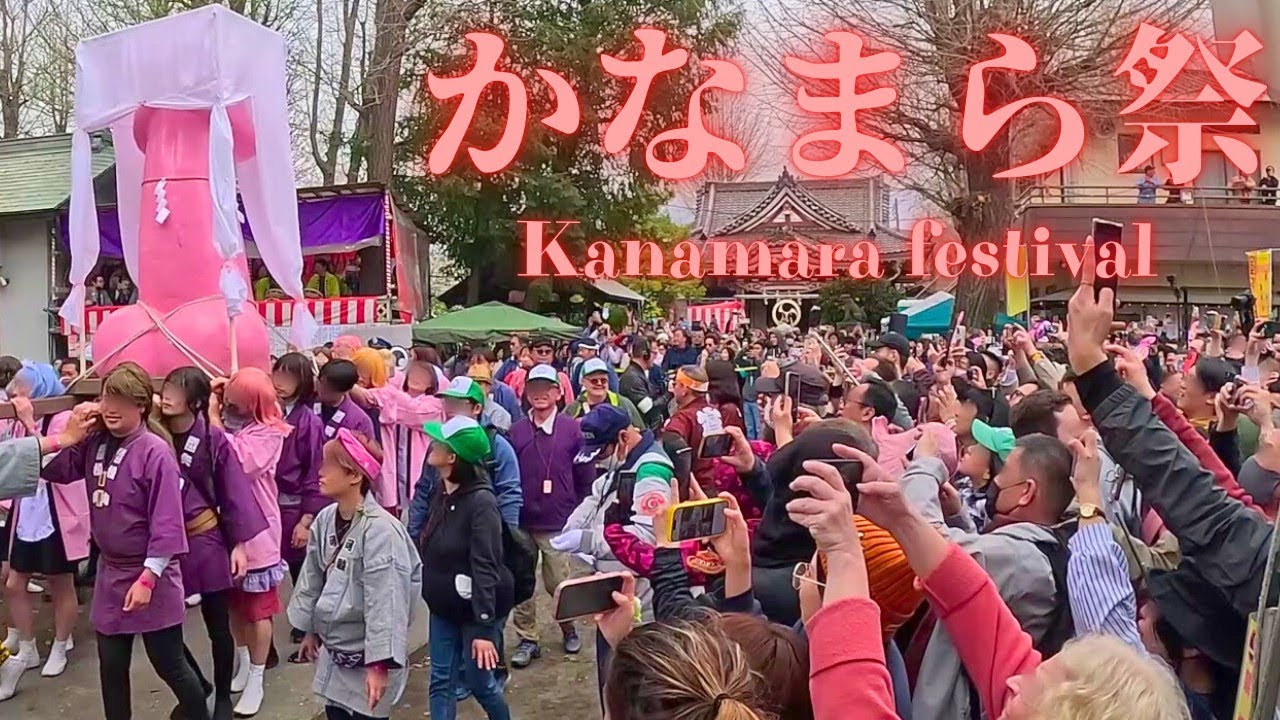
Every first Sunday of April, the streets of Kawasaki fill with tens of thousands of people parading giant phalluses through ordinary traffic, eating phallic-shaped candy, and raising money for HIV research — all inside a Shinto religious tradition running since the Edo period. The viral photographs have been circulating for years. Almost nobody who shares them knows the actual story.
Spend enough time watching how Western media covers Kanamara Matsuri and a pattern becomes impossible to ignore — the visual always travels, the laughter always follows and the story that explains why any of this exists gets entirely left behind, every single time, because it requires context that doesn’t compress into a caption. Because what happens in Kawasaki every April isn’t really about shock value or spectacle or Japan being Japan in the particular way Western audiences find comfortable. It’s a story about a woman surviving something violent, a blacksmith solving an impossible problem, centuries of sex workers praying in a shrine that refused to close its doors on them, and what happens when all of that history collides with a modern HIV epidemic. That’s the story nobody tells. So here it is.
The Demon Had a Plan
The origin legend deserves to be told properly because most people have only heard the funny version — the one that stops at “demon hiding in a woman’s vagina” and never asks what the community did next, or why they preserved this story in formal religious practice for centuries afterward.
An Edo-period woman in Kawasaki had a problem nobody around her knew how to solve. A sharp-toothed demon had taken residence inside her body, and on two separate wedding nights, bit off the penises of two successive husbands. Both marriages were lost, but the woman survived. The community didn’t abandon her — they found a blacksmith. He forged an iron phallus, kanamara, hard enough to shatter the demon’s teeth on contact.
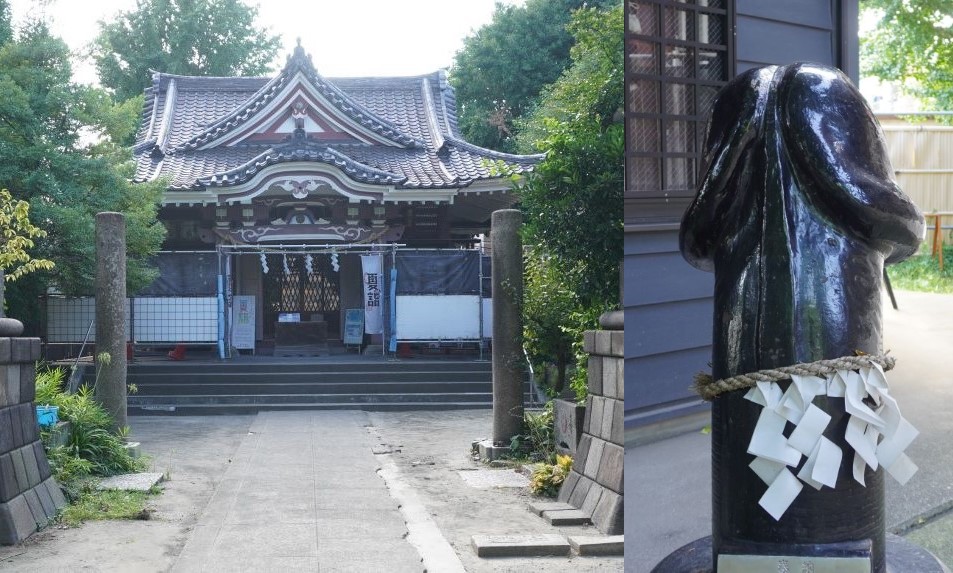
The demon was defeated, and the woman was free. That solution became a shrine tradition, and that tradition eventually became Kanamara Matsuri, running continuously at Kawasaki’s Wakamiya Hachimangu shrine from the Edo period to the present day. A journalist who covered the festival wrote something worth sitting with: “You keep waiting for the joke to arrive and then you realize the joke was always the assumption that there was one.” That realization lands differently for every visitor.
What April Looks Like in Kawasaki
Three portable shrines — mikoshi — process through Kawasaki’s streets on the day, each shaped unmistakably like a phallus and each carrying its own history. The iron one is the oldest, honoring the original legend directly. The wooden one dates to the Edo period.
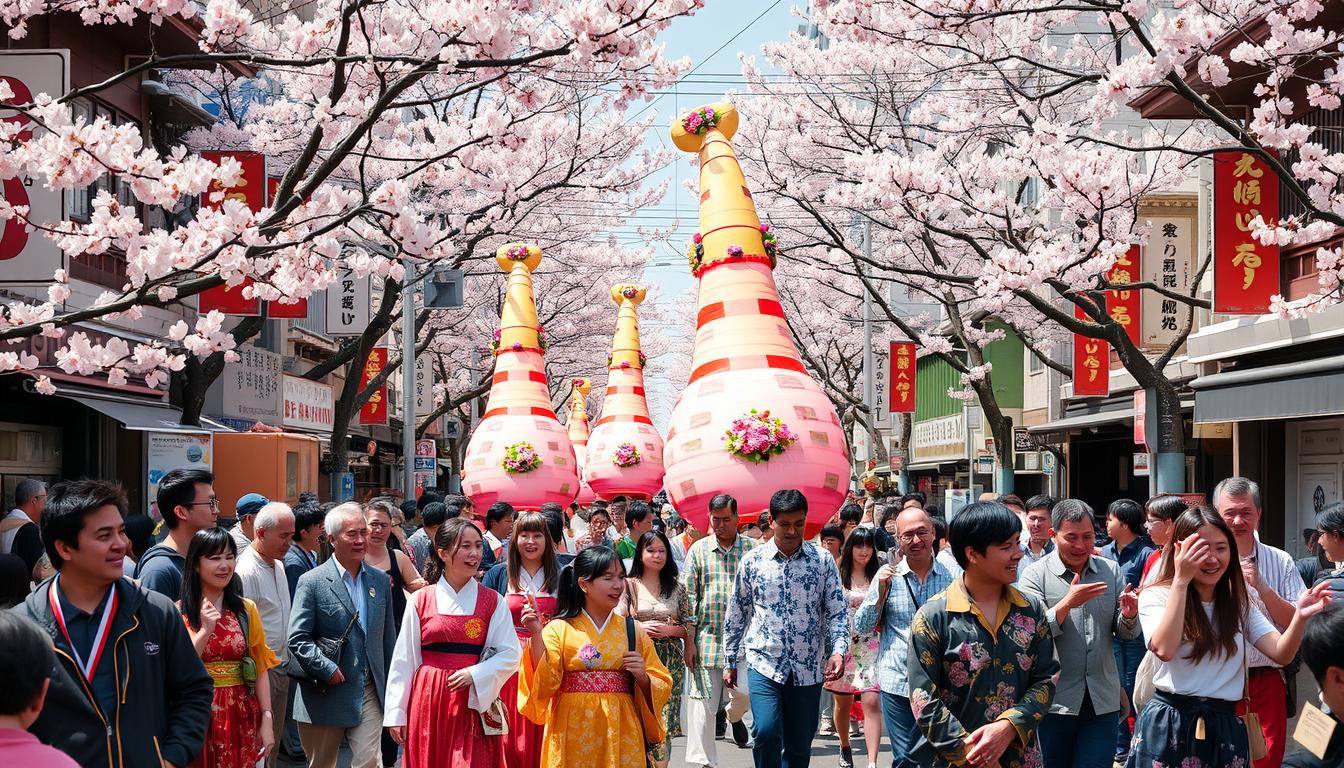
Then there is Elizabeth — enormous, luminously pink, donated by a Tokyo drag bar in the 1980s — now the single most photographed object at the festival by a margin that isn’t close.
What strikes people who arrive expecting spectacle is how ordinary the joy is. Grandmothers pose for photographs next to the shrines without a trace of self-consciousness. Children come with their families. Couples share the candy. A woman who had attended three times described it as feeling like “a neighborhood celebrating something it has always known was worth celebrating, and you happened to get invited” — and that warmth is what the viral photographs almost never transmit. The festival is not daring. Daring requires an audience you’re trying to impress. Kanamara Matsuri stopped needing to impress anyone several centuries before Instagram existed, honestly. Kawasaki is thirty minutes from central Tokyo by train. Buy the candy and let the context fully land before you open your camera.
The Theology the West Missed
Kanamara Matsuri is not a quirky outlier in the Shinto tradition. It is a completely coherent expression of it — and the gap between those two understandings is the entire difference between seeing this festival as a joke and seeing it as what it actually is.
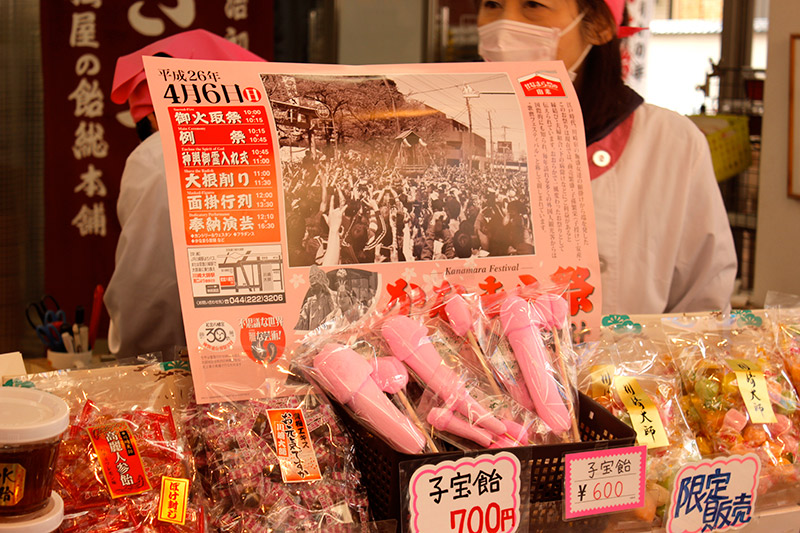
In Shinto, musubi — the generative, creative force binding all living things — is among the most sacred concepts in the religion. Fertility isn’t a footnote to the theology. It is the theology. Creation, sex, birth, agriculture, continuation — none of these are separated from the divine in Shinto cosmology. They are expressions of it. The phallus has appeared throughout Shinto iconography for centuries not because anyone was being provocative, but because it represents the force that keeps everything going, and in a tradition that treats generative energy as sacred, representing that force directly is not unusual… It is the point.
Western observers default to embarrassment around sacred sexuality because fifteen centuries of Christian theology trained that reflex into the culture — body as problem, desire as liability, physical representation of sexual energy as incompatible with spiritual seriousness. That’s not a universal position. It’s a particular one. Japan never adopted it and has never felt the need to explain that to anyone arriving confused.
Before the Tourists, There Were Prayers
This is the part that gets left out most consistently, and it is the most human part of the whole story.
The Wakamiya Hachimangu shrine historically served the sex workers of Kawasaki-juku — real people, working in real vulnerability, who came to pray for protection from sexually transmitted disease not as a cultural exercise but as genuine faith from people who had nowhere else to bring that particular fear. A researcher writing about the festival’s origins put it plainly: “The shrine survived because it made itself useful to people the rest of the city had decided not to see.” That usefulness, built across generations, is underneath every step the procession takes through Kawasaki’s streets each April.
The sex workers who prayed here first are not a footnote to the history of Kanamara Matsuri. In many ways, they are the history. Most of the tourists photographing Elizabeth have no idea any of this is there.
A Demon Story Funding Modern Medicine
When the AIDS crisis hit in the 1980s, the festival’s organizers recognized something that should have been obvious but rarely was — a shrine with centuries of connection to sexual health, a tradition of praying for protection from sexually transmitted disease, had something urgent to offer the present moment. They began directing proceeds toward HIV research and awareness. That mission has continued without interruption every April since.
So four things are operating simultaneously inside that procession — an Edo-period religious artifact, living Shinto practice, a memorial to sex workers who prayed here for centuries, and an active fundraiser for modern medical science. The caption under the photograph almost never has room for any of them.
The West Missed the Point Entirely
Travel coverage of Kanamara Matsuri has followed the same script for long enough that the script itself has become the problem. Japan positioned as the place where harmless strangeness happens while everyone else watches comfortably from a distance. The festival as one item on an “only in Japan” list. The photograph collected, the story told at dinner, the context left entirely behind.
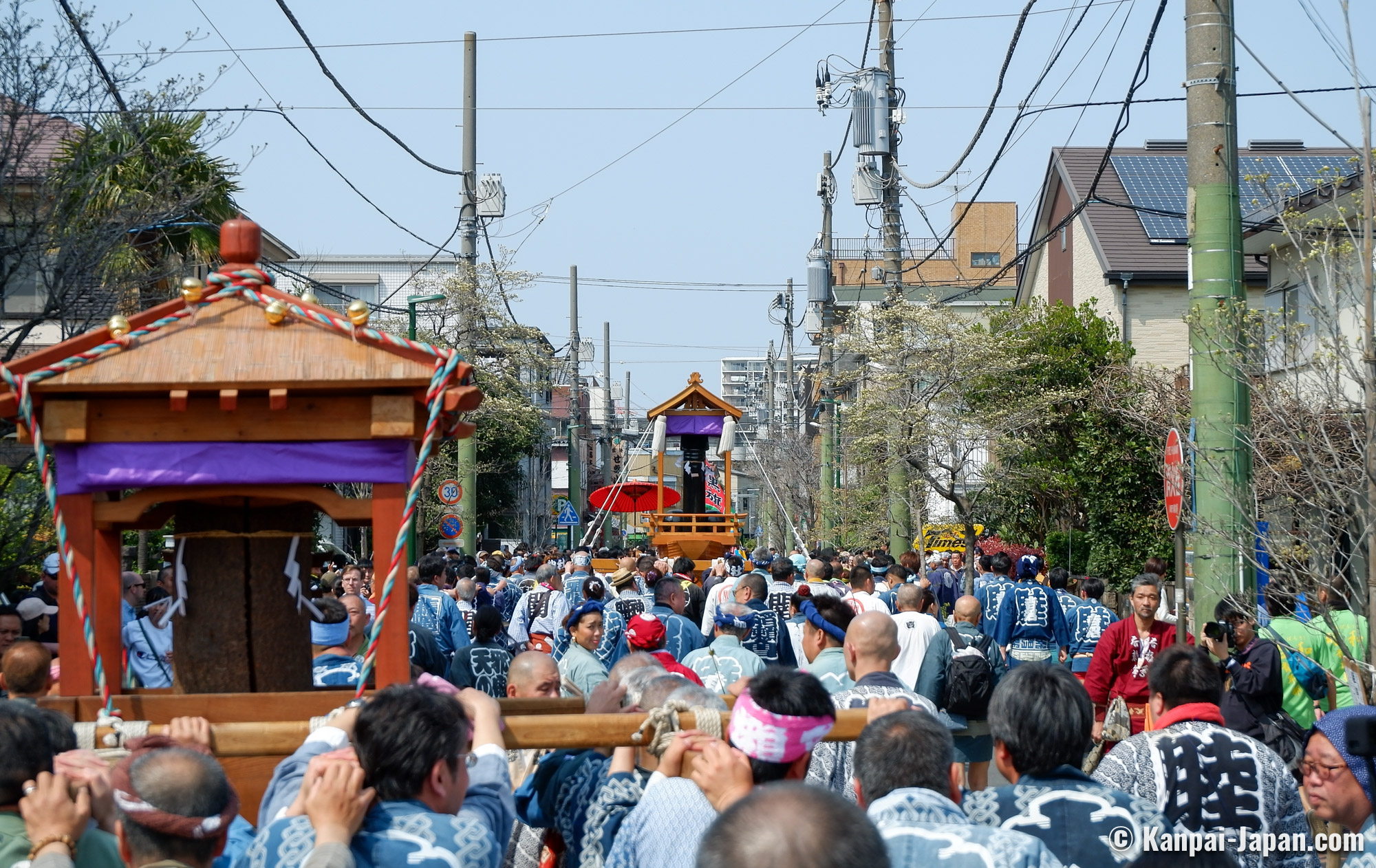
What actually deserves examination is a civilization so institutionally uncomfortable with sacred sexuality that an Edo-period fertility festival still reads as transgressive in the twenty-first century. Japan has never treated that confusion as its problem to solve. The festival was running before the country that finds it shocking existed in its current form. It will keep running long after the photographs stop circulating.
Go to Kawasaki the first Sunday of April. Feel the difference between a spectacle designed for an audience and a tradition that exists entirely for itself. That difference, once you can feel it, is not something you easily un-feel anywhere else you go looking for culture after that.
See you at the shrine.
First Sunday of April · Wakamiya Hachimangu Shrine, Kawasaki, Japan · 30 minutes from central Tokyo · Free admission · Donations to HIV research welcome