
In 2025, Liniker stopped mid-set on the Vale do Anhangabaú stage and looked at 120,000 people who had not paid a single real to be there. “Eu tenho vivido momentos que jamais imaginei que iria viver,” she said. I have lived moments I never imagined I would live. Ten years of career, singing what she writes, seeing herself in so many people who also see themselves in her — and the crowd she was saying it to had not been: selected by a ticket price, filtered by a wristband or organised by the market into people who could afford to be present and people who could not. They were just São Paulo. All of São Paulo, or as close to it as a city of twelve million people can get in one square on one night. This is what Virada Cultural produces — not a festival experience but a city experience, the specific feeling of culture without a price of entry. São Paulo has been doing this every May since 2005. The 2026 edition, the twenty-first, runs 1,200 attractions across 21 stages to 4.8 million people. Everything is free and the city has not once apologised for that.
The Confession São Paulo Makes Once a Year
The first Virada Cultural ran November 19–20, 2005, under mayor José Serra. Two hundred attractions. Three thousand artists. R$600,000 in public funding. The Coral Paulistano opened proceedings in the Vale do Anhangabaú, and whatever São Paulo expected from the experiment, the city kept 3 million people awake through the night to find out. By 2008 the crowd was 4 million. By 2019 it expected 5 million across 250 venues. The 2026 edition runs 1,200 attractions across 21 stages to 4.8 million people, with the MASP opening for 24 consecutive hours for the first time in its history, thirty samba schools unlocking their quadras, and a transport network reorganised entirely around the festival — the metro running all night, 41% more Sunday bus capacity, a dedicated line connecting Metrô Itaquera directly to Parque do Carmo in the east.
None of this is technically difficult for São Paulo to provide. The metro running all night is an operational decision. The stages in the Zona Leste are a budget allocation. The MASP staying open is a scheduling choice. The city has the infrastructure, the institutions, the artists, and the resources to make this weekend possible far more than once a year — and it doesn’t. Virada Cultural is São Paulo’s annual admission that everything it withholds the other fifty-one weekends was never actually unavailable. The city throws the biggest free arts festival on the planet and in doing so quietly confesses what it has been holding back. Totó Parente, the city’s secretary of culture, called the 2026 edition O Festival dos Festivais — the festival of festivals. What he didn’t say out loud is that it only needs to be the festival of festivals because the Pinacoteca, the Instituto Moreira Salles, the Museu da Língua Portuguesa, and the Sesc São Paulo spend the other fifty-one weeks of the year being accessible only to the fraction of the population that can get there during working hours and afford to be present. For twenty-four hours in May, the access question disappears. That is not a festival, it is a policy decision dressed as a party.
The Festival With No Festival Site
Virada Cultural does not occupy a festival site. It occupies São Paulo — all of it, including the parts a festival of this ambition would ordinarily skip. Five stages in the central region. Sixteen more across the periphery, pushed further outward with each edition since 2016 when the Prefeitura explicitly committed to decentralisation as a structural principle rather than a gesture.

The Zona Leste gets six stages and 170 attractions in the 2026 edition. The: Zona Norte gets two, Zona Sul gets seven, Zona Oeste gets the Palco do Rock — every rock attraction in the programme concentrated into one stage in a zone that has historically received the thinnest slice of what the city offers culturally. A dedicated Palco Brega, a Palco Mulheres, and the returning Palco Gospel join a programme that treats genre specificity as access rather than limitation — an acknowledgment that the people in those zones have their own relationship to music that a centralised programme staffed with prestige artists does not automatically serve.
The decentralisation has been the most consequential decision in the festival’s twenty-one-year history, and what it reveals is not generosity but self-correction. A city that genuinely distributed its cultural resources equitably throughout the year would not need to make a point of doing it for one weekend in May. The fact that Virada Cultural’s peripheral programme has to be announced, celebrated, and defended as a feature says everything about what the other fifty-one weeks look like. The Zona Leste does not need six stages one weekend a year. It needs what the Jardins has every other day. Virada Cultural does not solve that problem. It just makes it visible.
Seu Jorge, Manu Chao, and a Beninese Ensemble the World Took Too Long to Find
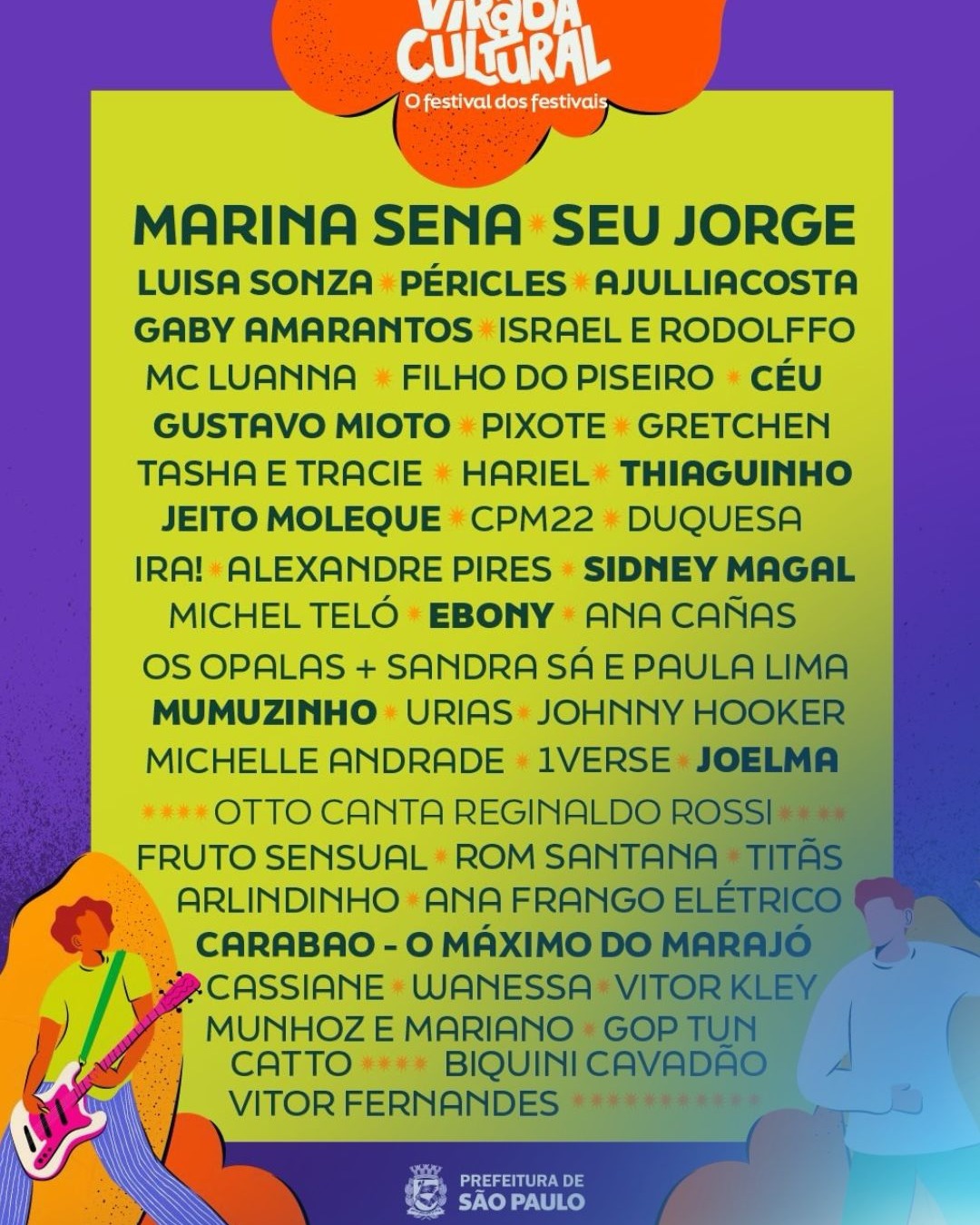
The Vale do Anhangabaú main stage carries the headline names. Seu Jorge performs there in 2026 — a man whose relationship to Brazilian cultural identity runs through Cidade de Deus, through the Bowie album sung entirely in Portuguese, through decades of music that has always known exactly what it is and where it comes from. Manu Chao plays São Paulo on a free stage in front of whoever shows up. For a musician whose entire career has been an argument against the commodification of culture, that context is not incidental — it is the point. João Carlos Martins — the classical pianist who lost the use of both hands and came back wearing bionic gloves — performs alongside Mocidade Alegre, São Paulo’s 2026 Carnival champions, in a pairing that makes complete sense only here, where the usual categories of what belongs alongside what temporarily dissolve.

The international programme brings the Orchestre Poly-Rythmo de Cotonou from Benin — the Afrobeat and voodoo jazz ensemble that made their most important records in the 1960s and 70s and that the world took decades to catch up with. Jazz Sabbath arrives from the UK. 1VERSE becomes the first K-pop act in the festival’s twenty-one-year history — a significant threshold in a country where K-pop’s Brazilian fanbase is one of the most active in the world outside Asia. Gaby Amarantos, Péricles, Marina Sena, Luísa Sonza, Thiaguinho, and Alexandre Pires complete a programme that moves from Beninese voodoo jazz to Brazilian samba to classical piano to K-pop without straining. That range does not happen by accident. It happens because the festival’s free and public structure removes the commercial logic that ordinarily forces events to pick a lane and stay in it.
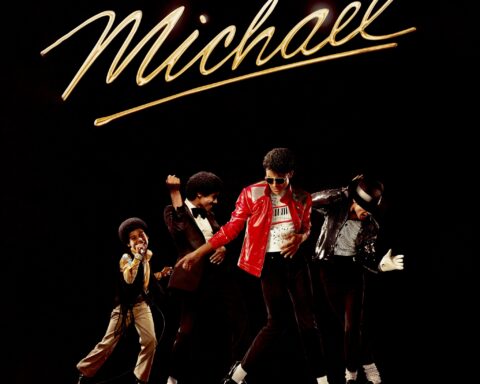
Free film screenings run across the city through the weekend, including Michael — the Jackson biopic that broke viewing records earlier this year. The Blue Note São Paulo runs a free concert at 0h30 in the middle of the night, which is the kind of sentence that stops making sense the moment you try to imagine it on any other weekend of the year.
Twenty-One Years Without Shrinking
The Grammys bend just enough to look current, then retreat into structure. Bad Bunny wins Album of the Year in the same ceremony where K-pop gets contained inside genre categories designed to acknowledge without integrating. Institutions manage change slowly, selectively, always maintaining control over the pace. Virada Cultural does not work like that — and the difference is operational not philosophical.
The 2020 pandemic edition ran entirely online — 400 attractions streamed across six theatres, nine cultural centres, and 22 libraries under the theme Tudo de Arte, Nada de Aglomeração. The festival came back in person in 2022 bigger than before. The baseline has not shrunk across twenty-one editions. Every time the city had a structural reason to contract the programme, it expanded instead. The 2026 edition is the most explicit proof of that consistency yet — the MASP opening for 24 hours for the first time in its own history, accessibility provisions built into every stage, Libras sign language interpretation, audio description for visual performances, dedicated areas for people with disabilities at every point in the city. Access to one of the most important art collections in Latin America should not depend on business hours on a weekday.
The 2026 edition makes that position operational in ways no previous edition has. Most cities that run free cultural events of this scale eventually find reasons to scale back. São Paulo has run Virada Cultural through debt, through pandemic, through changing administrations, and through every structural reason an institution finds to protect itself by shrinking. Twenty-one editions in, the programme has only grown. That is not momentum. That is commitment — and commitment at this scale, sustained this long, stops being a festival and starts being infrastructure. It becomes something the city does because it has decided this is what it owes its residents, not because the budget is comfortable or the politics are convenient.
São Paulo at Its Most Honest
Liniker said it to 120,000 people who had not paid to be there, and the weight of that sentence does not diminish with repetition. The crowd she was looking at was not sorted by income, not organised by zone, not filtered by the city’s ordinary mechanisms for deciding who gets to stand somewhere important. It was just São Paulo — the version of the city that exists for twenty-four hours in May when the metro runs all night and the stages go up in the periphery and the MASP keeps its doors open until the following midnight and nobody is asked to prove they can afford to be present.
That version of the city does not require a festival to exist. It requires a decision. São Paulo makes that decision once a year, which is twenty-three times fewer than it should, and calls the result the biggest free arts festival on the planet, which it is. The real question — the one the city has been deferring for twenty-one years — is why the answer to what São Paulo owes its twelve million residents only arrives in May.
The 2026 edition runs May 23–24 across every zone of the city. Everything is free.
See you in São Paulo!!!