
The Zapotecs had a word for it before there was a festival to attach it to. Guendalezaa — cooperation, exchange, gift, the thing a community does when it understands that what you carry belongs to more than you. Centuries before the Spanish arrived in Oaxaca with their crosses and their calendar, this principle was already running the harvest ceremonies that gathered communities on hilltops to give thanks to Centéotl, the goddess of corn, for another year of life. The corn came from the earth. You thanked the earth by giving back and thanked your neighbour by sharing. The word and the logic were the same thing. When the government of Oaxaca packages this into a ticketed auditorium event every July and calls it the Guelaguetza, it is using a word that has always described the opposite of what a ticketed event does — and the communities who built the thing know it, which is why the argument about who the Guelaguetza belongs to has never once been resolved.
Before the Government Got Involved
The ceremony that eventually became the Guelaguetza is older than the Mexican state. Older than the colonial period. Older than any institutional framework that has ever tried to contain it. It began as a harvest celebration tied directly to guendalezaa — to the corn goddess Centéotl, to the principle that abundance is communal and gratitude moves in all directions. After the Spanish arrived and Catholicism followed, the ceremony absorbed the Virgen del Carmen into its structure the way so much of indigenous Mexican spiritual life absorbed Christianity — not by surrendering but by bending, by finding the frequencies where the old devotion and the new framework could coexist without either cancelling the other. The corn goddess and the Catholic saint occupied the same calendar space without crisis. The people doing the observing were the same people who had always been doing it. They understood what they were doing better than anyone who arrived later to document it.
The earthquake of 1931 destroyed much of Oaxaca City and with it the informal community structure through which the ceremonies had always run. When leaders reorganised the festival as a statewide cultural event under the name La Guelaguetza de la Raza, the shift from ceremony to civic occasion was not incidental — it was designed. The tension that every edition since has had to manage was designed into it at the same moment.
The Calendar and What It Protects
Since 1969, the Guelaguetza has run on the two Mondays immediately following July 16 — Los Lunes del Cerro, the Mondays on the Hill. The exception is when the first Monday falls on July 18, the death anniversary of Benito Juárez, the Zapotec lawyer who became Mexico’s first indigenous president. In that case, both dates shift one week forward — out of respect for a man the festival’s own communities produced. The 2026 edition is the 94th. It lands on July 20 and July 27 at the Auditorio Guelaguetza on Cerro del Fortín. Morning performances at 10:00 AM. Evening performances at 5:00 PM.
Citywide celebrations run the entire month of July — parades, the Desfile de Delegaciones, the selection of La Diosa Centéotl, the Feria Internacional del Mezcal, free community Guelaguetzas in Zaachila, San Antonino Castillo Velasco, and Cuilápam de Guerrero. The festival is a month. The auditorium is two days. Most people who love it have never been inside the auditorium.
The Traje Knows Exactly Where It Comes From
Oaxaca is the most linguistically and culturally diverse state in Mexico, and the scale of that diversity is difficult to absorb without sitting with it for a moment. More than 300,000 people are monolingual in one of sixteen distinct indigenous languages. The Zapotecs alone speak more than sixty mutually unintelligible language variants — sixty languages that share a name and almost nothing else. The Mixtecs, the Mazatecs, the Chinantecs, the Mixes, the Chatinos, the Triquis, the Huaves, and seven other distinct ethnic groups each maintain their own language family, their own cultural framework, their own relationship to land and history that no neighbouring group shares. The Guelaguetza is the occasion on which representatives of all of them come up the same hill at the same time, in trajes — not costumes in the theatrical sense but garments made by hand that carry specific historical and community meaning the way a name carries identity — and give what they carry to everyone watching.
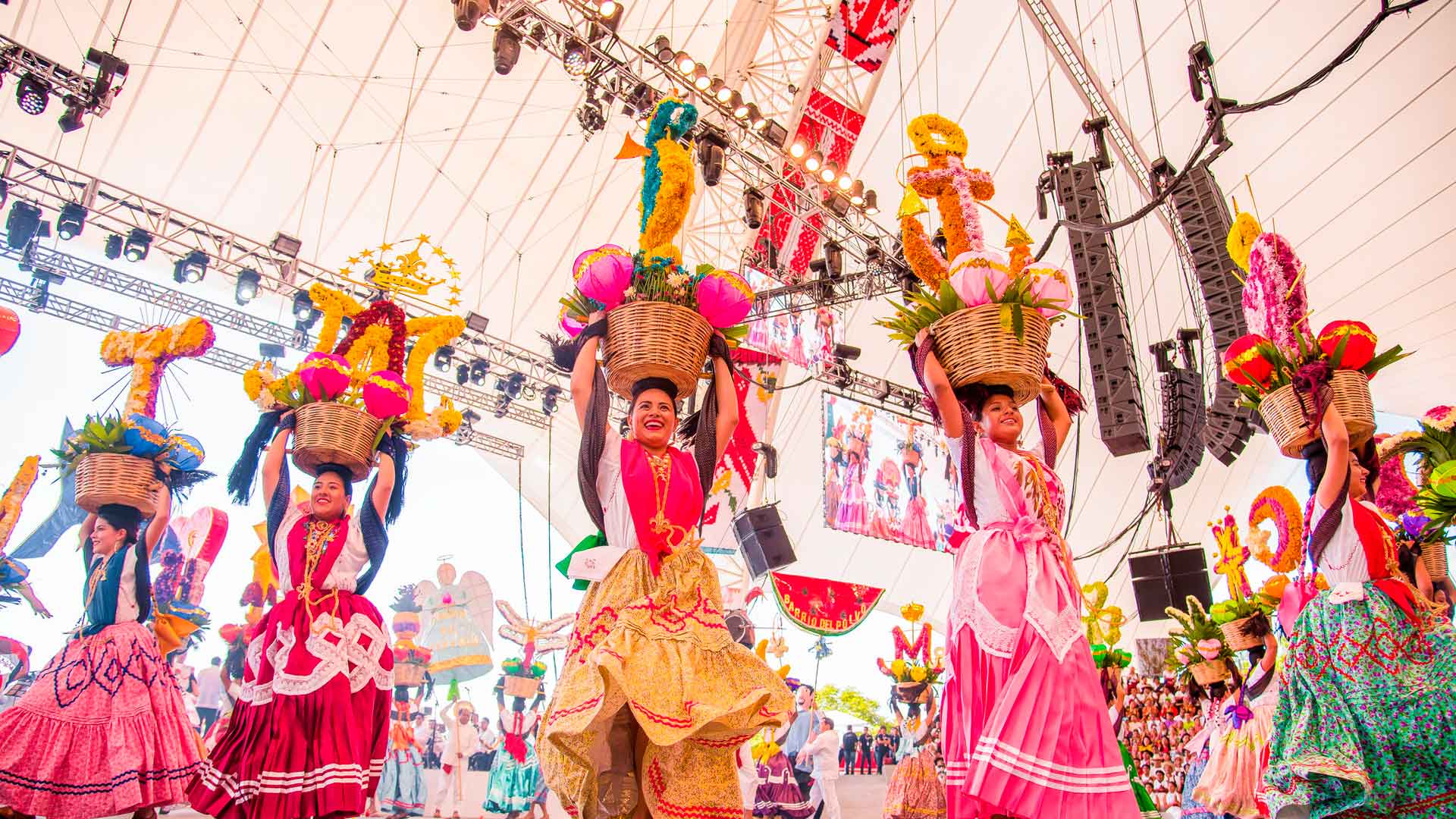
Each delegation represents one of Oaxaca’s eight regions: Cañada, Costa, Istmo, Mixteca, Papaloapan, Sierra Sur, Sierra Norte, Valles Centrales. Selected through a lottery from hundreds of eligible groups and municipalities, they perform in gender-separated groups, bring the food their region makes, bring the music their community has maintained across generations, and at the end of each performance throw that food into the crowd — bread, cookies, tamales — and after the Flor de Piña, whole pineapples. The throwing is not entertainment. It is guendalezaa made physical: what you have, you give; what the earth gave you, you pass on; the exchange is the ceremony and the ceremony is the word the Zapotecs had before anyone built an auditorium around it.
Tickets for reserved Sections A and B at the Auditorio Guelaguetza go through SuperBoletos and typically open in late May — limited to two per person, gone in hours, with a Banamex presale absorbing 15% of capacity before general sales begin. Sections C and D are free, first-come, first-served, and require queuing from as early as 4:00 AM on performance days. The auditorium holds 11,000. Fewer than 3,000 of those seats go to the general public as paid tickets. The rest go to Oaxacans who waited in line. That distribution is not generosity — it is a position, and it is one the government of Oaxaca has been unable to hold consistently against the commercial pressure that has been building since Oaxaca and Monte Albán received UNESCO World Heritage designation in 1987 and the tourism economy that followed that designation rewrote the city’s priorities.
The Year Oaxaca Ran Two Guelaguetzas and Only One Was Free
In 2005, the Oaxacan government announced it would add a second daily performance across each of the two celebration Mondays — doubling auditorium capacity, doubling revenue, doubling the number of paying national and international tourists who could access the event. The communities whose delegations perform did not experience this as a scheduling upgrade. They experienced it as a statement about what the festival had become and who it now served. The Popular Assembly of the Peoples of Oaxaca organised from the protests that followed, and in 2006 the government’s Guelaguetza did not happen on Cerro del Fortín as planned. The APPO built its own — free, on the same hill, slogan by the people, for the people, returning the exchange to the logic the word had always described. Three journalists died in the broader political crisis that 2006 became in Oaxaca. The government’s response to the counter-Guelaguetza was police repression and state-sanctioned force, which said everything necessary about how seriously the ownership question was being taken by everyone involved.
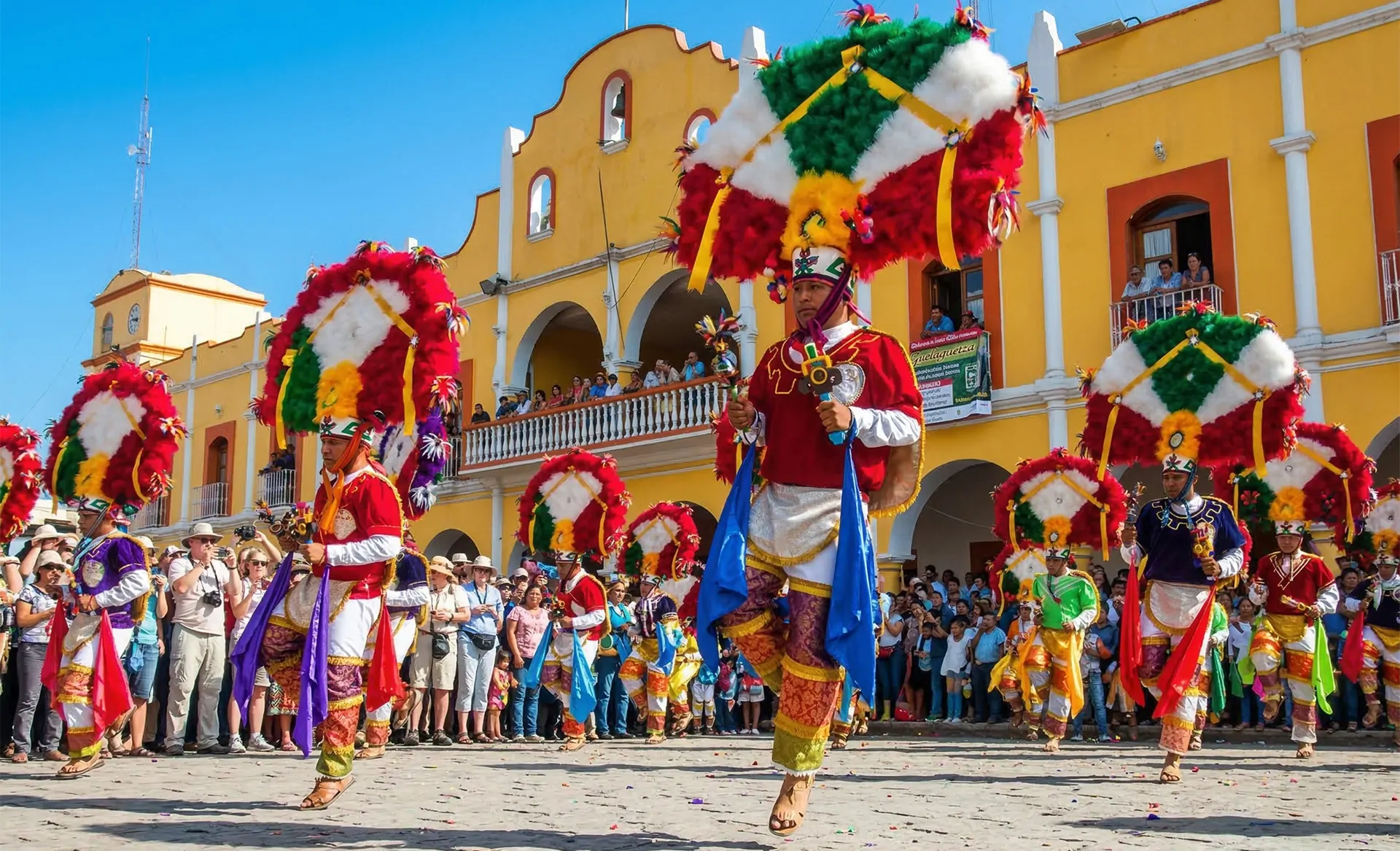
Subsequent administrations have managed the legacy of 2006 with varying degrees of transparency and none have resolved the structural question underneath it. The festival is simultaneously the most important indigenous cultural gathering in Mexico and one of Oaxaca’s primary tourism products, and those two things produce contradictory pressures that no administration has been honest enough to acknowledge publicly. The communities who send delegations to Cerro del Fortín do not need the Guelaguetza to tell them who they are — they know exactly who they are, they have been who they are for centuries without anyone staging it, which is precisely why the monograph each delegation must submit before selection explains in depth the historical background, symbolism, and community meaning of their proposed performance. Visibility matters. Being seen on that hill, in those trajes, doing the dances that exist because someone decided they were worth keeping — that matters to the people doing it in ways the tourist economy around them can pressure but has not yet been able to fully corrupt.
What the Throwing Has Always Actually Meant
After the Flor de Piña — the dance of the pineapple, performed by women from the Tuxtepec region of the Papaloapam who have been passing this choreography down for generations, carrying whole pineapples on their heads through movement that makes the weight look like nothing — the dancers throw the pineapples into the crowd.

People catch them. Take them home. Eat them. This has happened at every edition of the Guelaguetza that has ever taken place, regardless of what the government decided about ticket pricing that year, regardless of what the tourism projections said, regardless of whether the APPO was running a counter-festival on the same hill. The pineapple leaves the dancer’s hands and lands in someone else’s and the exchange completes — a specific thing, grown in specific soil, carried up a specific hill, offered across a specific distance, received by someone who was there to receive it. The word holds its meaning and the ceremony does what the ceremony has always done. Whatever has been built around the Guelaguetza by institutions that operate on a different principle from the one that created it, that moment remains outside their reach.
Guelaguetza 2026 runs July 20 and July 27 at the Auditorio Guelaguetza, Cerro del Fortín, Oaxaca de Juárez. Morning performances at 10:00 AM, evening performances at 5:00 PM. Tickets through SuperBoletos. Citywide festivities run the entire month of July — follow Oaxaca Cultura for Diosa Centéotl announcements, Popular Guelaguetza schedules, and Feria del Mezcal dates. If you cannot get auditorium tickets — and most people cannot — the free community Guelaguetzas in the Central Valley towns are closer to the original word anyway.