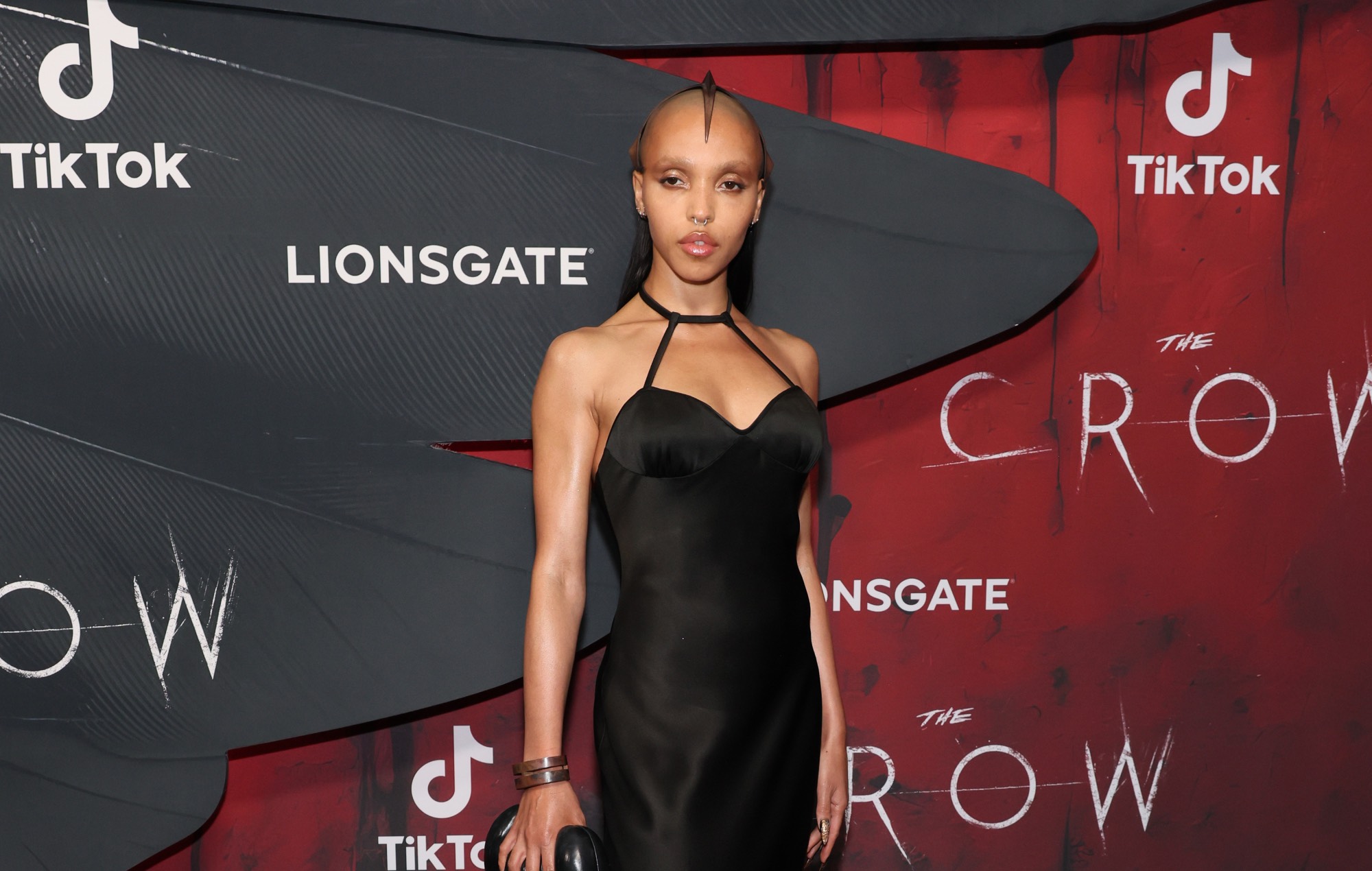
FKA twigs has always resisted belonging to one place. She emerged not as a pop act, but as a living myth—half-dancer, half-specter, with music that sounded less like songs and more like transmissions. From LP’s alien-R&B cathedral to MAGDALENE’s operatic grief and CAPRISONGS’s communal joy, twigs has built her career on shapeshifting. Each project dissolved boundaries, and each reinvention pulled her closer to something elemental. With EUSEXUA, she arrives at that element. This is less fantasy or escape but more flesh, pulse, breath. It is a record about presence—music that doesn’t linger in your ears but moves directly into your body.
The Invention of a Word
“Eusexua” is not in any dictionary. It is twigs’ invention, a term she uses to name the moment when music overwhelms thought and the body takes control. It is the sweat of being alive, the ecstatic blur between rhythm and flesh. For twigs, the word is not abstract. It is lived. Where MAGDALENE reached for myth and CAPRISONGS leaned into community, EUSEXUA strips everything down to embodiment. She doesn’t ask for interpretation; she asks for presence.
An Invitation to Surrender
Twigs’ arrival at this point makes sense only when you trace her past. In 2014, LP1 rewired R&B with its crystalline electronics and alien sensuality. Two Weeks stood at the center—imperial, hypnotic and undeniable. Critics called it futuristic, but it was declaration: she would not follow the path of her peers. By 2019, heartbreak and surgery shaped MAGDALENE. It was sacred and devastating, each track soaked in gothic drama. Here was vulnerability as theater, grief sung with operatic grandeur. Then came CAPRISONGS in 2022. Suddenly, twigs was laughing, dancing, bantering. She opened her world with WhatsApp voice notes, Afrobeats percussion, and Caribbean warmth. If MAGDALENE was solitary confession, CAPRISONGS was a collective release. EUSEXUA gathers all of this—alien futurism, operatic pain, communal rhythm—and burns it into something primal. No myth, no mask, just your body…. Moving, your head swaying.
Eusexua
The opener is not just an introduction; it is manifesto. The kick drum sets a steady pulse, clean but yet insistent, like a metronome for the body. Twigs’ vocals float above—airy, stretched, almost whispering—while beneath, synth textures grind low, tactile and warm. The duality is deliberate: restraint and release, thought and flesh, fragility and demand. It defines the project’s thesis—movement before meaning, body before interpretation.
Perfect Stranger
If the title track sets the tone, Perfect Stranger delivers its heat. It coils like smoke, subtle and sly, its bassline sneaking beneath the ribs before the brain even registers the rhythm. The percussion here is muted but tactile—hi-hats softened, snare hits brushed rather than struck. Twigs sings not as a guide but as an instigator, teasing the listener’s muscles into sync. The groove does not shout. It seduces. Every layer feels like invitation: hips to sway, breath to shorten, pulse to align.
Two Weeks
A decade later, Two Weeks remains imperial. Where newer tracks pulse in minimal clarity, this one burns slow, lush, and heavy, drenched in layered harmonies and trap-inspired percussion. The contrast within EUSEXUA is striking: here, twigs feels like a monarch surveying an empire, her vocals commanding and elongated, the bassline rolling with sovereignty. The song’s placement is heritage—it’s a relic of her past that reminds us how long she’s been building toward this embodiment. In a way, EUSEXUA is the body, and Two Weeks is the bone—structure carrying memory.
Cellophane
Where Two Weeks is grandeur, Cellophane is fracture. The production is skeletal—bare piano, silence allowed to linger so long that breath itself becomes percussion. Twigs’ vocals tremble, bending between chest and falsetto, breaking at points where most singers would push smoothness. That break is intentional: it devastates because it feels human. Cellophane strips away rhythm, forcing stillness, and in that stillness the body is exposed. Vulnerability becomes louder than any climax. The song doesn’t demand tears; it simply cracks you open and leaves you to leak.
Honda (ft. Pa Salieu)
Honda plays like motion captured at half-speed. The bassline hums low, thick as rubber, not pushing forward but idling, waiting. Percussion rolls but never overpowers, like the gentle roar of traffic under streetlights. Pa Salieu enters with grit, the verse leaning against the track’s glide instead of driving it. The collaboration feels organic, not forced—twigs’ ethereal phrasing a counterweight to Pa Salieu’s earthbound delivery. The effect looks like suspension: you are moving, but you don’t know where. It’s less destination, more drift.
Tears in the Club (with The Weeknd)
On paper, this should be pure pop gloss—a duet with The Weeknd designed for club rotation; but twigs reshapes the pop formula. The synths shimmer but are frayed, the beat polished but streaked with ache. The track feels like looking in a mirror at 3 a.m.—you’re glowing under strobe lights, but the eyes looking back are tired, bruised and tender. The Weeknd brings his velvet melancholy, but twigs doesn’t surrender to his mood. She matches it, distorts it, wrapping intimacy and exhaustion into one glitter-stained breath.
Two Weeks
A decade later, Two Weeks remains imperial. Where newer tracks pulse in minimal clarity, this one burns slow, lush, and heavy, drenched in layered harmonies and trap-inspired percussion. The contrast within EUSEXUA is striking: here, twigs feels like a monarch surveying an empire, her vocals commanding and elongated, the bassline rolling with sovereignty. The song’s placement is heritage—it’s a relic of her past that reminds us how long she’s been building toward this embodiment. In a way, EUSEXUA is the body, and Two Weeks is the bone—structure carrying memory.
Cellophane
Where Two Weeks is grandeur, Cellophane is fracture. The production is skeletal—bare piano, silence allowed to linger so long that breath itself becomes percussion. Twigs’ vocals tremble, bending between chest and falsetto, breaking at points where most singers would push smoothness. That break is intentional: it devastates because it feels human. Cellophane strips away rhythm, forcing stillness, and in that stillness the body is exposed. Vulnerability becomes louder than any climax. The song doesn’t demand tears; it simply cracks you open and leaves you to leak.
Honda (ft. Pa Salieu)
Honda plays like motion captured at half-speed. The bassline hums low, thick as rubber, not pushing forward but idling, waiting. Percussion rolls but never overpowers, like the gentle roar of traffic under streetlights. Pa Salieu enters with grit, the verse leaning against the track’s glide instead of driving it. The collaboration feels organic, not forced—twigs’ ethereal phrasing a counterweight to Pa Salieu’s earthbound delivery. The effect looks like suspension: you are moving, but you don’t know where. It’s less destination, more drift.
Tears in the Club (with The Weeknd)
On paper, this should be pure pop gloss—a duet with The Weeknd designed for club rotation; but twigs reshapes the pop formula. The synths shimmer but are frayed, the beat polished but streaked with ache. The track feels like looking in a mirror at 3 a.m.—you’re glowing under strobe lights, but the eyes looking back are tired, bruised and tender. The Weeknd brings his velvet melancholy, but twigs doesn’t surrender to his mood. She matches it, distorts it, wrapping intimacy and exhaustion into one glitter-stained breath.
Wanderlust
Closing the record with Wanderlust is a statement. Most artists end with fade-outs or echoes, but twigs insists on sharp presence. The track is clean—glossed with clicking drums, sleek synth pads, and a melody cut like glass. Her voice, high yet weighted, balances softness with authority. She doesn’t dissolve into atmosphere; she stands centered, planted, unhidden. The song doesn’t just end the album—it asserts embodiment as permanence, reminding us the ritual doesn’t fade when the record stops.

The Album as Anatomy
Taken together, these tracks form more than a playlist, they sketch anatomy. Eusexua is the heart, steady and insistent. Perfect Stranger is the hips, sly and inviting. Cellophane is the lungs, breaking and gasping. Two Weeks is the spine, regal and unbending. Honda is the legs, suspended in mid-stride. Tears in the Club” is the skin, glowing and bruised under light. And Perfectly is the final exhale, the body standing whole, unhidden. Together, these songs form more than an album, they map a body; and EUSEXUA is not a setlist. It is anatomy pressed into sound.
Performance as Ceremony
For twigs, music has never stopped at audio. She turns it into living art. Cellophane gave us a pole-dance ascension that felt biblical. Glass & Patron blurred fashion, dance, and video into weaponized spectacle. With EUSEXUA, she elevates the philosophy into performance. The rollout bled into rave nights—steel, sweat, strobe—and then expanded into the EUSEXUA Tour, staged less as concerts than installations. Divided into acts like scripture, the shows blended choreography, costume, sculpture, and silence. Every pause, every outfit, every gesture builds the ritual. Jordan Hemingway’s stripped-back visual for Perfectly distilled the idea to its core: a bare studio, clean light, twigs centered. No excess. No mask. Just presence as art.
Cultural Weight
EUSEXUA is more than music. It is philosophy in an era where bodies are commodified, filtered, and endlessly surveilled, twigs reclaims the body as sanctuary. She insists on embodiment as resistance. For women, for marginalized voices, this insistence carries weight. To move, sweat, breathe, and stand visible is not indulgence—it is survival. Twigs transforms that survival into sound, into ritual; and her place in culture is singular. She collaborates with The Weeknd and Pa Salieu, yet never dilutes her vision, remains avant-garde while orbiting pop. FKA twigs is both inside and outside, both mainstream and myth.
Don’t Play It—Enter It
Don’t press play like it is some background noise. EUSEXUA isn’t casual—it’s a threshold. Step into the title track and feel the pulse settle into your chest. Let Perfect Stranger loosen your frame, then hold still when Childlike Things cracks the silence. By the time Wanderlust closes, you won’t just have heard the album—you’ll have lived inside it.