
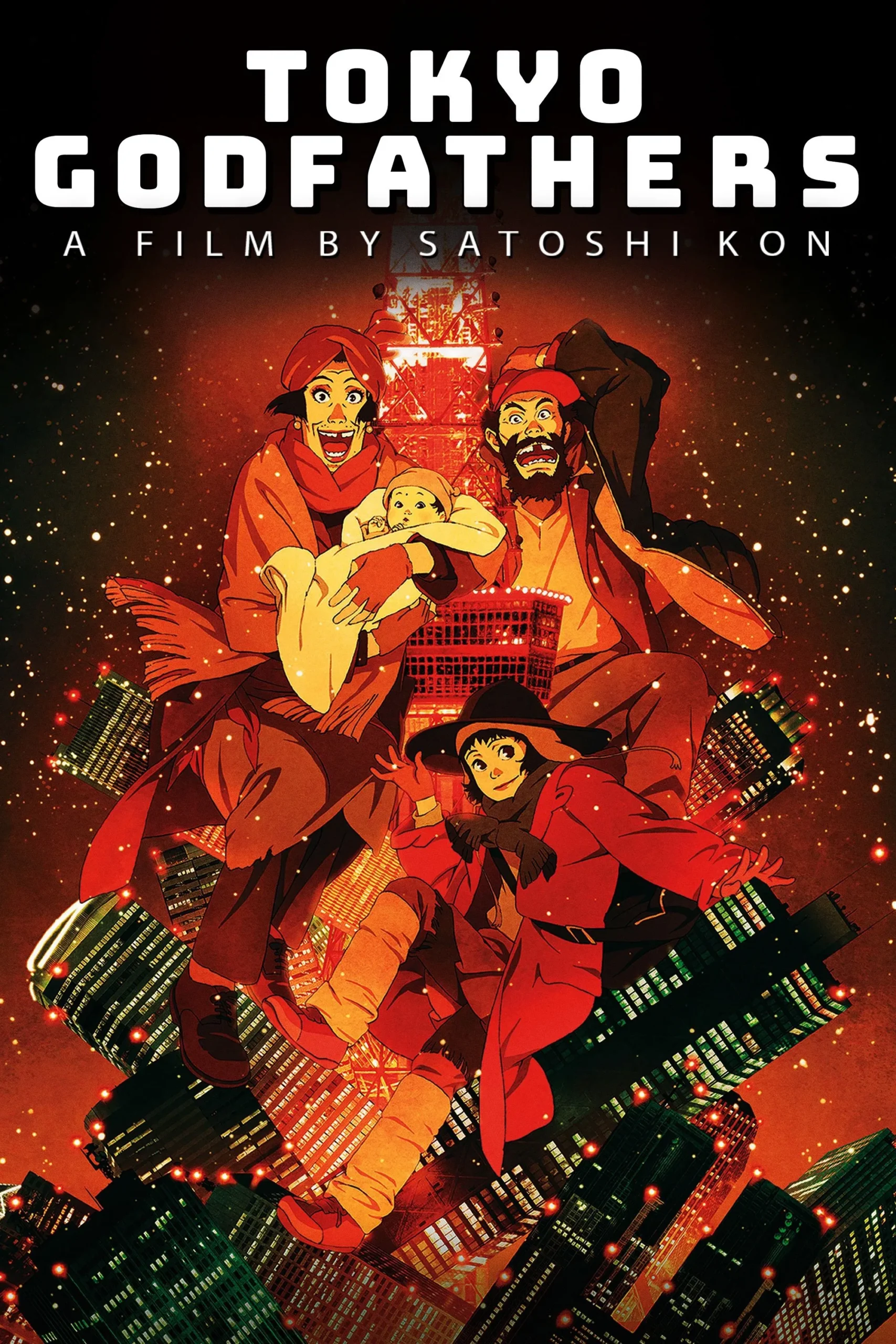
This isn’t another generic Christmas movie where everything works out perfectly by the end credits. It’s a 2003 anime from Satoshi Kon that understands what the holidays feel like when you’re barely surviving them.
New Year’s Eve is here, and if you’re looking for something to watch with friends… who actually means something, Tokyo Godfathers deserves your attention. Three homeless people find an abandoned baby on Christmas Eve in Tokyo, and what happens next is 90 minutes of messy, real, surprisingly funny storytelling about people the world pretends don’t exist.
When the City Stops for Nobody
Tokyo in this film moves like it has somewhere important to be and you’re just standing in the way. Trains cut through the night on perfect schedules while people flood through intersections like they’re late for something they can’t quite remember. Satoshi Kon animates the city with cold precision that makes you feel how little it cares about anyone. This isn’t the Tokyo you see in tourist videos or romantic anime—no cherry blossoms or poetic rain scenes. Just convenience stores at 3 AM, concrete underpasses, fluorescent lights that make exhaustion visible on every face. The city works perfectly whether you’re housed or homeless, employed or forgotten. It doesn’t pause for anyone and somewhere in all that mechanical efficiency, three people are trying to survive another freezing night on the streets.
Three People Living on the Margins
Gin is a middle-aged alcoholic who talks constantly because it’s easier than facing what he’s running from. He’s got a story for everything, excuses stacked on top of excuses, and most of them are probably lies he’s told so many times he believes them himself. Hana is a trans woman who refuses to be quiet about who she is, even when the world keeps telling her to disappear. She’s loud, emotional, fiercely loyal, and believes in family harder than anyone in the film because hers threw her away. Miyuki is a teenage runaway carrying anger she doesn’t know how to process yet. She’s guarded, doesn’t trust easily, and clearly ran from something painful enough that living on the streets seemed like… the better option.

Those three?… they argue constantly, insult each other, threaten to leave, push each other’s buttons like people who know exactly where it hurts. But when it gets cold enough, they huddle together for warmth. That’s what passes for family when you don’t have anywhere else to go. Roger Ebert wrote that these aren’t sentimentalized homeless people but characters with real complexity, and he was right. The film doesn’t try to make them noble or deserving or any of that condescending nonsense. They’re just people trying to get through another day.
A Baby Left in the Trash
They find Kiyoko on Christmas Eve, and there’s nothing magical about it. She’s literally in the garbage, wrapped in old newspapers, crying and freezing to death. No dramatic music, no heavenly light shining down, just a baby someone threw away like trash because they couldn’t deal with her. Three people who can barely take care of themselves suddenly have to figure out what to do with a newborn… in the cold. They name her Kiyoko, which means pure child, and there’s something both sad and funny about homeless people in cardboard shelters choosing that name. Maybe they’re being ironic, or maybe they see something in her that the world hasn’t destroyed yet—something they recognize because they remember what it was like before everything fell apart.
The baby changes everything because you can’t just ignore a crying infant the way you ignore your own problems. One reviewer on Letterboxd said it perfectly—the baby isn’t a symbol or a plot device, she’s actual weight and warmth and responsibility. Now these three have to move, make decisions, take care of someone more helpless than they are. It forces them to matter again.
How Cities Work on Accident
Things line up oddly in Tokyo Godfathers. People cross paths at convenient times, doors open right when they need to, connections happen that feel almost too perfect. Some viewers complain this makes the film unrealistic, too neat for something trying to be grounded. But anyone who’s lived in a major city knows that coincidences happen constantly. Millions of people moving through the same spaces every day means paths cross all the time—most of it means nothing, but occasionally it means everything. The film just focuses on the coincidences that matter and trusts you to understand that cities work this way. What saves people here isn’t divine intervention or destiny, it’s being in the right place when someone decides to stop and actually pay attention instead of walking past like everyone else does.

Family That Doesn’t Require Forever
Tokyo Godfathers doesn’t lie about family the way most holiday movies do. Families in this film are messy, broken, sometimes violent, sometimes loving, usually complicated. The film doesn’t tell you which families count and which don’t, doesn’t give you some hierarchy of what makes family real. What it does show you is that family doesn’t need to be permanent to matter. For one winter night, three homeless people become something like parents to an abandoned baby—not because they’re qualified or ready, just because she needs someone and they’re the ones who showed up. There’s no promise this arrangement lasts past next week or even tomorrow. But right now it’s real… and that’s enough. The film trusts you to understand that temporary doesn’t mean meaningless.
Why This Film Still Works
Satoshi Kon made his name with films like Perfect Blue and Paprika, where reality bends and breaks until you can’t tell what’s real. Tokyo Godfathers is nothing like that… the animation here is straightforward, almost documentary-style. Kon uses it not to escape reality but to observe it more carefully than live-action can. This restraint is why the film still feels fresh over twenty years later while flashier anime from the same period look dated.
There’s no Hollywood ending here, no promise that everyone will be fine. What you get instead is simpler—people are more than their worst day, caring doesn’t require forever, and being really seen by another person can shift your entire life. As 2026 starts, maybe that’s the reminder we all need.
Watch Tokyo Godfathers this New Year’s Eve… come back and tell us what you thought. We want to know if it hit you the same way it hit us.