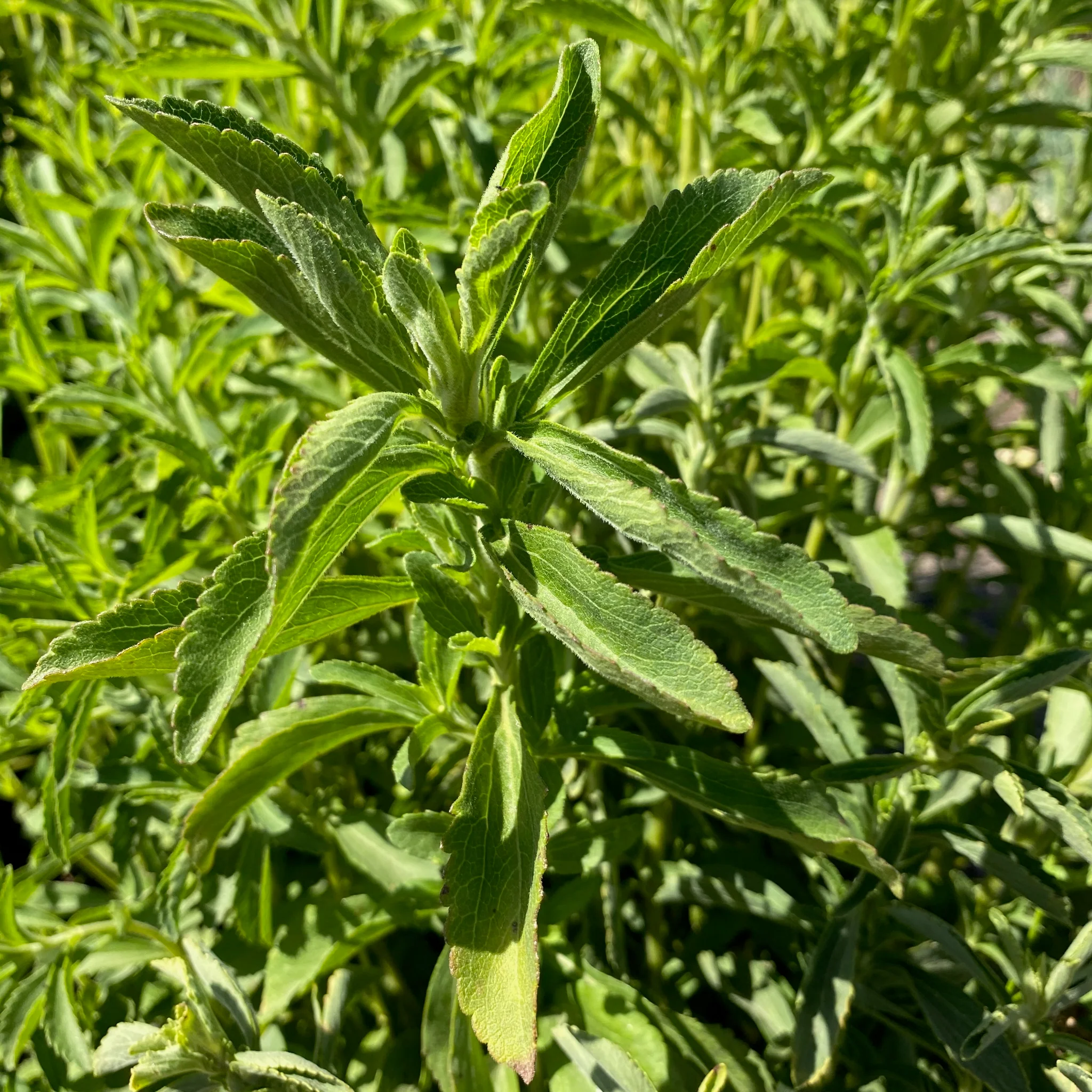
Somewhere along the Paraguay-Brazil border, generations before anyone thought record it, Guaraní families were tearing a small green leaf into their yerba mate. They called it ka’a he’ê, sweet herb, and used it the way people use things that simply work. No lab confirmed it and no marketing department named it. Their tongues already knew what it was.
That’s where stevia’s story actually starts, and it’s worth sitting with, because everything that comes after, the botanists, the beverage giants, the bioreactors, is a story of the world catching up to something Indigenous Paraguay has never needed to explain.
The Leaf Bertoni Only Translated
Moisés Santiago Bertoni, a Swiss-Paraguayan botanist, gave the plant its formal scientific description in 1899, working entirely from specimens and knowledge that Guaraní communities freely shared with him.

Ovidio Rebaudi, a Paraguayan chemist, followed with early analysis of the compounds behind its intensity. Between them, the species picked up a Latin name, Stevia rebaudiana, and stepped into the Western scientific record.
Call it discovery if that word sits easier but it’s more honest to call it translation. The leaf didn’t change. The language used to describe it did. For decades after Bertoni’s paper, almost nobody outside South America paid stevia any attention, and its taste had nothing to do with it.
Sugar had already built an empire, plantations, shipping routes, refineries, colonial capital, and a taste memory stitched into entire cultures over centuries and a leaf from Paraguay was never going to out-market that kind of infrastructure. It took the twentieth century’s mounting sugar problem, rising diabetes rates, rotting teeth, expanding waistlines, to send scientists looking backward at a plant Guaraní communities had never stopped using. Japan moved first, commercialising stevia extracts in the 1970s, years ahead of Western regulators still treating the whole idea with suspicion.
Why Diabetics Trusted This Leaf Before Regulators Did
Here’s the part that actually explains why Japan bet on this leaf decades before anyone else. Stevia rebaudiana carries a group of compounds called steviol glycosides, and they’re doing nearly all the work, 200 to 300 times sweeter than table sugar by weight, with stevioside and rebaudioside A (Reb A) responsible for most commercial extracts.
Sweet taste works through receptors on the tongue that respond to a molecule’s shape rather than its calories. Sugar fits those receptors and triggers a full metabolic cascade behind the sweet signal. Steviol glycosides fit the same receptors from a different angle, strong enough to register as sweet, but the molecule passes through the small intestine, largely unabsorbed. Gut bacteria break down what’s left, and the byproducts leave the body rather than becoming glucose. The tongue tastes sugar but the bloodstream never gets the memo.
This is precisely why multiple studies, including trials published in the Journal of the American Dietetic Association, found that stevia doesn’t raise blood glucose or insulin levels in people managing type 2 diabetes, even at high intake. That isn’t treatment, it’s absence, the absence of a spike that sugar reliably produces. For anyone managing a lifelong condition, an absence like that carries real weight.
Because steviol glycosides carry effectively zero calories, stevia has also drawn attention as a substitution tool in weight management, though appetite and long-term dietary compensation remain genuinely unsettled questions nobody credible has answered. Newer research into what these compounds do to gut bacteria is similarly still being written, with early findings mixed rather than conclusive. And the safety picture that matters most, pregnancy, children, general population risk, has been reviewed independently by the European Food Safety Authority, the FDA, and the WHO’s joint expert committee, all landing near the same acceptable daily intake and all finding no evidence of harm at purified extract levels.
The infertility rumour that still circulates traces back to a single 1968 rat study using extreme doses of crude extract, never replicated, bearing little resemblance to how commercial stevia is made today. Decades of research since, and three regulatory bodies working independently, yet none have found what that one study suggested.
Perhaps the biggest surprise isn’t that stevia is sweet. It’s that the body treats its sweetness almost like a polite illusion.
Why the Aftertaste Became a Billion-Dollar Problem
Sweetness has always been political. Sugar cane spread across the Caribbean and Brazil not because it tasted good but because European empires needed a crop grown on stolen land by enslaved labour and shipped home at a profit that justified the entire system. Stevia’s business story is smaller and far less bloody, but it’s still, underneath everything, a story about who gets to decide what the world tastes.
Commercial cultivation now centres heavily in China, with smaller operations in Kenya, India, and parts of the United States. Whole dried leaf carries a full spectrum of compounds, some sweet, some bitter, some simply inert, and commercial extraction isolates specific glycosides, usually rebaudioside A, chasing a cleaner sweetness while dodging the bitterness still carried by whole-leaf preparations.
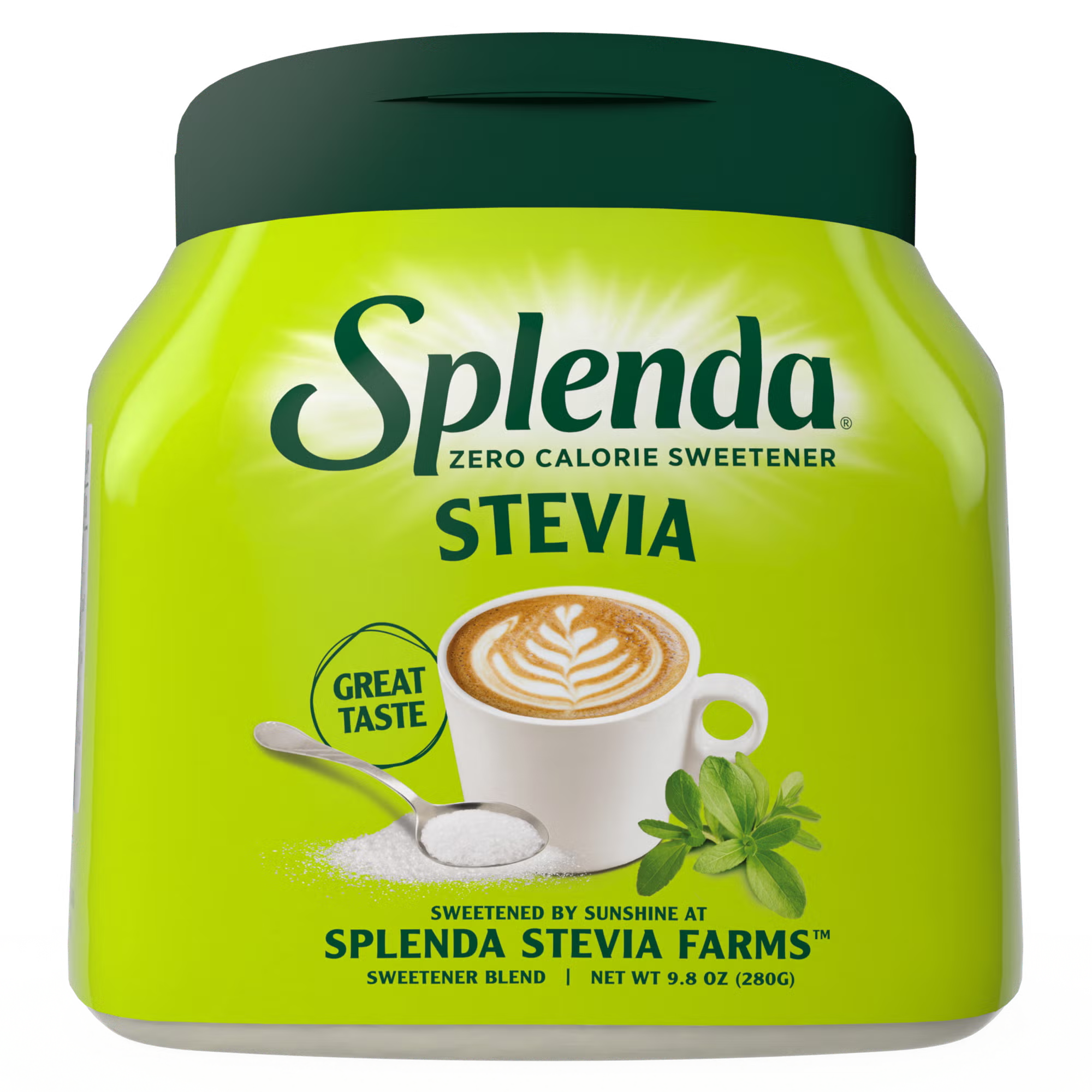
That bitterness is the industry’s real obstacle. Certain glycosides, stevioside especially, bind to bitter receptors alongside sweet ones, producing a two-part signal some palates pick up hard. It’s why Coca-Cola and PepsiCo, after years chasing extraction methods that could mute that trailing bitterness, eventually built entire product lines around stevia blends, and why companies like Cargill and DSM-Firmenich turned to fermentation, engineering yeast to produce rare glycosides like rebaudioside M in bioreactors rather than fields. Some of today’s “stevia” sweeteners, oddly enough, never touched a stevia plant at all.
None of this happened out of sentiment. Shoppers were reading ingredient labels for the first time in a generation. Governments were taxing sugar-sweetened drinks outright. And the word “natural” had quietly become worth more to a company’s bottom line than the word “artificial” ever was. Coca-Cola and PepsiCo weren’t chasing a leaf, they were chasing a market that had already made its decision.
On the environmental side, stevia’s case rests mainly on water. Studies comparing crop requirements have found that it needs substantially less irrigation than sugar cane per unit of sweetness delivered, largely because so little raw material is needed once you’re extracting a compound this potent. That doesn’t make it environmentally free. Processing still requires energy and, often, chemical solvents. A supply chain concentrated in a handful of countries carries its own transport and monoculture risks. The honest comparison isn’t that stevia is green and sugar isn’t. It’s that stevia’s footprint, measured against the sweetness it delivers, tends to land lighter
Sugar has built fortunes. Stevia may build a different future, not by replacing sugar entirely, but by forcing it to share the table.
The Question Stevia Can’t Actually Answer
Step back from the lab and the marketplace, and a harder question sits underneath all of it. Why are humans this obsessed with sweetness in the first place?
Sweetness once signaled something specific in evolutionary terms: safe calories, ripe fruit, food unlikely to poison you. That wiring never updated itself for a world of supermarket aisles and drive-through windows. The craving that once pointed a forager toward a ripe fig now points a commuter toward a vending machine, and the body still can’t tell the difference
Whether sugar meets the clinical bar for addiction the way nicotine does remains genuinely contested. Some studies show it activating dopamine pathways in ways that resemble dependence, particularly under intermittent high-sugar diets in animal models. Other researchers push back hard, arguing that food is something the body actually requires, unlike a drug, and that the addiction framing oversimplifies something shaped as much by culture and stress as neurochemistry. Nobody credible has settled this.
What’s clearer is how little the natural-versus-artificial framing actually tells. Stevia benefits from a word the food industry learned to sell hard, the word natural, but natural has never meant safe, and artificial has never meant harmful. Aspartame is synthetic with decades of safety data behind it. Certain natural compounds are toxic in doses far smaller than anything sold at a supermarket. The label tells a reader something about marketing and almost nothing about the molecule.
Sweetness has also migrated into places it never used to live, bread, salad dressing, tomato sauce, protein bars sold as health food, often as a quiet default rather than a deliberate choice. Wellness culture answered by treating sweetness itself as suspect, building an industry around guilt-free labels and sugar-free everything. Both extremes miss the same thing. A food culture hiding sugar everywhere and a wellness culture treating sweetness as moral failure are, strangely, mirror images of the same discomfort. Neither one asked whether plain food could just be normal again.
This is the real question stevia gets pulled into, whether it wants the job or not. A zero-calorie sweetener doesn’t dissolve the emotional architecture built around sweetness over a lifetime. Someone who links dessert to reward, or stress to sugar, doesn’t lose that link just because the sweetener changed. Stevia can lower a glycemic number but can’t undo decades of learned association between sweetness and permission. That work happens somewhere other than the tongue.
The frontier past stevia is already running in bioreactors, not fields. Precision fermentation, the same technique producing rare stevia glycosides without a single leaf involved, is now being extended toward sweet proteins like brazzein and monellin, sourced originally from West African fruits, sweet at concentrations far below even stevia’s, with early signs some may sidestep the bitterness that still trails steviol glycosides. Whether any of it reaches supermarket shelves at real scale is still tangled in cost, regulation, and whether consumers will eat something grown in a vat rather than a field.
Stevia probably isn’t the final answer. It’s more accurate to call it a bridge, a plant that proved a market existed for sweetness without metabolic cost, and in doing so opened the door for whatever comes after it. The Guaraní who first used ka’a he’ê weren’t trying to disrupt an industry, they were just sweetening tea. Everything stevia became after that, happened because a small leaf did one thing well and refused to be ignored forever.
Perhaps the real revolution isn’t a leaf from Paraguay. It’s the possibility that sweetness and excess were never actually the same thing, and it took four centuries of sugar convincing us otherwise to finally notice.