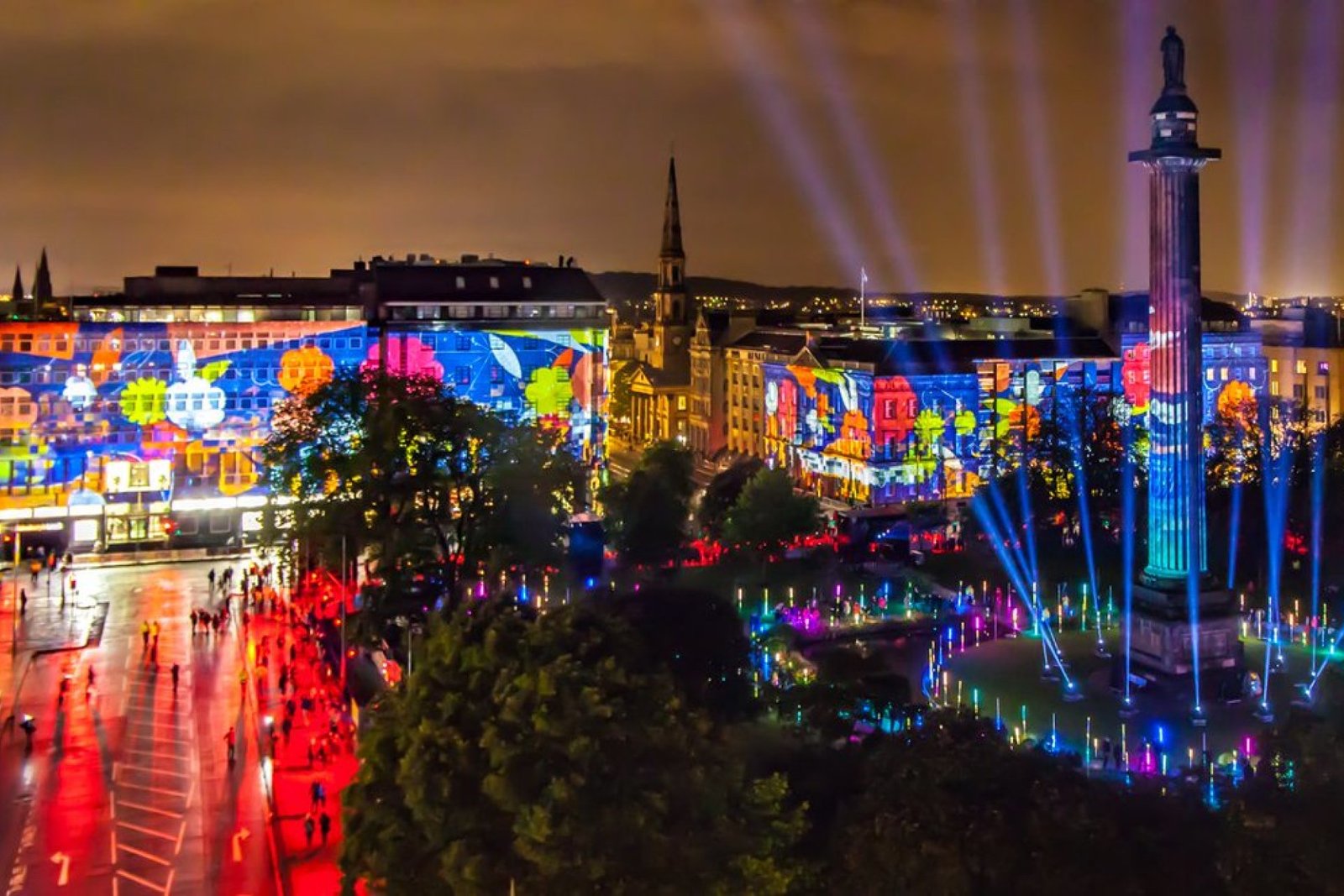
In 1942, Rudolf Bing was walking down Princes Street after an opera, trying to solve a financial problem for Glyndebourne. Five years later, that walk had become something else entirely. Bing, an Austrian Jewish refugee who’d fled the Nazi regime, opened the first Edinburgh International Festival on 24 August 1947 to provide “a platform for the flowering of the human spirit,” in a Europe that had just spent six years trying to destroy it. The Vienna Philharmonic played that first year, reunited with conductor Bruno Walter for the first time since the war scattered them.
Seventy-nine years on, the 2026 Festival is doing something similarly personal with a different country. Running 7–30 August under the theme All Rise, timed to America’s 250th anniversary, the programme explores freedom, ingenuity, prejudice and hypocrisy as one unresolved bundle across 147 performances in opera, theatre, dance and classical music.
Nicola Benedetti’s Fourth Festival, and Her Husband’s Orchestra Is On the Bill
Nicola Benedetti is directing her fourth Festival in 2026. She became the first woman and first Scot to lead the International Festival in October 2022. Two years later, she married Wynton Marsalis, the New Orleans trumpeter who leads the Jazz at Lincoln Center Orchestra. That orchestra is one of three in residence at this year’s Festival, alongside the Berliner Philharmoniker and Gustavo Dudamel’s LA Philharmonic. Marsalis and JLCO play Edinburgh on 8, 11 and 12 August, with the 8th a joint performance alongside the Royal Scottish National Orchestra.
Furthermore, the scale of the commissioning tells its own story. Five world premieres. Ten Festival commissions. Three European premieres, five UK premieres and three Scottish premieres. A director doesn’t spend a budget that size unless she’s genuinely wrestling with the theme, not decorating around it.
Two World Premieres, Two Different Americas, One Stage
The opera programme runs two new productions at the Festival Theatre, both American, from opposite ends of a century. Verdi’s A Masked Ball, staged by Zurich Opera, moves its assassination plot into the excess of the Gilded Age. The Galloping Cure, a world premiere from composer Missy Mazzoli and librettist Royce Vavrek, takes the opioid crisis head-on, no period costume to soften it. Scottish companies add two operas-in-concert at Usher Hall, keeping the home institutions in the room while the imported work carries the sharper material.
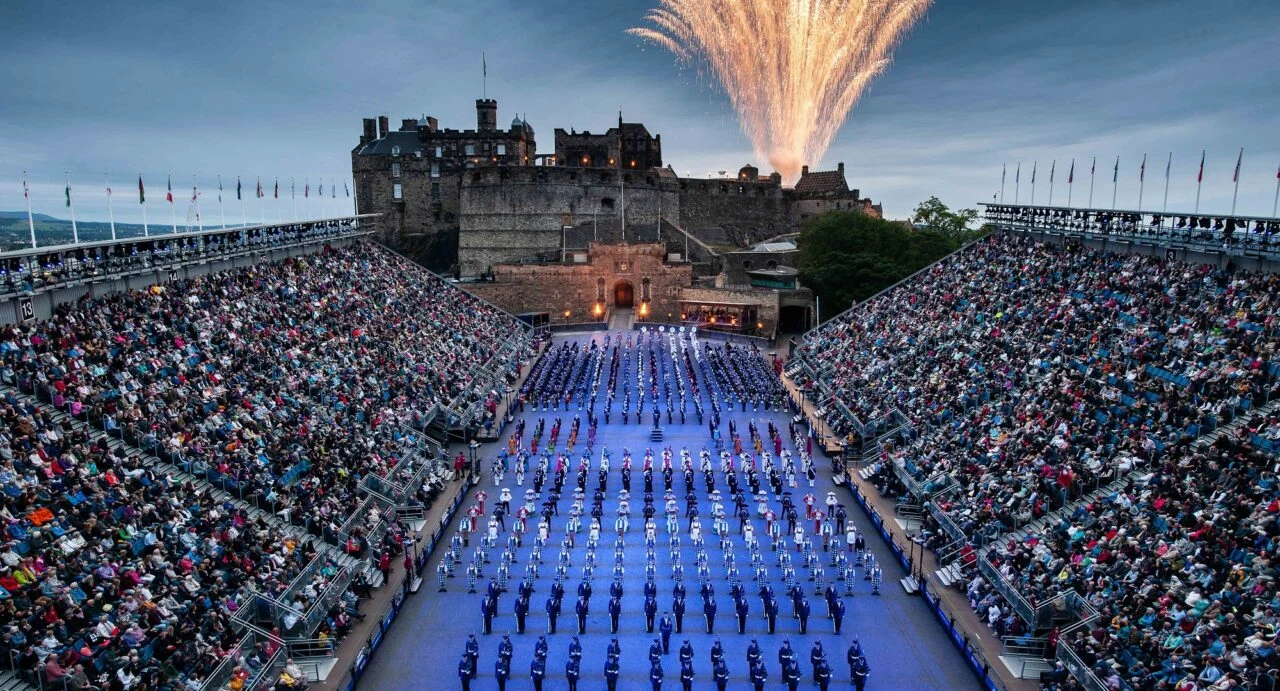
Tony Kushner’s Angels in America, his Reagan-era epic of AIDS, faith and American self-mythology, anchors the theatre programme. It runs alongside Haribo Kimchi, a five-day cross-cultural piece at the Hub, and Ingoma! A Revolution in Rhythm, built entirely around resilience and rhythm as political statement. Moreover, the through-line across the theatre programme is simple: these are all plays about people who had to fight for the ground under their feet.
Jazz at Lincoln Center, Berliner Philharmoniker, LA Phil, One Stage Each
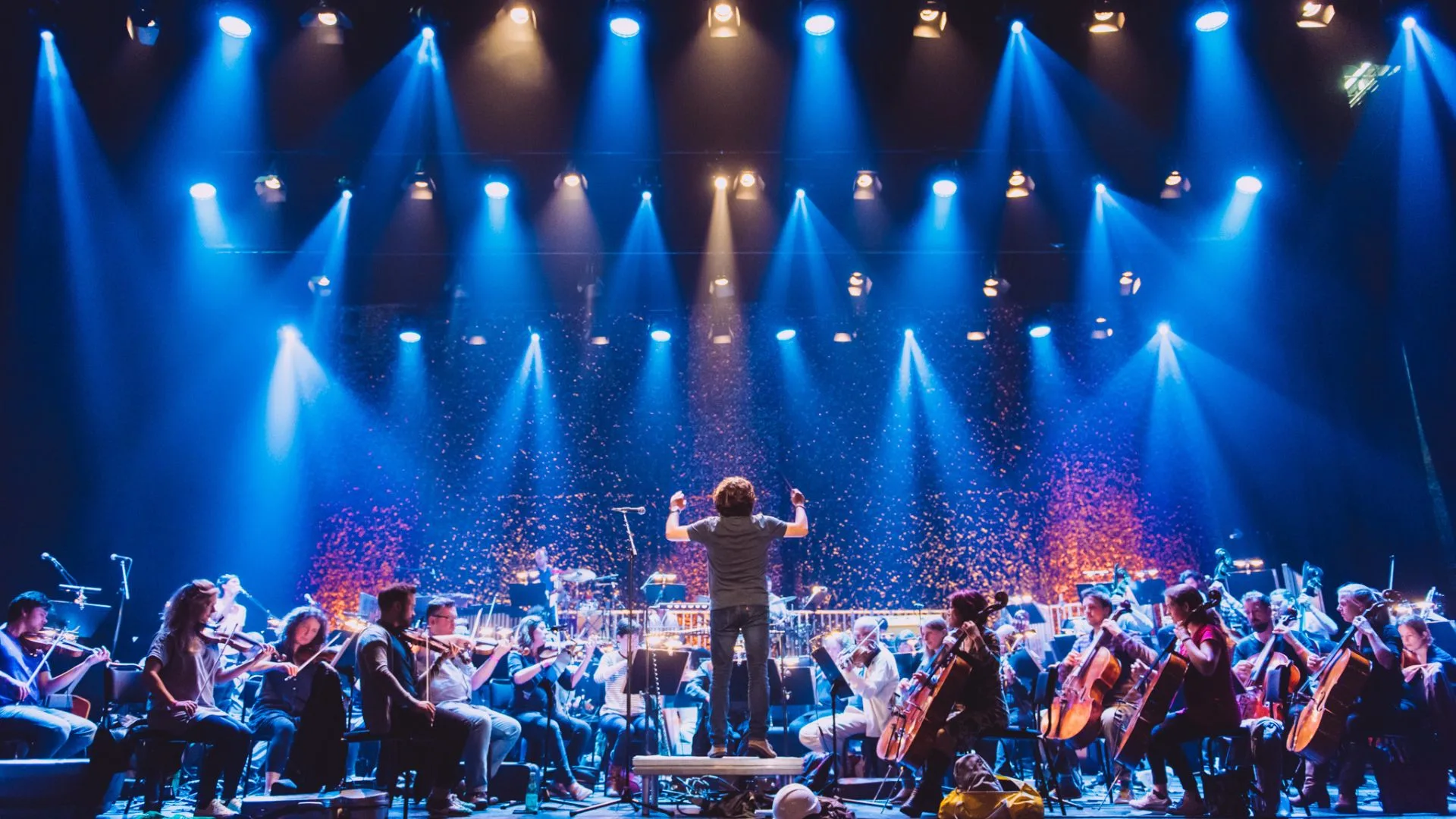
The classical music programme runs 23 concerts at Usher Hall and 21 recitals at the Queen’s Hall, anchored by the three-orchestra residency model. Jazz at Lincoln Center Orchestra brings American jazz repertoire under Marsalis’s direction. The Berliner Philharmoniker and LA Phil, the latter under Dudamel, supply the European and West Coast counterweights. Sean Shibe performs as a self-described boundary-breaking, Spanish-British guitarist, and pianist Yuja Wang appears with the Jazz at Lincoln Center residency, a pairing unlikely to happen anywhere else on the festival calendar this year.
Deaf, Disabled and Neurodivergent Attendees Get Real Discounts, Not Gestures
The affordability push is built into the programme’s spine, not tacked on as good PR. Over 50,000 tickets across the 2026 Festival will go for £30 or less, and the £10 Give It a Go scheme applies to every single event, aimed at anyone who wants to try something unfamiliar without the financial risk attached. The Young Musicians Pass gives free tickets to 8 to 18-year-olds, and Tickets for Good extends free access to NHS staff, charity workers and low-income benefit recipients. Deaf, disabled and neurodivergent attendees get a 50% concession discount, and 2026 brings the highest number of captioned performances the Festival has staged to date, alongside two Dementia-Friendly concerts following last year’s sellout.
A festival built to examine who gets to claim a country’s ideals has quietly built a ticketing structure that puts the same question to itself. All Rise never asks its audience to salute America’s 250th anniversary. It asks them to watch that mythology get handled by people who never wrote it, an Austrian refugee’s festival now run by a Scottish violinist married into an American jazz dynasty, staging a Gilded Age murder plot next to an opioid crisis nobody’s finished living through.
Here’s How to Get In, and Where to Start
The 2026 Edinburgh International Festival runs 7 to 30 August across venues including Usher Hall, the Festival Theatre, the Queen’s Hall, The Hub and the Lyceum. Tickets are on sale now through eif.co.uk, with the £10 Give-It-a-Go scheme worth checking first. General booking has been open since March, and popular residency concerts, particularly the LA Phil and Jazz at Lincoln Center dates, are moving fast. Follow the Festival on Instagram for programme updates and access information.