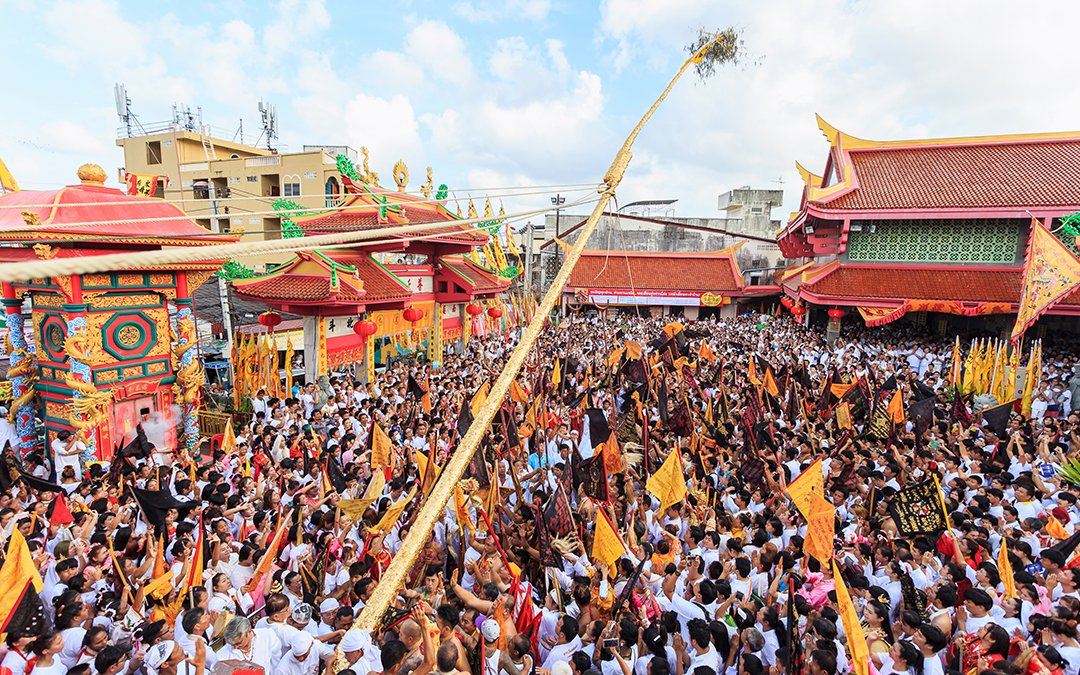
In 1825, a Hokkien opera troupe arrived at the tin-mining town of Kathu to entertain Chinese labourers, then fell seriously ill. The troupe decided they had neglected the ancestor rites kept back home, and improvised with a nine-day fast and a prayer to the Nine Emperor Gods. Having recovered, Kathu’s residents repeated the fast every year afterwards. Two hundred and one years later, 39 shrines across Phuket will be running it for the government which has put a figure on it. The figure is 1.4 billion baht.
Tin explains why there was ever a theatre troupe in Kathu at all. Miners had done on the island since the 1500s, and in the 1790s a much richer field opened up at Kathu. Within a generation it had become the biggest on the island, Chinese labourers filled the settlement, and so a touring company in 1825 made its show to a Chinese mining town in a jungle clearing. Fujian was still a long way off, so when the performers fell ill, nobody present knew the full ceremony, and so had to build their own at the theatre.
A Sick Troupe Wrote the Rulebook Because Nobody Else Knew It
Accounts of the illness disagree, with most name-cholera while others malaria. The versions agree on what the troupe concluded, however. The performers then blamed neglected ancestor worship, and took up a strict nine-day fast and a prayer to the Nine Emperor Gods, whom Hokkien speakers call Kiu Ong Iah. Taoist belief links these star lords to the Big Dipper, and also gives them authority over human fate and health. When the sickness receded, Kathu’s residents kept the fast going. The community has repeated it every year since.
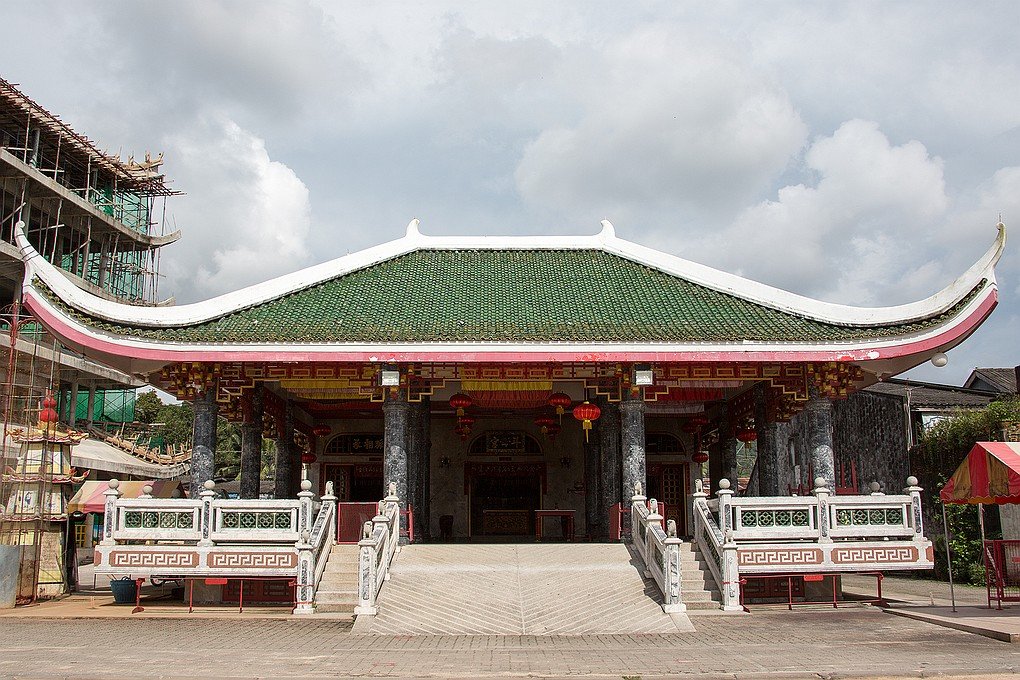
Kathu Shrine still carries the history, though the full name is Lai Thu Tao Bo Keng. That means the hall of Tao Bo, the Mother of the Dipper, for whom Chinese belief makes her the mother of the Nine Emperor Gods. The shrine also ranks first on the provincial roster, and keeps the festival’s original scripture book, marked its 200th year in October 2025. Chanachon Tandavanitj owns Chinpracha House and Museum in Phuket Town, and credits the gods for ending the outbreak, his word for them being heroes.
The English Name Sells a Diet and Hides a Discipline
Visitors who read the words Vegetarian Festival expect an event about animal welfare, but the festival is centred on purification instead. Devotees keep a strict vegetarian diet, and dress in white too. The nine days aim to cleanse body and mind. Locals also call it Jia Chai, and the government describes it as a reflection of the religious faith and heritage of Phuket’s Thai-Chinese community.
Hokkien migrants brought the tradition to southern Thailand. The same Nine Emperor Gods rites run across the Chinese diaspora in Malaysia, Singapore and Indonesia. Within Thailand, Phuket’s version is the largest and best known, set apart by its mediums and its network of shrines.
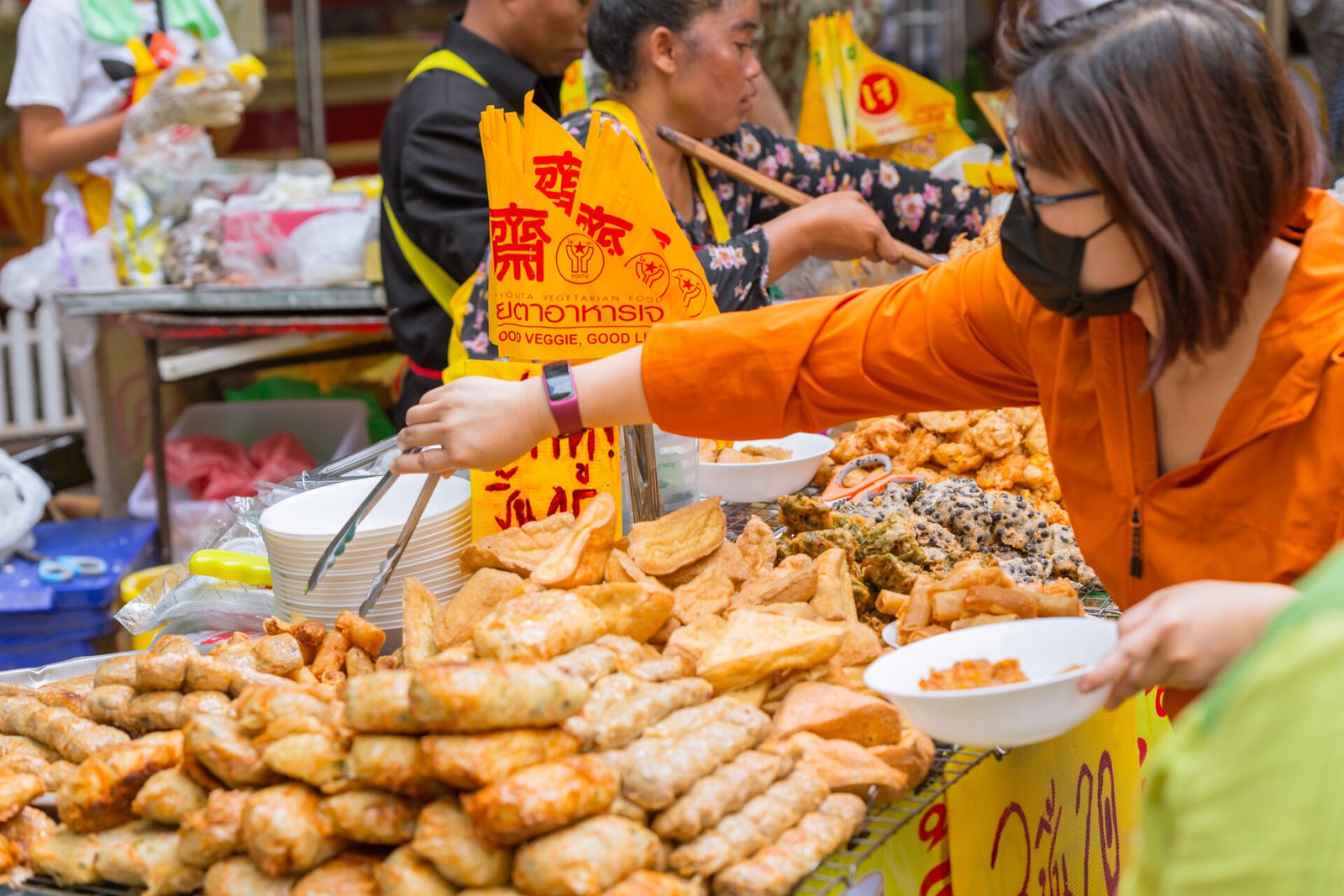
Food is the easiest way in. Stalls line Ranong Road in Phuket Town, from the fountain circle to Jui Tui Shrine. The island’s markets turn fully vegetarian for the nine days, and taking part only costs nothing, so visitors pay only for their meals.
The Mediums Carry the Risk Visitors Photograph
The ma song stand at the centre of the street rituals. The name means horses of the gods, because the mediums act as vehicles for the deities. In trance, they pierce their cheeks with knives and skewers, seemingly not in pain. It’s reported by Time Out Phuket at shrines including Jui Tui and Bang Neow.

Firecrackers fly by the sackful under the feet of each procession, while Sam Kong Shrine adds blade-ladder rituals to its march through the old town. Bang Neow stages its rituals around a large statue of Guanyin. Kathu keeps the reputation for the most intense medium rituals and the most spectacular fire-walking. At 3 pm, in full daylight, the birthplace of the festival lights the island’s earliest fire walk.
Every Shrine Keeps Its Own Clock
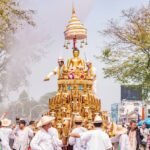
Phuket runs a relay instead of a single parade. According to Phuket101 and the Tourism Authority of Thailand’s 2026 programme, 39 shrines take part. Thirty-one of them hold a street procession of their own. Each morning a different shrine leads. Naka Shrine opened the processions on October 11 at 7.30 am, and Sam Kong goes out on October 13 at about 7.45 am. Ban Tha Rue follows on October 14 at around 6.09 am. Bang Neow will leave on October 15 at 6 am, and Jui Tui, one of the two largest departs on October 16 at 8 am.
Then Kathu marches on October 17 at 6.45 am, and Sui Boon Tong leads the final day on October 18 with Saphan Hin. Two evening rituals sit alongside the dawn marches. Ban Tha Rue holds its fire-walking on October 15 at 8 pm. On October 18 at 7.30 pm, Kathu stages the sacred bridge-crossing. Devotees receive the Nine Emperor Gods’ seal on their backs as a sign of purification from sins and misfortune. The poles come down on October 19, once the gods have left. Shrines confirm their final times shortly before the festival, so every date above is a plan.
A Government Spokesperson Has Priced a Fast That Charges No Admission
Thailand’s government is now framing the festival with a forecast. Deputy Government Spokesperson Ploytalay Laksmeesangchan described Jia Chai as a significant cultural tradition, and also provided the projections. Officials expect more than 140,000 visitors, mostly domestic tourists. Travellers from China, Singapore and Malaysia will add to that, and the expectation is for at least 1.4 billion baht in local economic activity. Meanwhile, hotel bookings in Mueang Phuket District have risen by about 10 percent compared with last year.
The money lands in an odd place. Nobody pays at a gate, so the spending reaches hotels and stalls instead of a ticket office. The festival joined Thailand’s national intangible cultural heritage list in 2018, giving the rite an official standing it didn’t need in Kathu in 1825. A rite that sick performers improvised without a script has lasted long enough for a government to forecast its income. The government can predict 140,000 visitors, but only the shrines can open a street at six in the morning. Bang Neow will do so on October 15 whether or not the forecast holds.
Processions continue through Sunday, October 18, and entry is free. Anyone on the island still has mornings left to watch the relay run. Phuket101’s festival guide lists the dates and shrines. Its Kathu Shrine page also covers the original scripture book and the 3 pm fire walk. Time Out Phuket’s insider guide sets out procession and ritual times shrine by shrine. The Thaiger’s guide covers etiquette for visitors who want to watch without getting in the way. The government’s own forecast, with its 140,000 visitors and 1.4 billion baht, appears in Pattaya Mail’s report of the Phuket announcement.