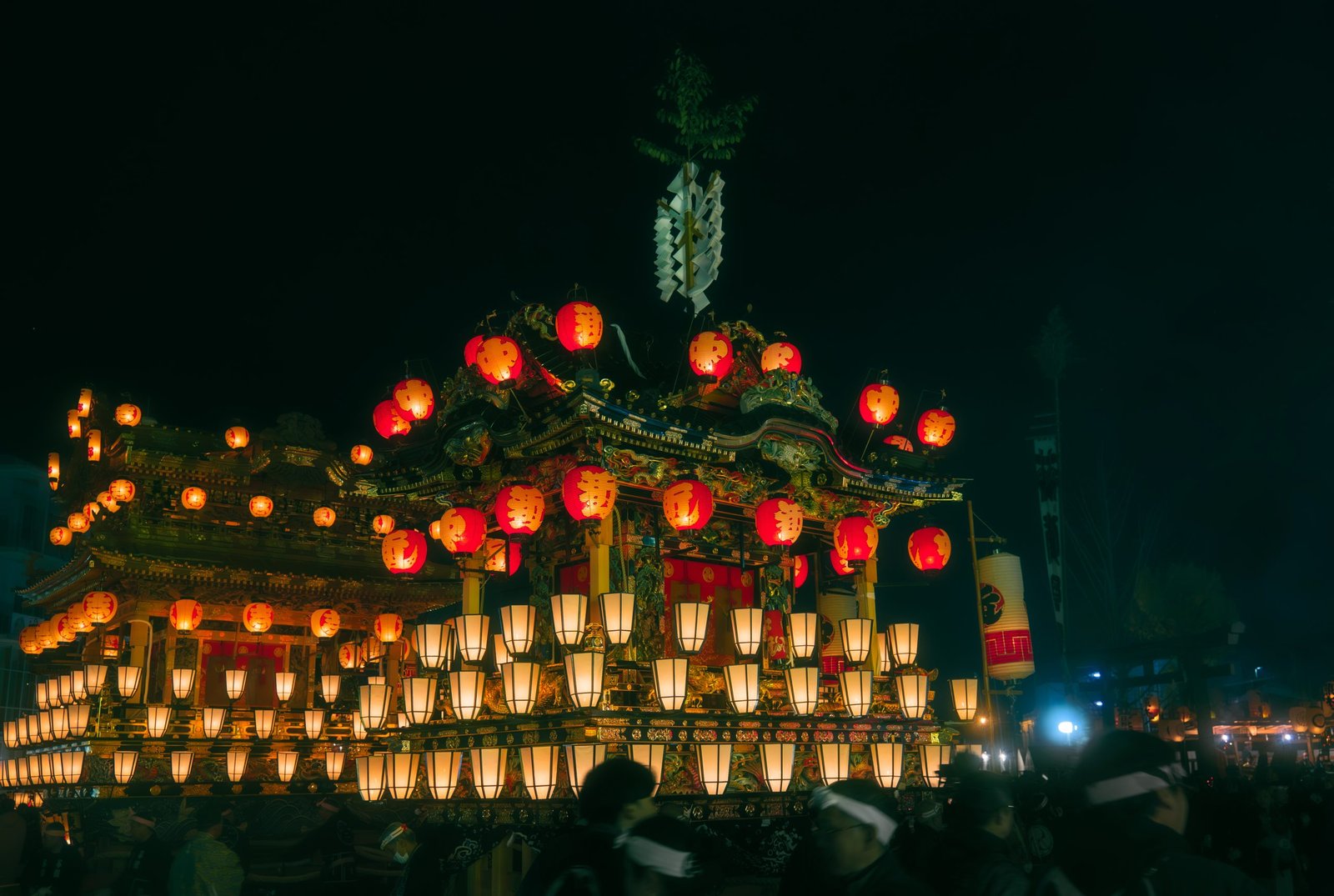
In 1827 the government halted religious festivals outright, and six districts in Chichibu carried on anyway. For the next 50 years, until the ban lifted, three districts held the festival one year and the other three held it the next. Their floats still roll through the streets today.
The Chichibu Night Festival, known in Japanese as Chichibu Yomatsuri, runs on 2 and 3 December in Chichibu, Saitama Prefecture. In 2026 those dates fall on a Wednesday and a Thursday. The 2nd is the eve and the 3rd is the main day. The dates never move, because the city holds the festival every year on December 2 and 3. The festival stands beside Kyoto’s Gion Festival and the Takayama Festival as one of Japan’s three great float festivals, and it is the only one of the three that takes place in winter.
UNESCO inscribed it on its Intangible Cultural Heritage list in 2016 and the crowd estimates vary widely, from 170,000 to 400,000.
Silk Paid for the Festival and the Pullers Still Wear It
No one can name the year the festival began. It is thought to predate Chichibu Shrine, which has stood for more than two thousand years. A record places the festival in the Kanbun era, 1661 to 1672. In the Edo period it carried the name Great Festival to Myōken and fell in early November.
A grand silk market near the shrine gave it money and a crowd. Silk merchants arrived from the surrounding regions, sold their cloth and joined the celebrations. As the region grew richer, the festival grew bigger. Chichibu sits deep in the mountains with little land suited to rice, so silk carried its economy for generations. The men who pull the floats still wear Chichibu meisen, the region’s woven silk. Legend adds a founder to the story. Chichibuhiko no Mikoto, who founded the shrine, taught silk weaving to the local community.
The shrine sits in the centre of the Chichibu Basin and looks out at Mount Bukō, and Hahaso Forest served as a place to worship the mountain from afar. The horses go back even further. The shogunal government donated sacred horses to the shrine in the Kamakura period, between 1185 and 1333. Two horses now repeat that gift every year, accompanying the floats on the tour of local shrines and pass to Chichibu Shrine when the festival ends.
Six Towns Beat a 50-Year Ban by Taking Turns
The ban had a clear target. In the last century of the Edo period, officials saw the common people as degenerating and clamped down on nightlife culture, including float parades and kabuki theatre. The floats had appeared only in the mid-seventeenth or early eighteenth century, and records date some of them to 1716 through 1736. For a period they were illegal. Then, from 1827, religious festivals stopped outright. Six districts refused to stop. They alternated, three towns one year and three the next, and the festival never missed a year before the ban ended. Each of the six floats on the streets today stands for one of those towns.
The Loudest Festival in Chichibu Goes Quiet for One Float
Tradition places the Buddhist deity Myōken in Hahaso Forest, the shrine’s sacred grove. Legend treats Myōken as a woman in love with the dragon deity of Mount Bukō. The dragon deity already has a wife, the spirit of Suwa Shrine. Every year on December 2, Myōken leaves the grove and travels to Suwa Shrine to beg for a single night with her lover.
By tradition, when the float from Motomachi passes Suwa Shrine, the musicians quiet their instruments and the onlookers whisper. If the talks go well, the two deities meet at Kamenoko Rock, a turtle statue in Chichibu Park near City Hall.
The hush is easy to miss in a festival built on drums and flutes. It marks the shrine ritual underneath the spectacle.
Not One Nail Holds Chichibu’s 20-Ton Floats Together
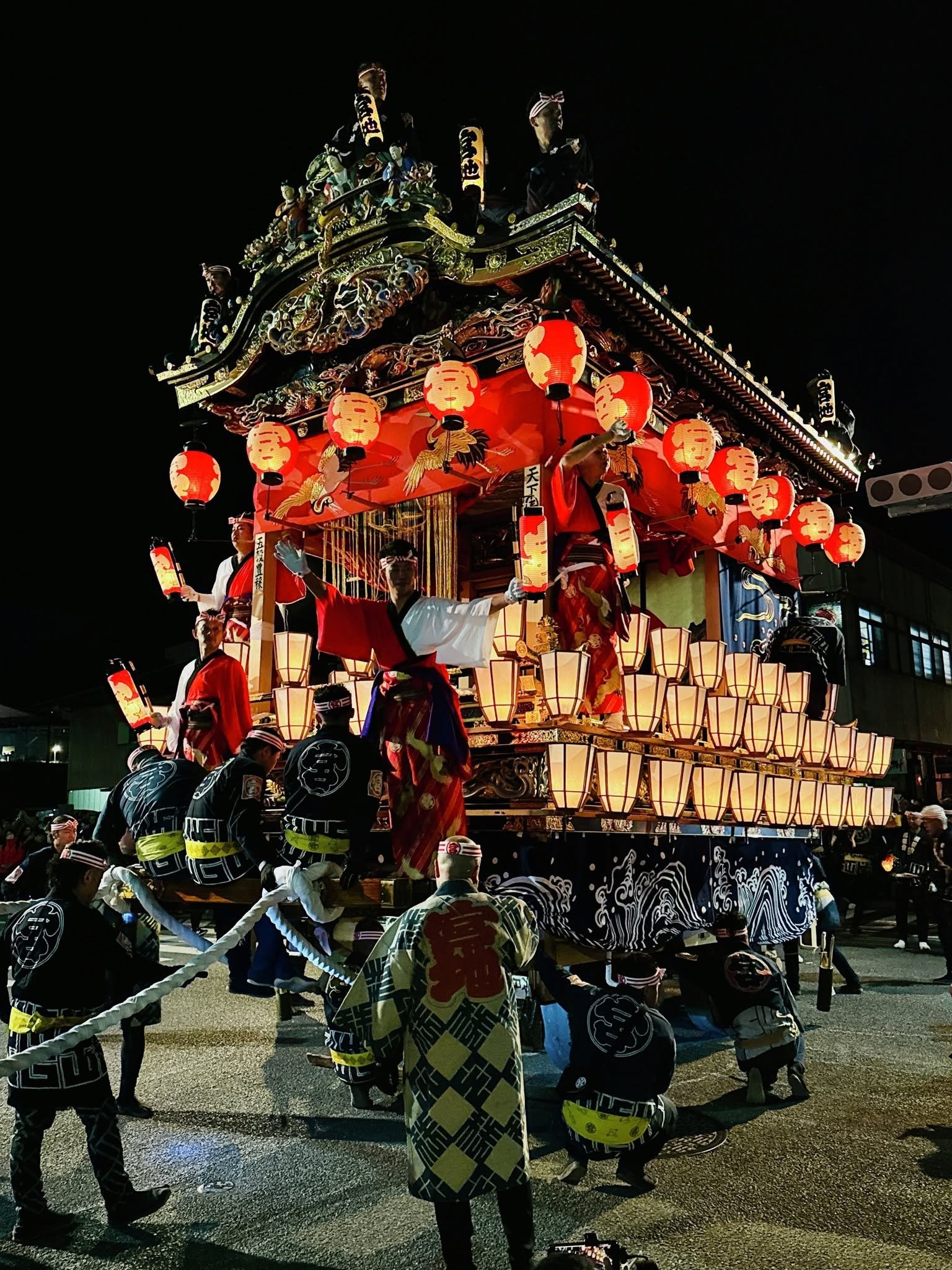
Each of the six floats belongs to a different neighbourhood. Two are kasaboko, lantern-covered platforms topped with halberds that stand in for the deities. Four are yatai, which carry musical ensembles and double as stages for kabuki and dance. Traditional wood joinery holds the floats together, and they contain no nails. They weigh between 10 and 20 tons.
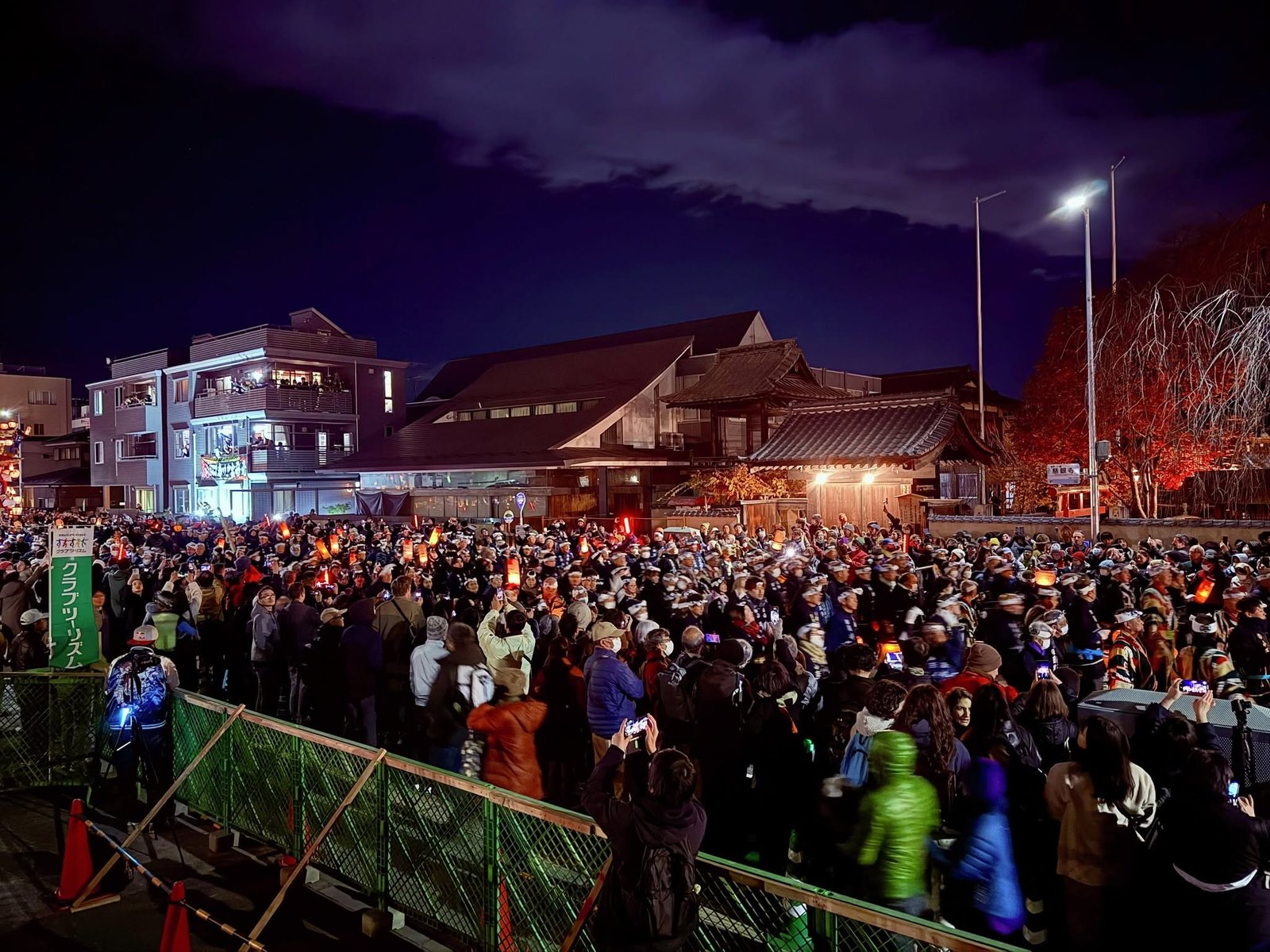
The timetable gives the crews long days. On December 2 the floats move from 12:00 to 16:30 and again from 18:00 to 20:00. On December 3 they move from 9:00 to 12:00 and again from 18:00. Floats from every town gather at the Otabisho, the resting place of the deities. At around seven in the evening the six floats converge on the shrine, and they reach the Otabisho only after the steep Dangozaka hill.
That climb is the festival’s signature. Crews haul the floats up Dangozaka while drums and flutes urge them on. The reverse pulling known as girimawashi is the move to watch for. Chichibu hayashi, the festival music, keeps a light tempo that energises the float pilots and the crowd, while dances and plays run on the yatai stages. In 2025 the procession typically reached the Otabisho around 22:00.
Visitors who miss the dates can still meet the floats. The Chichibu Festival Exhibition Hall next to the shrine keeps replica yatai and kasaboko on its first floor, with projection mapping and a powerful sound system that recreate the night. A small theatre screens a short film on each of Chichibu’s main annual events, and the second floor traces the history of the Night Festival. The hall opens all year, including festival days, until 5pm.
The City Closed the Dangozaka Climb to Visitors for Five Hours Last Year
The festival’s best-known moment carries a catch. The city’s notice for December 3, 2025 restricted entry to the Otabisho and the area around Dangozaka from about 17:30 until about 22:30 for accident prevention. During those hours visitors could not watch the climb from the hill. The city’s festival page carries the current notice, and visitors should read it before choosing a spot. 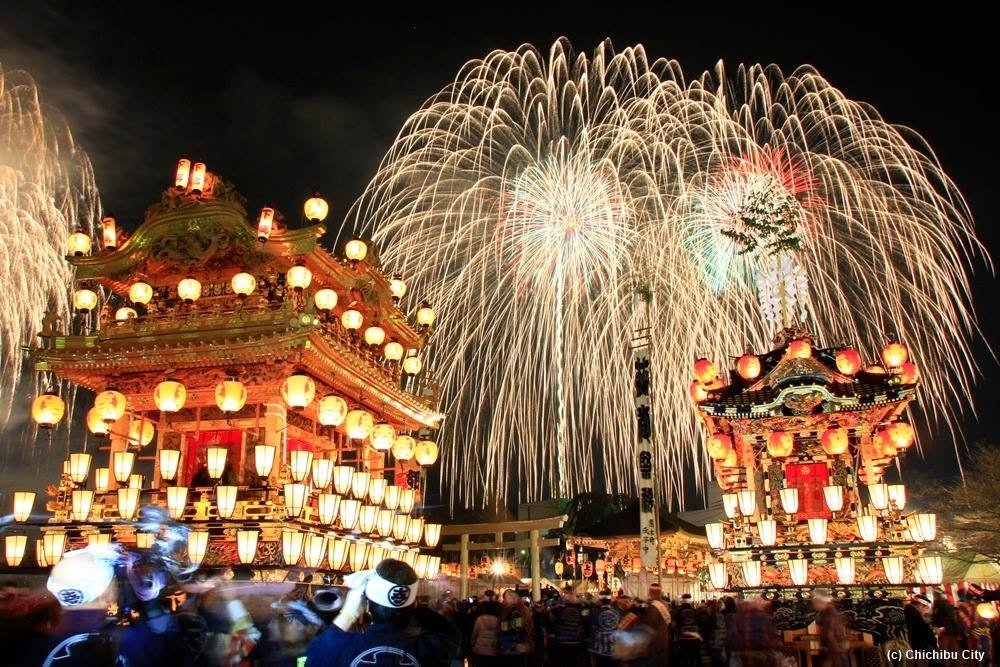
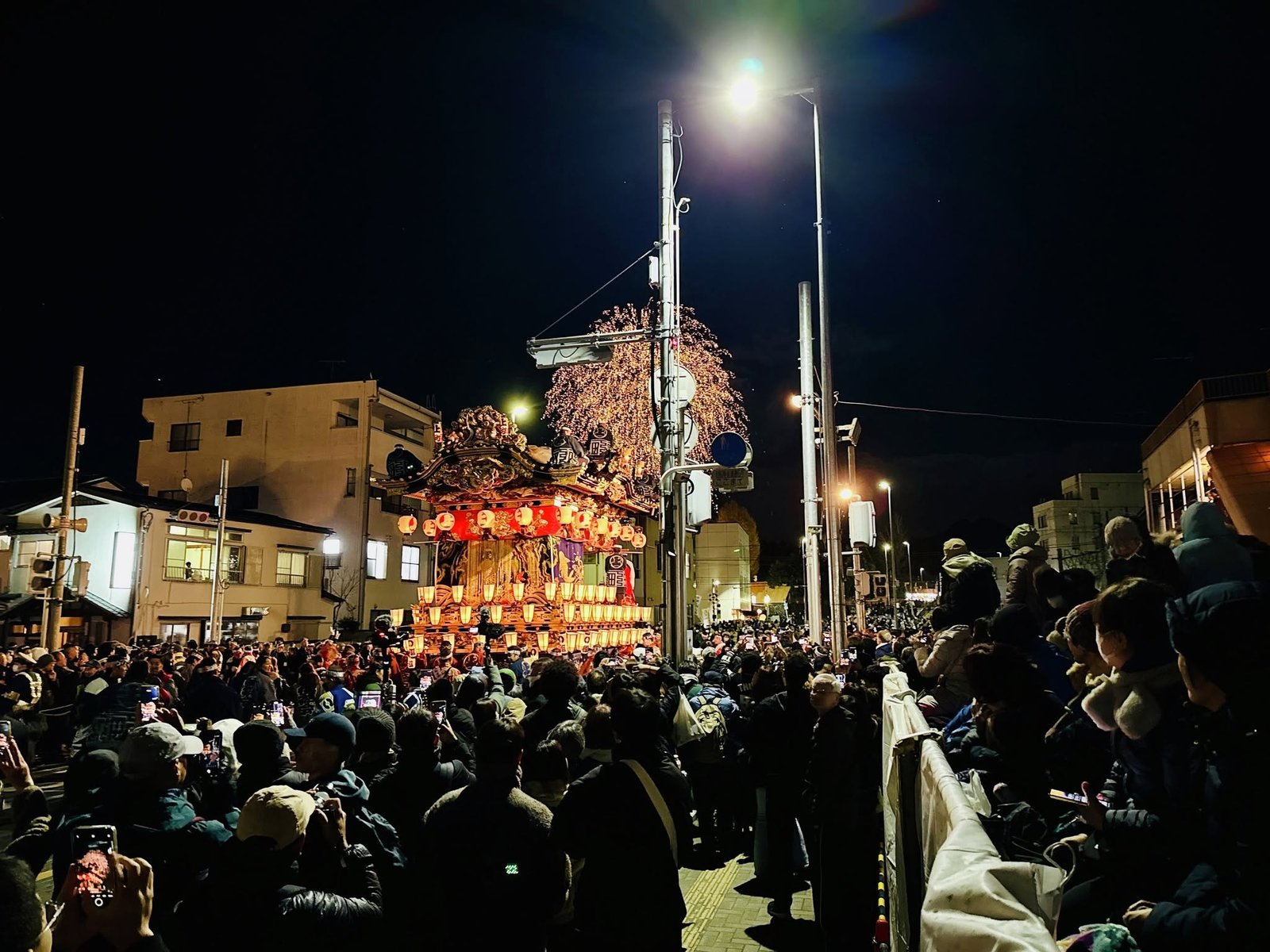
The fireworks give the street something to watch meanwhile. Winter fireworks are rare in Japan, and the cold air keeps the sky clear. The 2026 schedule puts the eve display at around 19:00 to 20:00 and the main display at around 19:30 to 22:00. The 2025 shot counts stood at 370 on the eve and 4,100 on the main night. The City Hall parking lot and the area in front of Seibu-Chichibu Station make the recommended viewing spots. Another good spot runs along National Route 140, between the traffic light in front of Seibu-Chichibu Station and the Uenomachi intersection. More than 800 stalls sell local food, from yakitori to miso potatoes, and the streets fill with stands selling amazake, the sweet rice wine that takes the edge off a December night.
Weak Reception at the Station Punishes Last-Minute Ticket Buyers
The festival takes place in central Chichibu, just outside Chichibu and Seibu-Chichibu stations, about 90 minutes from central Tokyo. The fastest route is the Laview limited express, which covers the distance in about 80 minutes from Ikebukuro. Seibu runs extra limited express trains on both nights. Every Laview seat needs a reservation and the trains can sell out, so book ahead. Boarding without a limited express ticket costs an extra 200 yen. Extra local trains run on December 3, and some require a transfer at Hanno Station. The SEIBU 1Day Pass costs 1,500 yen for adults and does not replace the limited express ticket.
Mobile reception around the station can wobble, so show digital tickets away from the crowd before reaching the gates. Carry cash for IC card top-ups and the stalls. Drones are banned at the festival. December temperatures in Chichibu average just under 4°C, and the night feels colder.
The festival rewards the visitor who commits to December 3 and plans around the closure. The climb, the longer fireworks display and the evening float timetable all fall on that date. The eve gives a quieter look at the Myōken story and more room to stand. Street viewing is free. The Chichibu Tourism Association carries the official programme, Chichibu Shrine publishes its own details and Seibu keeps the train information on its festival page.