In 2003, a boy in Rotterdam started rapping because gospel and soul felt closer to home than anything on Dutch radio. He was eleven. His name was Jonathan Grando. The world would come to know him as Jonna Fraser. The home he was chasing traced back to Suriname, a country the Netherlands once colonized for its sugar, its labor, and eventually its people, shipped across an ocean and back again until “Dutch” and “Surinamese” stopped being opposites and became one identity carried in a single body.
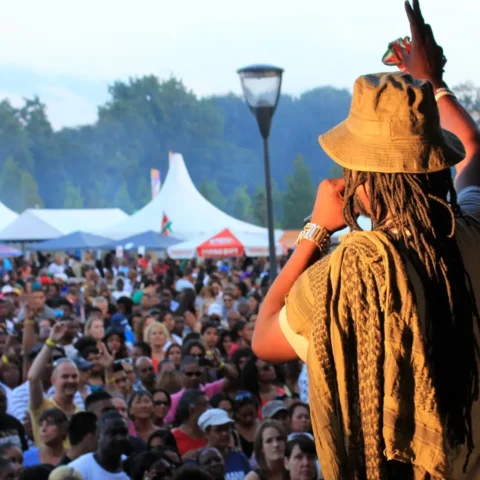
Twenty-three years later, Fraser doesn’t chase that sound anymore. He curates an entire stage built around it, on a beach outside Amsterdam, at a festival that calls itself Europe’s biggest celebration of Latin and Caribbean music. He grew up in Zaandam, broke into the Dutch charts in 2015 with the hip-hop collective New Wave, sold out Ziggo Dome twice, and in 2021 was named an Ambassador of Freedom by a country that once decided who counted as free and who didn’t.
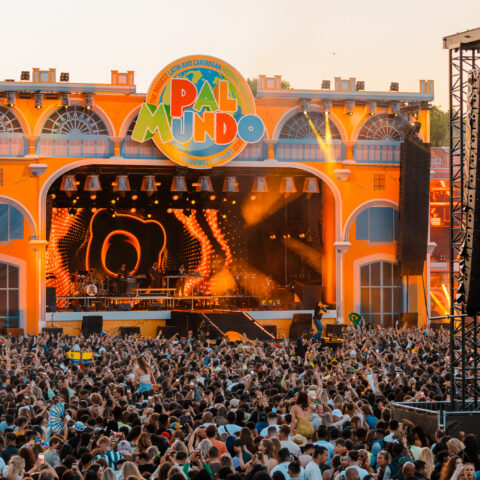
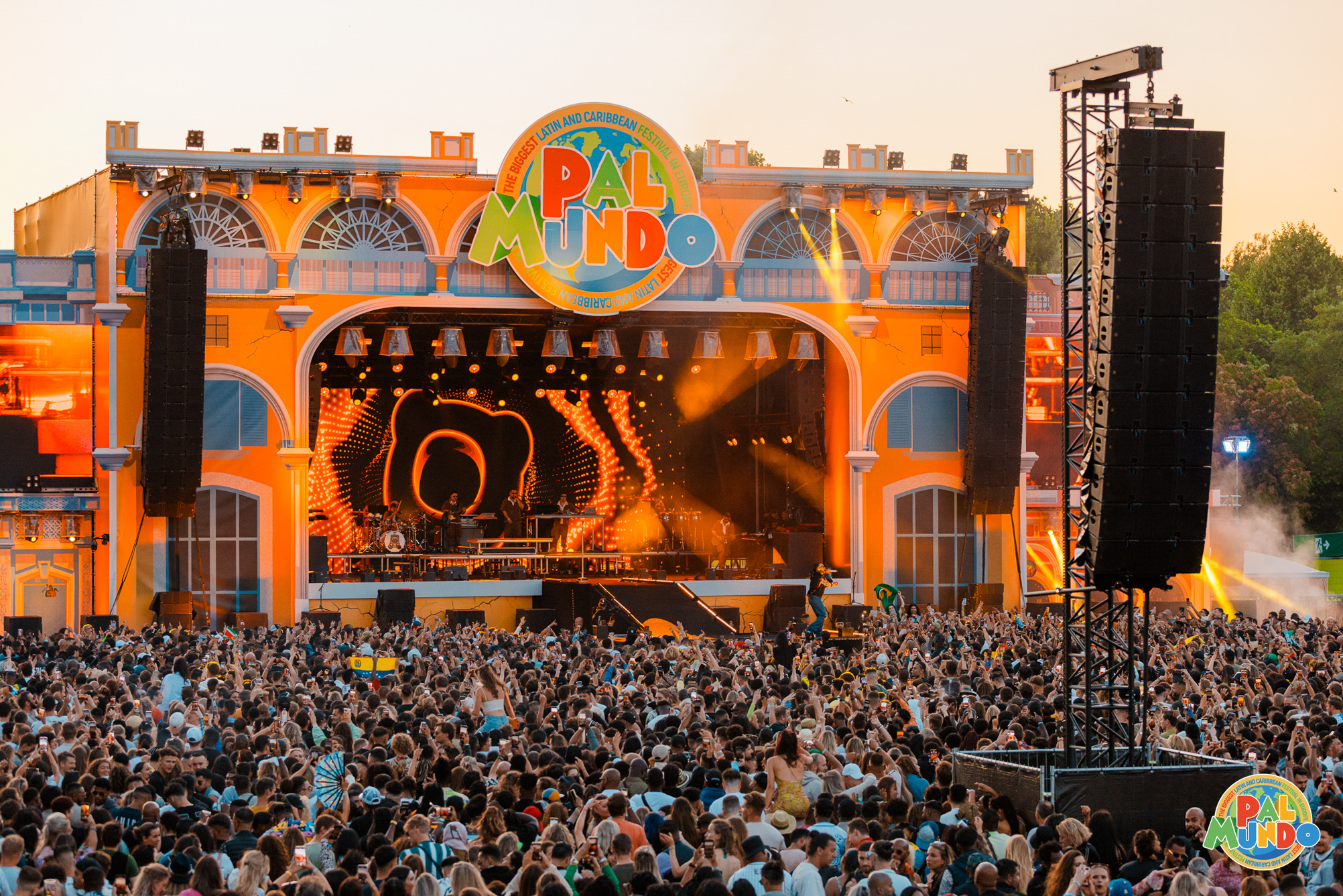
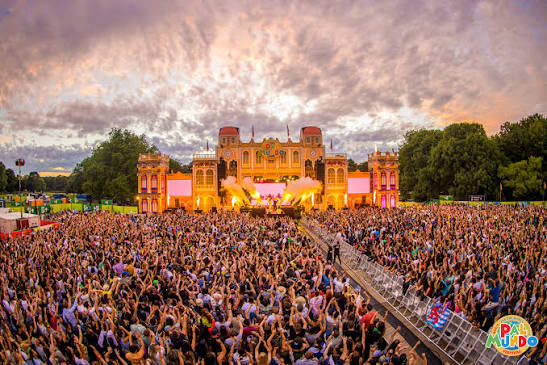
On July 18, 2026, Pal Mundo returns to Almeerderstrand in Almere for a twelve-hour day treating reggaetón, salsa, bachata, dancehall, and Brazilian baile funk as one continuous language rather than five separate imports. Five stages carry the weight: Main Stage, BLESSED by Jonna Fraser, Bresh, Favela, and Salsa Madhouse. Each one answers a different question about what “Latin music in Europe” even means now, and none of the answers agree with each other, which is exactly the point.
The Beach Nobody Photographs
Almere is not Amsterdam. It’s a planned city on reclaimed land, twenty-five minutes out by car, the kind of place most tourists skip entirely on their way to the canals. Nothing about Almeerderstrand suggested it would become the epicenter of European Latin culture. No canal-side history, no colonial-era trading post turned tourist attraction, nothing inherited. The festival built that reputation from nothing, stage by stage, year by year, until Ozuna and Myke Towers agreed to headline a Main Stage on Dutch sand instead of an arena in San Juan or a stadium in Madrid.
Both artists arrive as reggaetón’s most bankable global exports. Their catalogs move through Puerto Rican clubs as fluently as European festival circuits, and neither man needs an introduction to a European crowd anymore. Their presence signals something the organizers understood early: European audiences for this music no longer need translation. They need scale, sound systems, and enough stages to stop forcing five genres to share one slot. Ovy On The Drums, Arlene MC, JEON, Cho, and Ir Sais round out a lineup built for people who already know every word before the first drop lands.
A Stage Named After the Man Who Already Lived It
Fraser’s stage carries the name of his own album, and that detail matters more than it looks. He isn’t a Latin artist borrowing Caribbean sound for a festival slot booked once a summer. He’s Dutch-Surinamese, raised in Zaandam, a Rotterdam-born storyteller whose catalog already blends melodic R&B with dancehall and Afrobeats, sung across Dutch, English, and Papiamento in the same verse without apology. His stage doesn’t import authenticity. It carries a decade of sold-out arena nights and platinum records that had nothing to do with reggaetón charts in the first place, built instead on tracks like “Do Or Die” and a twelfth studio project, Red Rose Romance, released the same year he closed out the FunX Music Awards after being crowned Artist of the Year.
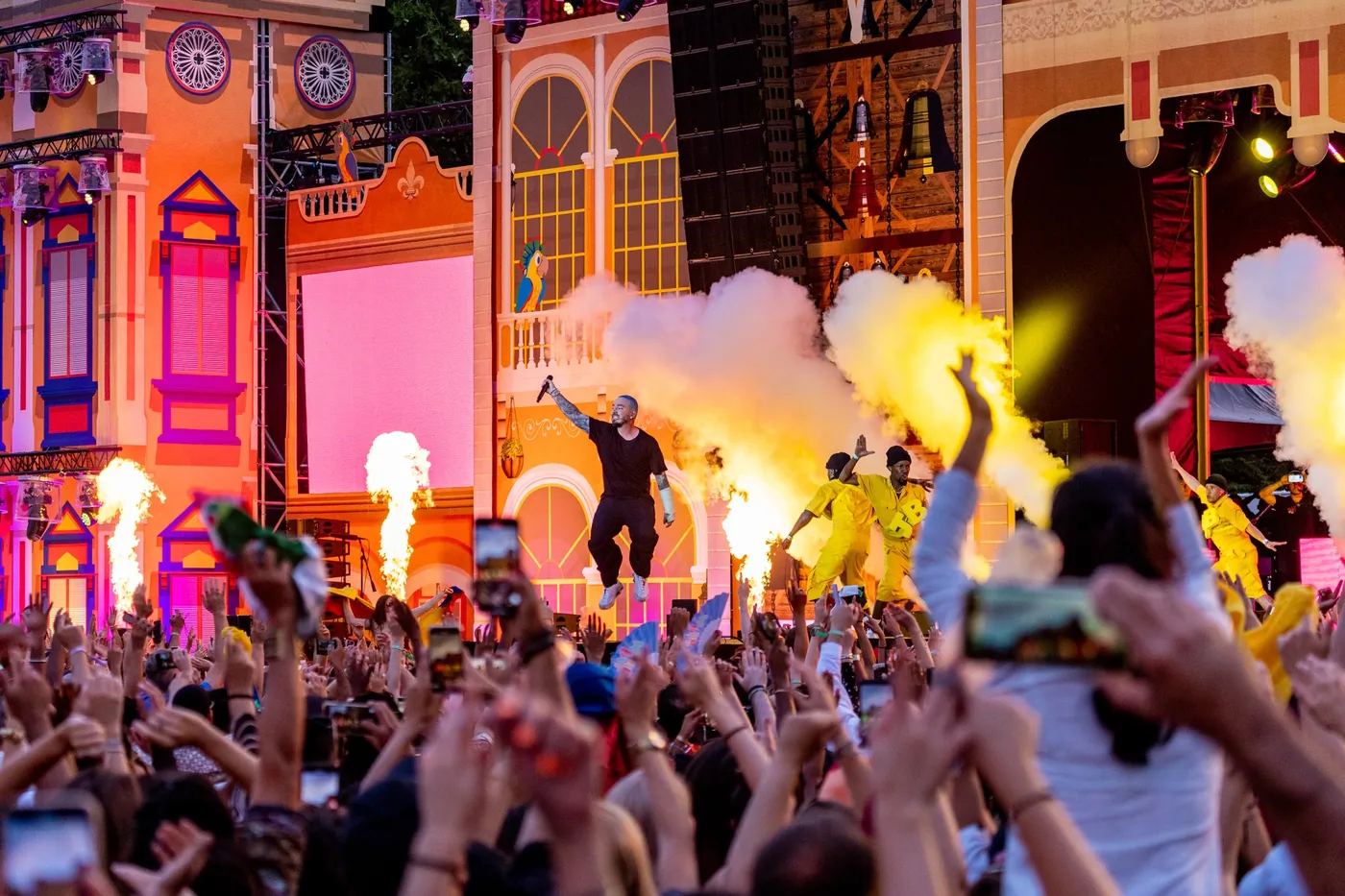
That distinction separates Pal Mundo from festivals treating Latin and Caribbean music as flavor sprinkled over a lineup for variety’s sake. Bresh arrived from Argentina as an explicitly global movement, connecting crowds across continents under one loosely translated promise: música, alegría, and inclusión, joy and inclusion with no judgment attached. DJs like Robin Roxette, who grew up between continents on a diet of Gloria Estefan and Michael Jackson, blend Latin, dancehall, Afro, and hip-hop into sets built for surrender rather than observation. Red & Lobster, born out of Amsterdam’s late-night club chaos, blend urban, Caribbean, and Afro sound into something closer to a fiery conversation between DJ, MC, and crowd than a scheduled set.
Favela channels Brazilian baile funk’s raw physical urgency, the kind of rhythm that makes standing still feel like the wrong choice. Salsa Madhouse holds the traditionalist line for dancers who came to move with a partner, not a crowd, where salsa, bachata, and merengue fill the floor the old way, one step building into a story rather than a viral clip.
The Ticket Tiers Tell Their Own Story
Regular tickets start at 79.95 euros. Golden Circle climbs to 139.95 euros, VIP to 159.95 euros, and Golden VIP tops out at 189 euros, with an optional Fast Lane add-on sold only alongside a Regular or Grupo ticket. A 10 euro shuttle runs from Almere Poort station straight to the site, and a walking route exists for anyone willing to make the trek from the platform on foot. That detail tells its own story. This festival serves people arriving by train, not a wealthy tourist class flying in for a boutique cultural weekend they’ll forget by September.
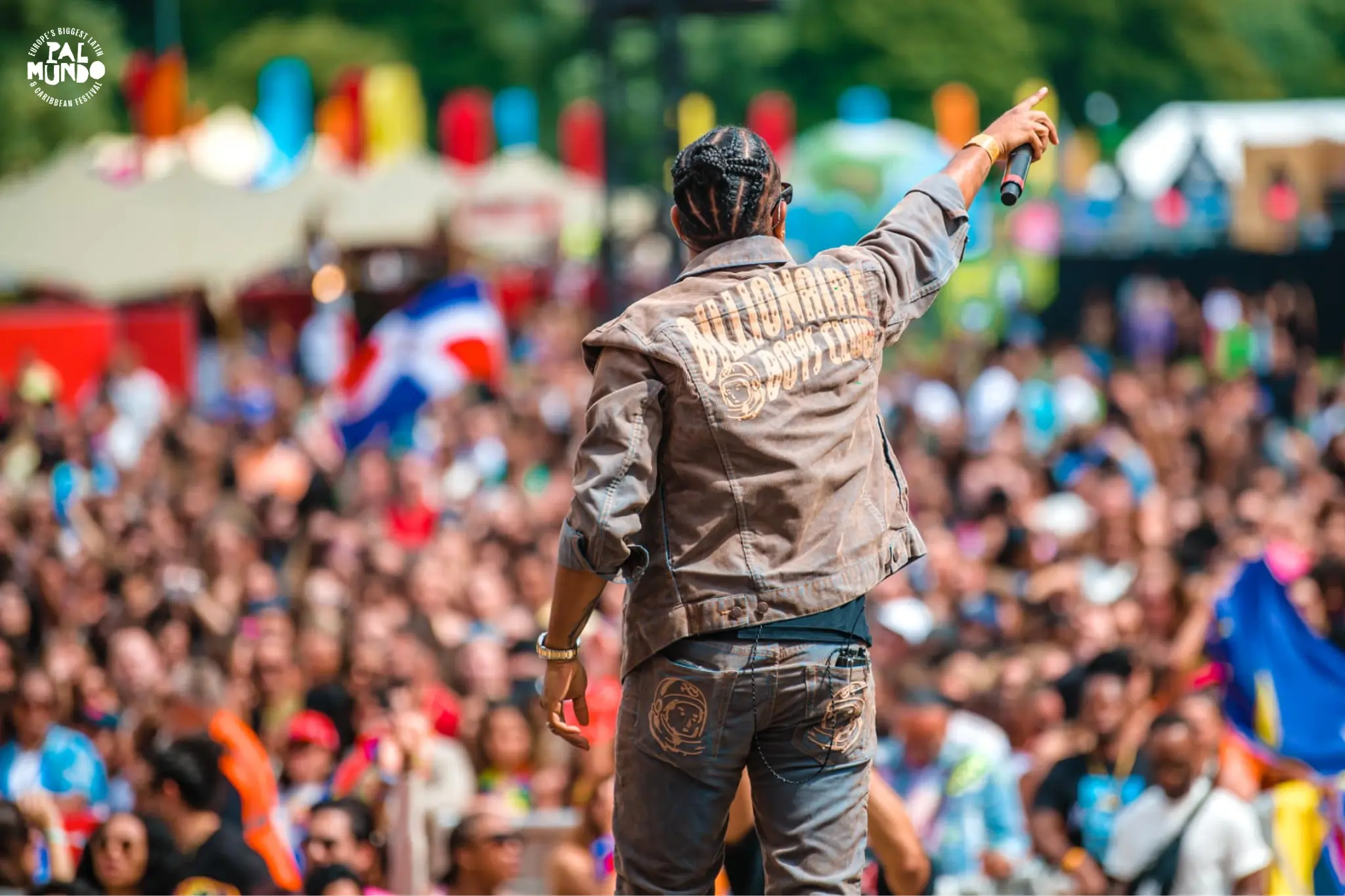 Photo: Pal Mundo
Entry closes at 20:00 while the music runs until 23:00, an eighteen-and-over night that assumes its crowd already knows exactly what they signed up for. Parking exists for anyone driving in, though the festival limits VIP spots near the entrance and clearly doesn’t prioritize them. Nothing about the logistics performs exclusivity. Everything about them assumes an audience that already shows up in the tens of thousands, year after year, needing no convincing at all.
A festival doesn’t scale to five stages and international headliners by accident. It happens because the audience keeps proving, year after year, that it exists and returns, that the numbers weren’t a fluke the first time somebody tried this on a Dutch beach instead of in a rented warehouse. What started as a gathering for a diaspora community now functions as continental infrastructure, the kind that makes reggaetón headliners treat a Dutch beach as a legitimate tour stop rather than a novelty booking squeezed between Madrid and Ibiza.
Participants, Not Guests
The easy read on a festival like this is nostalgia, communities recreating home on foreign soil for one loud day a year before returning to the quiet immigrant compromise of the other 364. Pal Mundo refuses that read, and it refuses it structurally rather than rhetorically. BLESSED isn’t a tribute stage built for a homesick diaspora to feel closer to home. Bresh didn’t get booked as an exotic import, something sampled once and forgotten by September. What Pal Mundo built instead is infrastructure that Jonna Fraser, Ozuna, Myke Towers, and thousands of dancers walk into as participants, not guests invited to perform their heritage for someone else’s entertainment.
Five stages, four continents’ worth of rhythm, and a crowd that switches between reggaetón and baile funk the way most people switch a radio dial, without thinking twice about it. Nobody’s asking this audience to simplify itself into one marketable identity anymore, and the lineup reflects that shift.
A country that once profited from Caribbean labor now hosts the region’s music at a scale most cities in that region can’t match, and nobody involved is treating it as an apology. Pal Mundo never framed itself as reconciliation, and it doesn’t need to. It exists because an audience kept showing up on a beach nobody expected to matter, until an entire festival industry had to take it seriously.
Whoever books their ticket for July 18 isn’t just paying to watch Ozuna or Myke Towers from a distance. They’re stepping onto sand that took years to earn its reputation, standing inside a lineup built by people who lived every genre on that bill before it became a festival slot. Almeerderstrand doesn’t ask anyone to arrive with credentials. It only asks that they show up ready to move, because by the time BLESSED or Bresh or Favela hits its stride, standing on the sidelines stops being an option anyone actually wants.