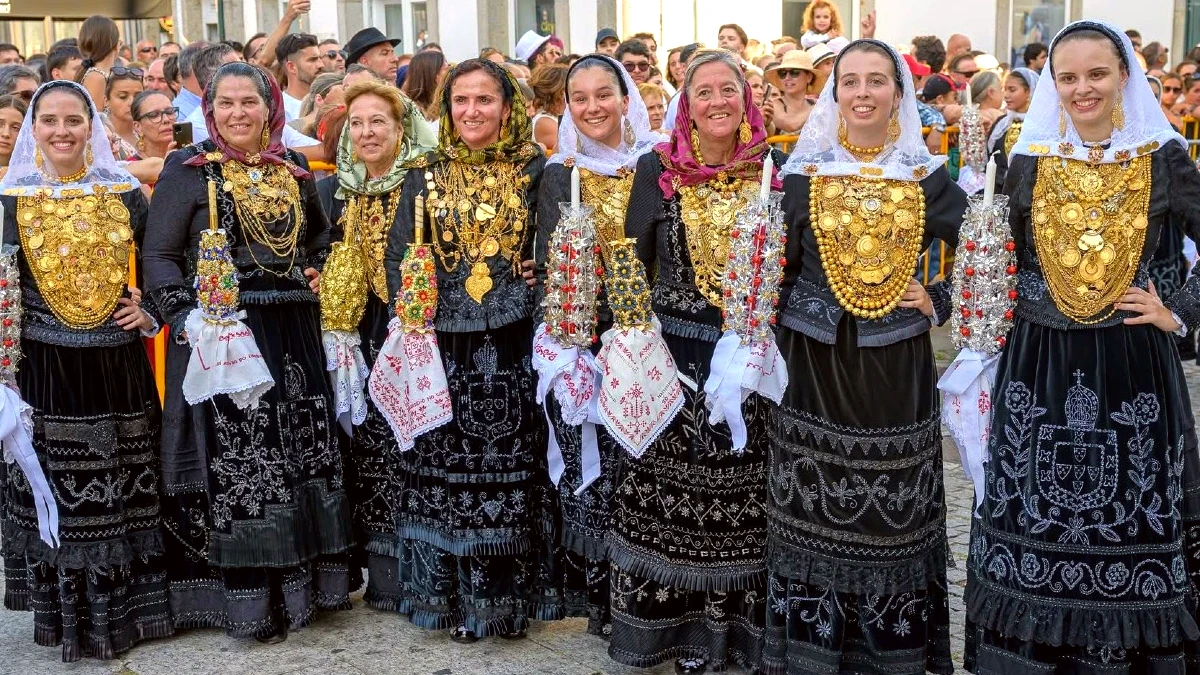
On 19 August 2026, 1,000 women marched through Viana do Castelo in costumes their families have preserved for generations. They wore gold that Lusa values at several million euros. Every place was sold out in two days. The parade which follows that places is 58 years old, and it was created by an ethnographer.
In 1968, the ethnographer Amadeu Costa collected together the parish mordomia processions around Viana do Castelo into one parade. The processions were modest as young mordomas travelled into the city to offer the civil and religious authorities a greeting and then returned home. Costa’s transformed this courteous call into a spectacle, and the visit is still a feature of the parade. At 11:00 on parade day the mordomas still call on the municipal executive, five hours before the march begins.
The parade gives the appearance of being older than it is. The Romaria de Nossa Senhora d’Agonia dates from 1772, according to the festival’s official site, and was held in August in August since 1783. Its patron is the saint of fishermen, and so it still anchors the programme around the procession to the sea. The Desfile da Mordomia followed almost two centuries after that devotion began. Yet it is the image that has now gone furthest whenever anyone mentions the Romaria.
The Gold Is an Inheritance, Not a Jewellery Display
A documentary filmed in 2017 put values on the chests. It counted more than 500 mordoras and estimated about 14 million euros in gold throughout them. A hundred or so wore one to 2.5 kilograms of gold. A few carried more than five. The rest wore about 100 grams of gold in earrings and chains. This year’s parade is much larger, although Lusa offered only the phrase “millions of euros”.
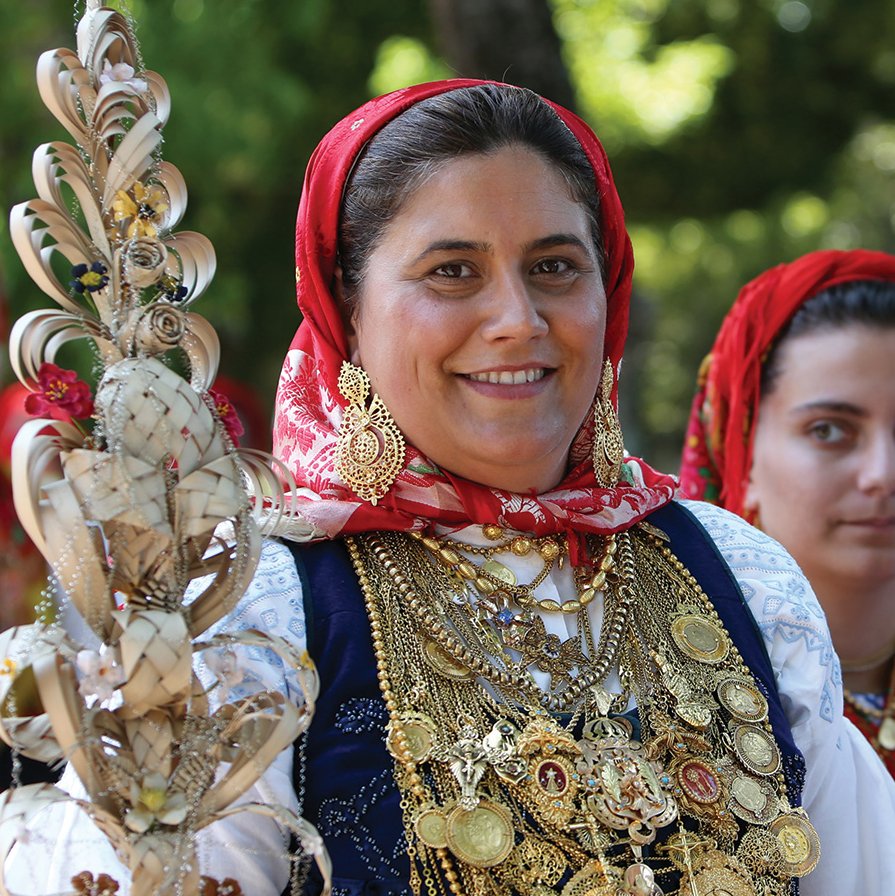 Photo: Festas d’Agonia
The municipality’s booklet on popular gold explains why families treat the pieces like that. They make use of 19.2 carat gold and carry no gemstones. The booklet gives them as a store of value that passes from one generation to the next. A mordoma thus wears an inheritance that serves as her family’s savings. Moreover, the organisers say that some of the older pieces only appear on this occasion. The heart, the Coração de Viana, anchors the design. A Time Out Lisboa report on the Museu da Filigrana adds that Viana gold is made in Póvoa do Lanhoso.
The look has since left the street. In January the singer Bárbara Bandeira released the video for her song Marcha. In it she wears a seven-kilogram dress valued at about 90,000 euros. The brand Portugal Jewels built it from Corações de Viana, queen earrings and other filigree pieces. Its statement cited the mordoras and the Festas da Senhora d’Agonia as references.
A Gift in 1852 Became a National Symbol
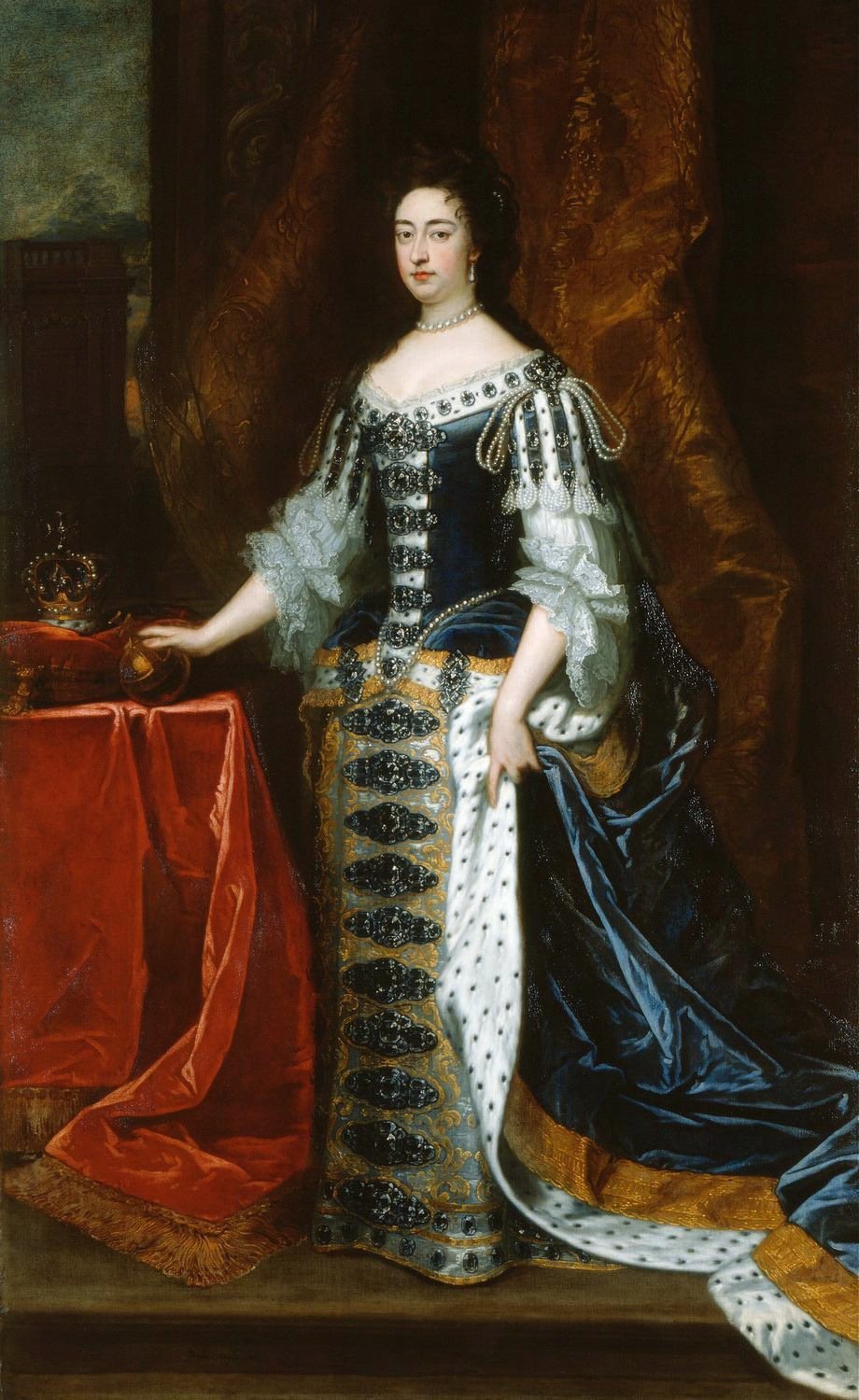
The brincos à Rainha usually trace back to 8 May 1852. Queen Maria II visited Viana do Castelo that day with her consort, King Luís. She had elevated the town to the rank of city four years earlier, and the young women of Viana gave her a pair in gold, and the model bore her name.
However, others claim that the design evolved from the bow and pendant earrings of the late eighteenth century. Another theory is that they are derived from the more classic king earrings.
Either origin leaves the earrings with real gravitas. Observador reported in April that the president’s wife, Margarida Maldonado Freitas, wore a pair. It was President António José Seguro’s first visit, in Spain. The newspaper described the choice as a symbol of femininity, wealth and status. A style that was first a gift to a queen now speaks for the country abroad.
Every Layer Has a Rule and Every Rule Has a Parish
Each mordoma represents her parish. The listing for the parade says that every piece, embroidery and layer follows its own rules, studied and preserved for decades. The municipality also publishes a specifications booklet that sets out the Traje à Vianesa for everyone. As a result, the costume serves as an address. However, the the street provides the range.
Trajes à Vianesa and de Mordoma stood alongside the festive dress of the Ribeira. The Morgada and ceremony costumes appeared too as well as outfits particular to the parishes. Most of them were passed from mothers to daughters and from grandmothers to granddaughters.
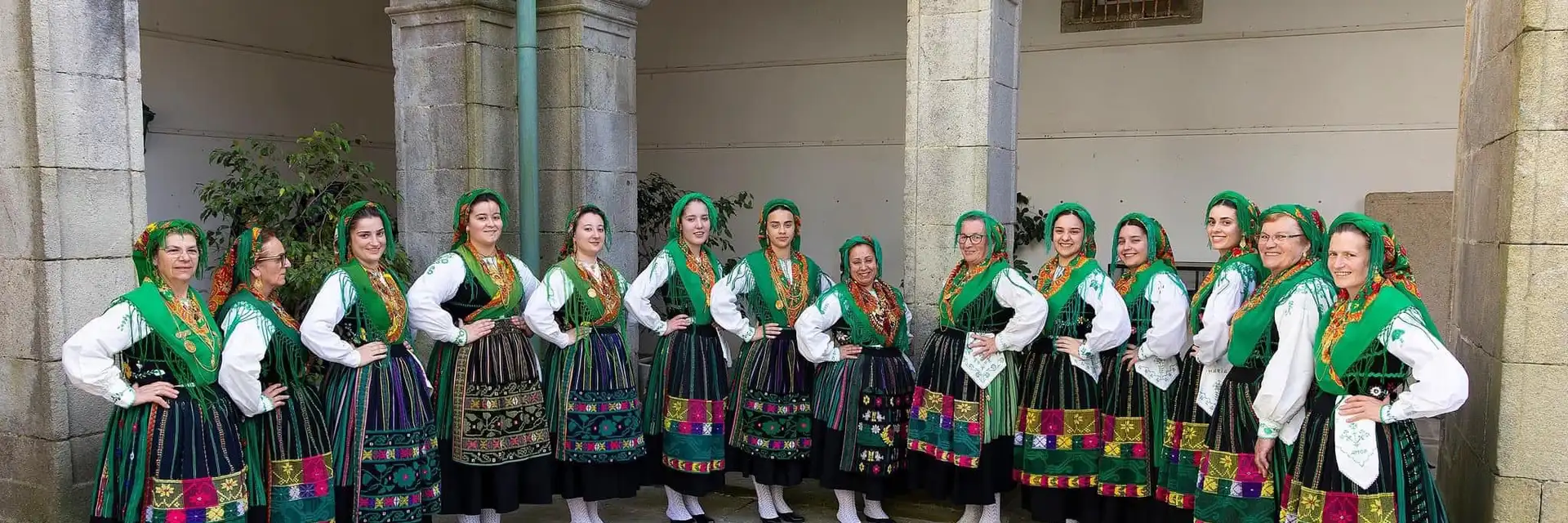
Letícia Portela, 15, wore the green of Geraz do Lima for the first time. She grew up in France. She told Lusa that the parade is a beautiful way to live the tradition of her birth city. Elly Barbosa, 25, lives in New Jersey and belongs to the Rancho Folclórico Casa do Minho there. She wore the blue of Serra d’Arga. Alícia Sousa walked for the second time as a Mordoma Azul. She carried a palmito with the Grupo Folclórico das Lavradeiras da Meadela. Meanwhile, the crowd that applauded them had waited for hours in the intense heat.
The Inheritance Skipped Two Daughters and Found a Granddaughter
Rosa Correia is 78 and lives in Darque, on the south bank of the Lima. She has been signed up for the parade for the past two decades. This year she walked in the Morgada costume alongside her 16-year-old granddaughter. The girl began at 14, the youngest age the parade accepts. “I feel very vain,” Rosa told Lusa.
Then she revealed the cost. “It saddens me that my two daughters do not care about this tradition,” she said. “But thankfully my daughter-in-law is like me, or even worse.” Lusa carried both quotes in Portuguese. In Rosa’s family, the inheritance skipped two daughters and fell on a daughter-in-law and granddaughter who both want it. The oldest walker this year was 83.
From More Than 500 to 1,000 Women in Nine Years
Start with the number of people. The 2017 documentary counted more than 500 mordoras. In 2022 the parade returned after two pandemic years off. That year, 709 women registered, about 100 more than in 2019.

This year the organisers set the limit at 1,000 and the places sold in two days. Viana Festas, the association that runs the Romaria, said that the speed showed how much women want to take part.
Moreover, the growth was domestic. By the organisers’ own counts, about 50 participants lived abroad in 2022. In France there were 22 and in Luxembourg 13. In 2026, 53 of the 1,000 came from the diaspora. Another 181 came from other Portuguese municipalities and 766 from Viana do Castelo itself. Overseas numbers barely changed. Portugal filled the new places.
At 20:00 the City Moves Straight to the Flowers
The festival feels the same pressure, every year. It stretched to nine days in 2023 because attendance was increasing. The 2026 edition ran from 15 to 23 August. On parade day, spectators lined the route from the former civil government building to the Largo de São Domingos.
At 20:00 crews began laying flower carpets in the Ribeira streets and dressing the boats for the sea procession. A parade invented in 1968 to display parish custom now has to ration its own walkers. That is the clearest sign the custom has survived. If 2027 is as quick as this Viana Festas will have to decide whose granddaughter waits another year.
Viana Festas lists the 2027 Romaria for 15 to 22 August on its official site. It carries the programme, a memory section and workshops. The association also posts on Instagram and Facebook and has a WhatsApp channel. Its parade date for 2027 will appear when the organisers publish the programme. Anyone planning a trip should watch those channels. In 2026, extra regional trains were added between Porto and Viana do Castelo from 19 to 24 August. Visitors who miss the parade can still see gold at the Sala do Ouro in the Museu do Traje de Viana do Castelo.