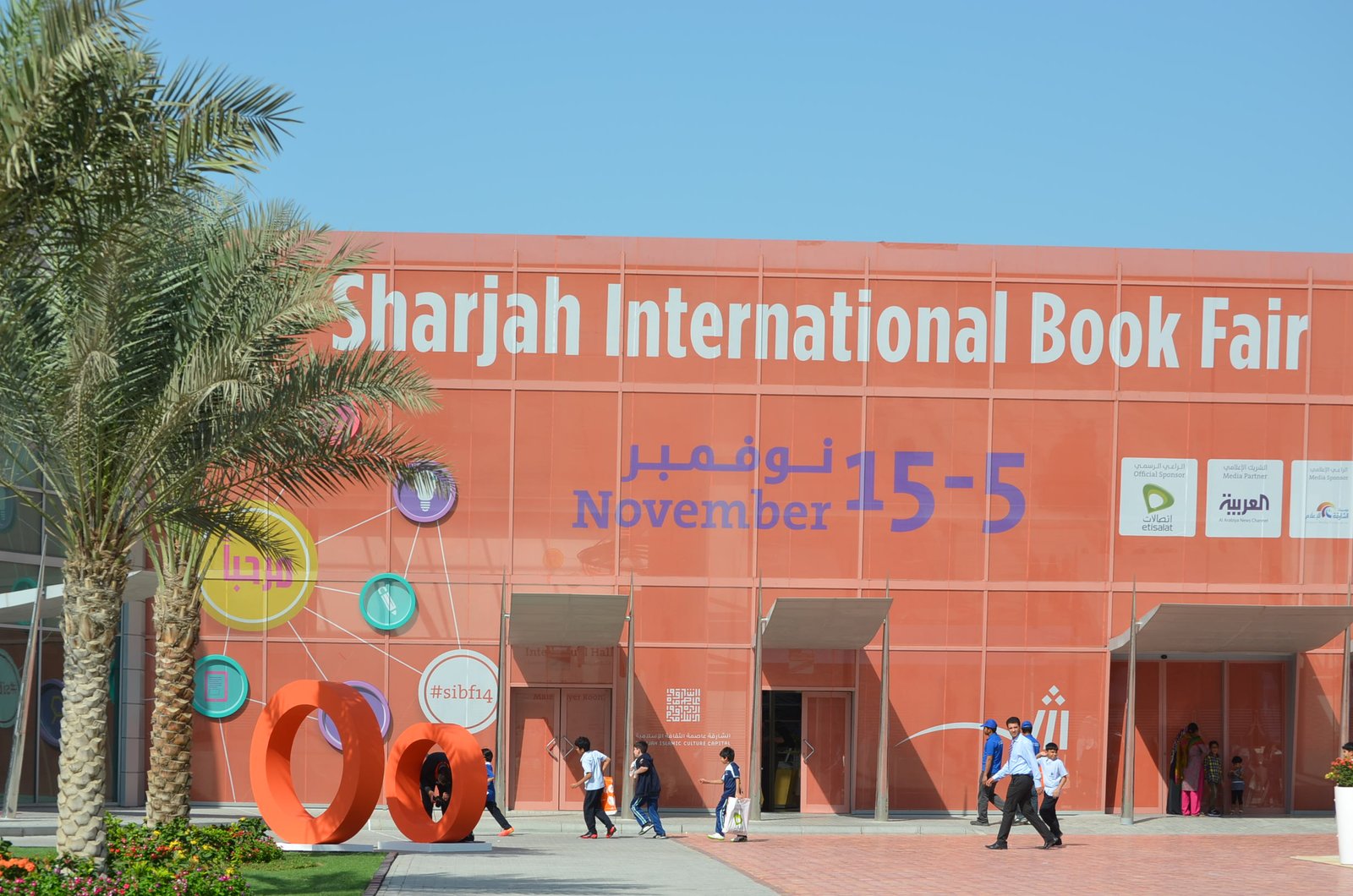
In January 1982, six publishers took stalls at the first Sharjah International Book Fair, and the readers barely came. According to a 2019 account of The National, booksellers urged the ruler to close the fair. In that account, Sheikh Dr Sultan bin Muhammad Al Qasimi bought every book on display instead. Salim Omar Salim, director of Sharjah Publishing City, told the paper the ruler “was just supporting the publishers.”
Forty-four years later, the 45th edition opened on 4 November at Expo Centre Sharjah with 2,673 publishers and exhibitors from 124 countries. The programme would run 1,500 events across 12 days under the theme “Made of Stories.” The growth is the headline as the roster is now more than 440 times the size of the 1982 launch. However, the quieter story sits in which numbers the organisers now lead with.
The 1982 Rescue Story Comes From One Official’s Retelling
Every reachable source dates from decades after the event. The six-publisher launch and the thin attendance appear in The National‘s 2023 history of the fair. The book-buying story appears in the 2019 piece, which passes it along as a story told about the ruler. A Gulf News timeline which confirms the date as 18 January 1982, says Sheikh Sultan opened the fair with a limited number of publishers. Even so, it says nothing about a shopping spree.
The habit the story describes does have a later paper trail. In 2008 Sheikh Sultan unveiled Knowledge Without Borders, which gave every Emirati family in Sharjah 50 books until 2016. In 2015 he announced a Dh4 million donation to buy books from exhibitors. Later, the fair’s 2025 closing report listed an AED 4.5 million grant for public and government library collections. Whatever happened at the stalls in 1982, the buying continues into the 2020s.
The idea also predates the fair. On 18 April 1979, Sheikh Sultan addressed a youth audience at a theatre event. He said it was time to stop “the concrete revolution of civil construction” and start a cultural one.
One Cancelled Year Left the Fair Bigger Than Where It Started
The fair skipped 1990 because of regional uncertainty during the First Gulf War. It returned in 1991 with more than 476 publishing houses from 30 Arab and foreign countries. By comparison, it had six publishers nine years earlier. By 2018 the fair counted about 2,000 publishing houses from 77 countries. The 2019 edition added 20 million books and 2.23 million visitors with corresponding growth, alongside.
The Sharjah Book Authority launched in 2014, and UNESCO named Sharjah as the World Book Capital for 2019, after Athens in 2018. Sharjah Publishing City housed 600 offices and a print-on-demand service that could produce up to 10,000 books in 24 hours.
No Report Explains Why 2.17 Million Became 1.4 Million
Sharjah International Book Fair reported 2.17 million visitors for 2022. The organisers reported 1.82 million for 2024 and 1,400,730 for 2025. That is a drop of about 35 percent from 2022 to 2025, even though 2025 counted visitors from 206 countries. The reports do not explain the gap as the counting methods may also have changed. The fall deserves a direct question to the Sharjah Book Authority and not a verdict.
The 2025 closing report put trade beside the crowd. The 15th Sharjah Publishers Conference brought 1,599 publishers from 116 countries together for 3,321 rights meetings. The organisers called Sharjah the world’s largest rights-trading marketplace for a fifth consecutive year. A pre-fair training programme drew 161 publishers from 18 countries, and 75 of them came from Africa. The 2026 conference ran from 1 to 3 November, days before the public gates opened, and a training programme with New York University began on 31 October.
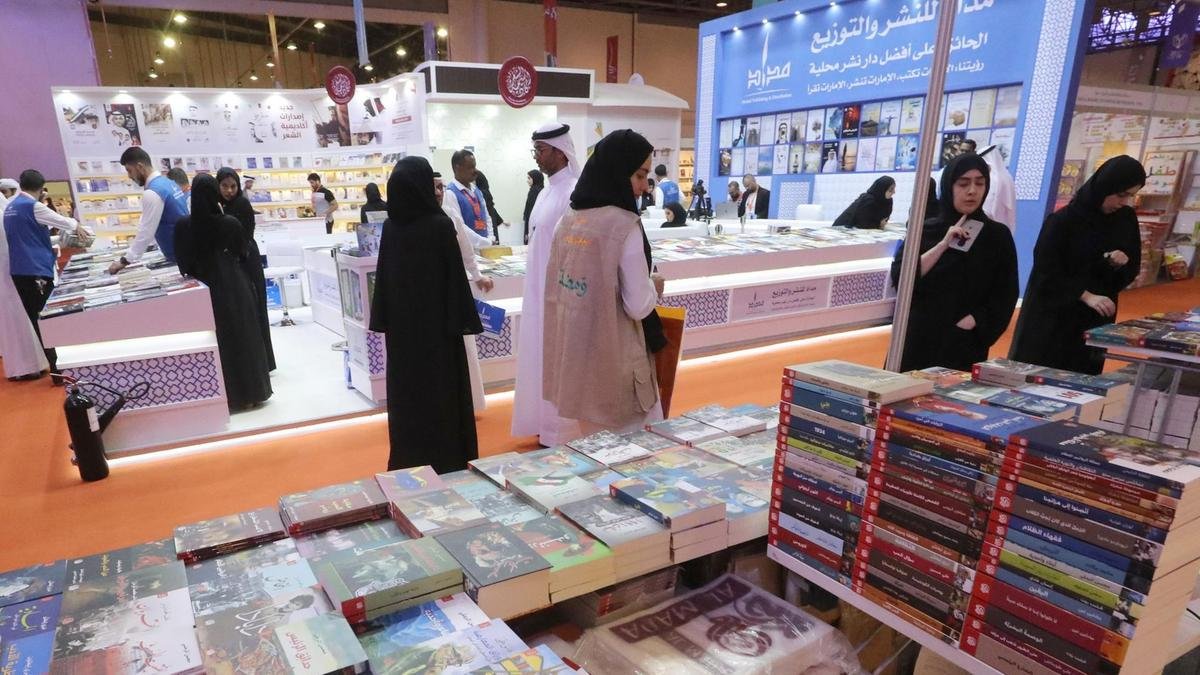
The 15th Sharjah Publishers Conference in 2025 convened 1,599 publishers from 116 countries and logged 3,321 rights meetings. The fair itself counted 2,350 publishers and exhibitors from 118 countries, 1,400,730 visitors, 1,200 cultural events and 750 workshops. It also announced an AED 4.5 million grant for public and government library collections.
Sharjah Went Out as a Guest in May and Now Plays Host in November
Oman holds the Guest of Honour seat for the 45th edition with a delegation of 50, including 41 writers and poets. The Omani programme lists 15 cultural sessions, six children’s workshops and 20 artistic performances. Meanwhile, daily music, folk performances and cookery sessions fill the gaps between them. Among the writers and poets are Zahran Al Qasmi, Dr Mohammed Al Yahyai and Hassan Al Matrooshi. Dr Abdulaziz Al Omairi, Dr Mahmoud bin Mohammed Al Rahbi and Ahmed bin Nasser Al Rashdi join them.
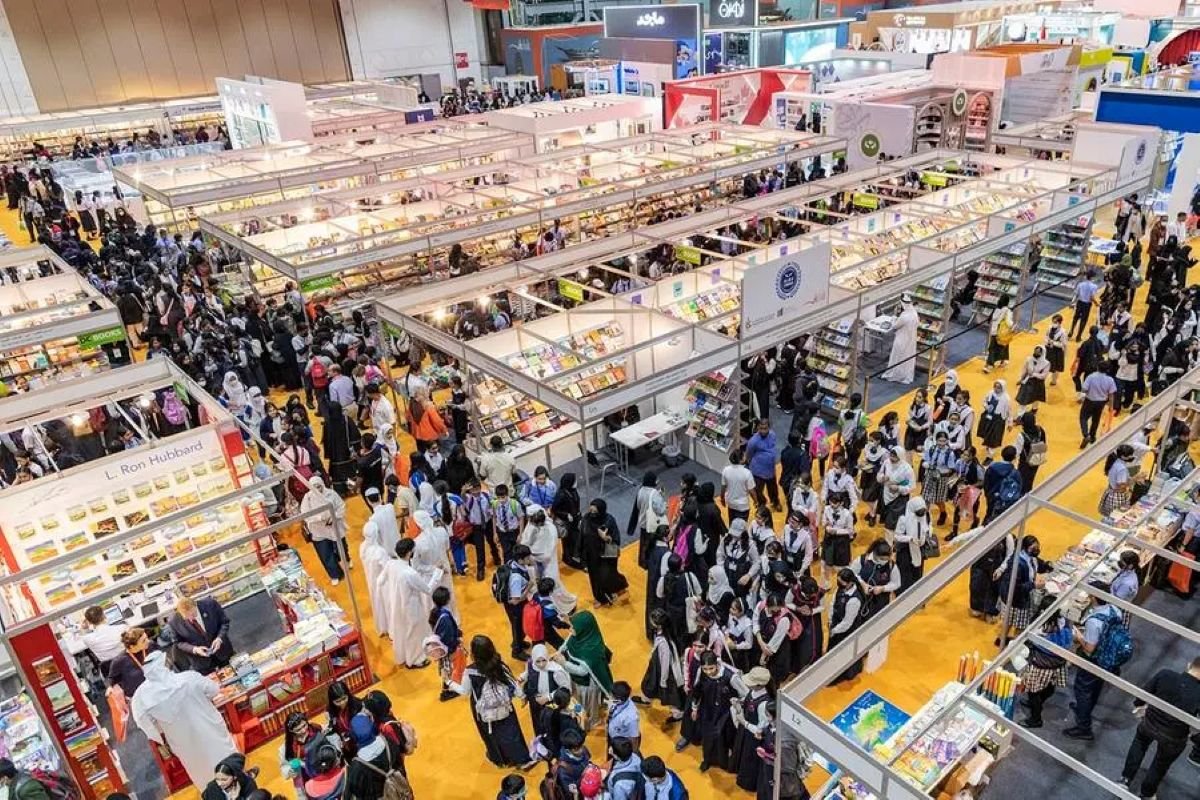
The seat works in both directions. Sheikh Sultan attended the Muscat International Book Fair in April 2025. In May 2026 Sharjah became the first Arab Guest of Honour at the Warsaw International Book Fair, with a four-day programme of discussions, poetry events and performances. Sheikha Bodour bint Sultan Al Qasimi, chair of the Sharjah Book Authority, framed the exchange as a duty. She said that “each edition of the Sharjah International Book Fair carries a renewed responsibility toward readers, writers, and publishers.” Kalimat Group, which she founded in 2007 to fill a shortage of quality Arabic children’s books, had published more than 400 titles by 2019. She was also the first Arab woman to serve as vice president of the International Publishers Association.
The same logic reached Beijing in June. There, the Sharjah Institute for Heritage presented more than 10 Chinese-language editions, including a translation of the Encyclopaedia of Mythical Creatures in Emirati Heritage.
Crime Fiction Is the Programme’s Sharpest Bet
The fifth Thriller Festival runs from 7 to 10 November in partnership with Capital Crime London and Thriller Festival New York. More than 12 specialists attend, including crime writers, literary agents and screenwriters. Clare Mackintosh, Karen Dionne, Elizabeth Moore, Vaseem Khan, Abir Mukherjee and David Fennell travel in from abroad. Noha Dawoud, Ibrahim Al Marzouqi and Adel Al Sumaiti represent the Arab side. Mohammed Ali Al Hammadi, Alia Nasser Al Zaabi and Islam Abu Shukair join them.
Agents and screenwriters on that guest list suggest the festival serves the rights market as much as the audience. Beyond crime, the wider programme includes Nnedi Okorafor, Liu Zhenyun, Daisy Rockwell and John Vaillant. Arab and Emirati voices fill the list as well, including Sultan Al Ameemi, Ali Abu Al Reesh, Dubai Abulhoul, Aisha Sultan, Najwa Barakat, Saud Alsanousi and Zoulfa Katouh. In all, the fair lists 106 writers, artists and intellectuals from 25 countries.
Children Get a District While Poets and Cooks Get Corners
Poets’ Corner turns visitors’ personal stories into poems in Arabic and English. For children, Future Hands District offers a chance to try different professions. The Cookery Corner brings chefs including Romy Gill, Kausar Raja and Mohammad Orfali for live demonstrations. The musical When Memories Sing premieres on 7 November. Abdullah Annan’s Impossible or Science?! runs on 8 November and Waterland takes the outdoor stage on 14 and 15 November.
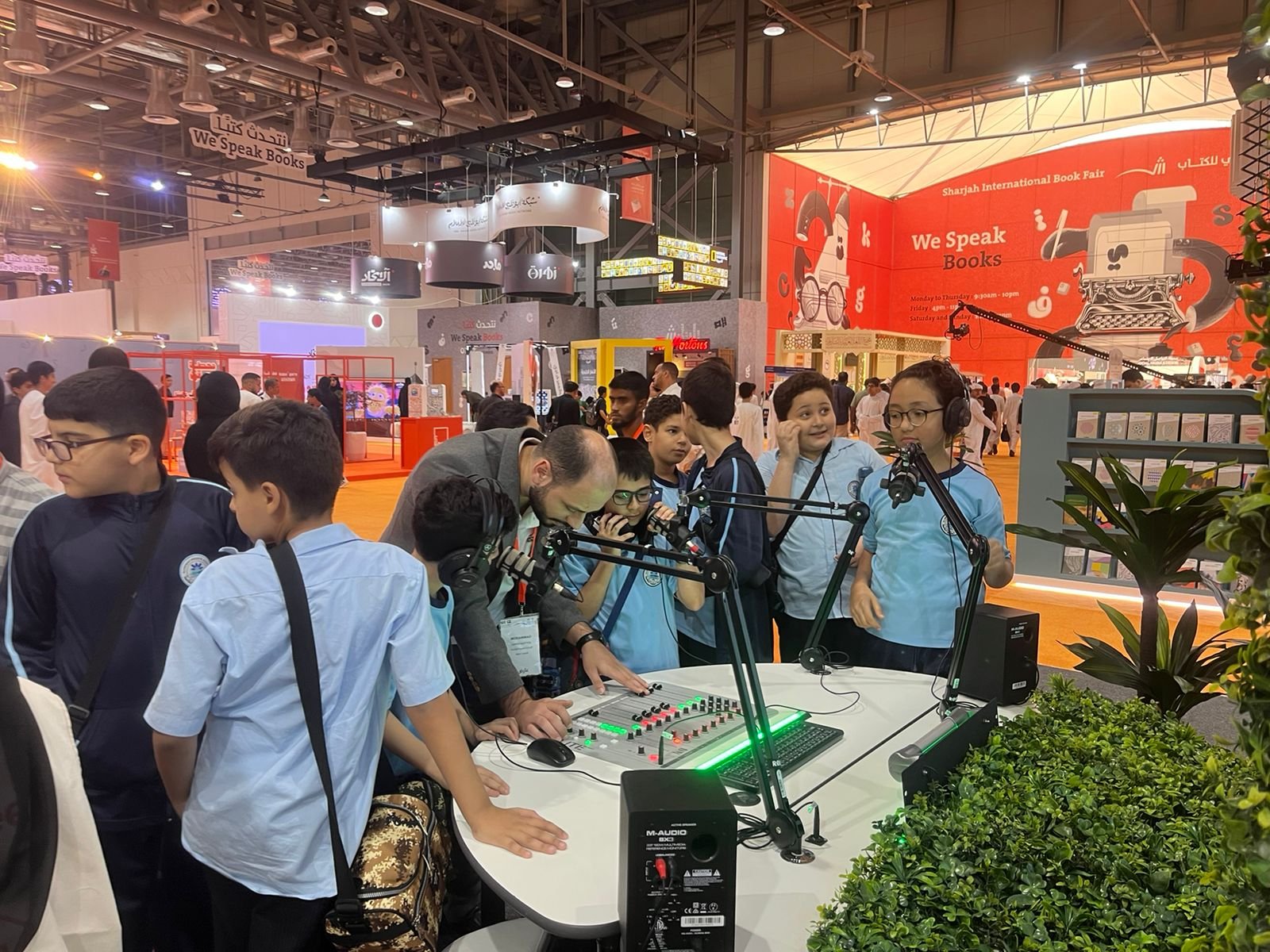
Daniela Tully teaches narrative voice, character and dialogue in a registration course. In addition, Khaled El Sawy leads an acting studio. A fair that schedules acting classes beside chef demonstrations has decided that readers need more reasons to come than books. The fall in visitor numbers makes that decision look less like a flourish and more like a response.
The fair runs until 15 November at Expo Centre Sharjah. The Thriller Festival takes place from 7 to 10 November, and the Sharjah International Library Conference runs from 7 to 9 November. The stage shows require advance booking. The official channels carry opening hours, registration and tickets, so check the SIBF official site and the Expo Centre Sharjah site before travelling. Go for the Omani poets and the crime panels. Then walk toward the hall where the rights meetings happen and ask who the fair is built for now.