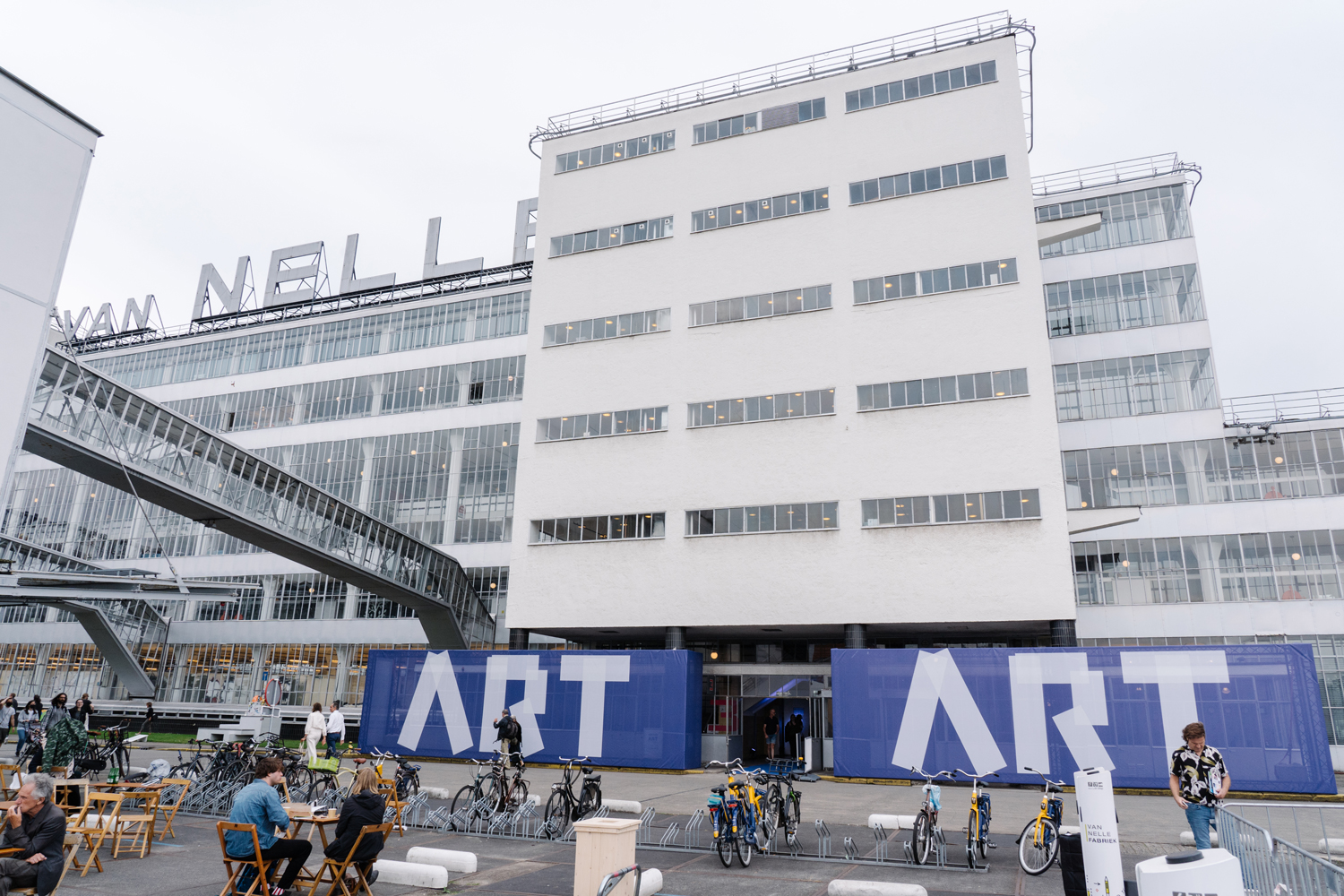
In May 1940, the Luftwaffe erased Rotterdam’s medieval centre in two hours. The Dutch called it de Brandende Stad — the Burning City. What returned was not a restoration, in any form. The planners who arrived after the rubble had been cleared did not try to rebuild what stood earlier, rather, they built something no pre-war European city would have allowed— Cube houses, the Markthal, the Erasmus Bridge. An entire urban identity assembled from refusal: to mourn what was gone, to pretend the old rules still applied.
Art Rotterdam, now in its 27th edition, has absorbed exactly that logic. The fair does not defer to Basel or Maastricht or Brussels. It does not compete with them, but makes an entirely different argument.
Rotterdam Ahoy Was the Right Question at the Right Time
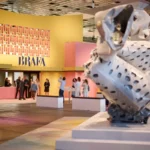
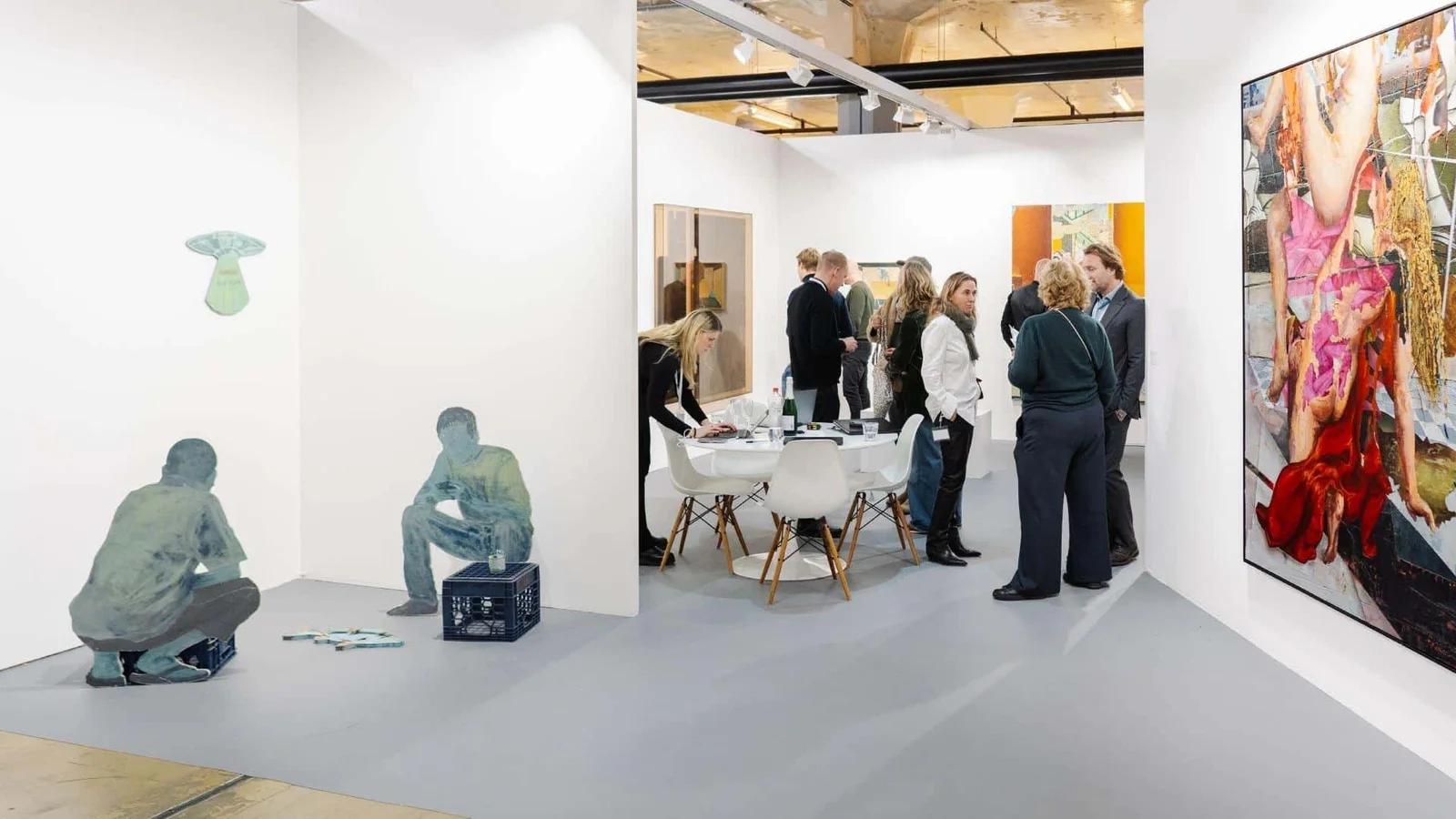
The 2025 edition was Art Rotterdam’s first at Rotterdam Ahoy, a large-scale events venue in the south of the city. The 2026 edition confirmed it. Twenty-seven editions in, the fair was no longer asking whether its venue could hold it. The question had inverted: whether the fair could fill the space with something proportionate to it.
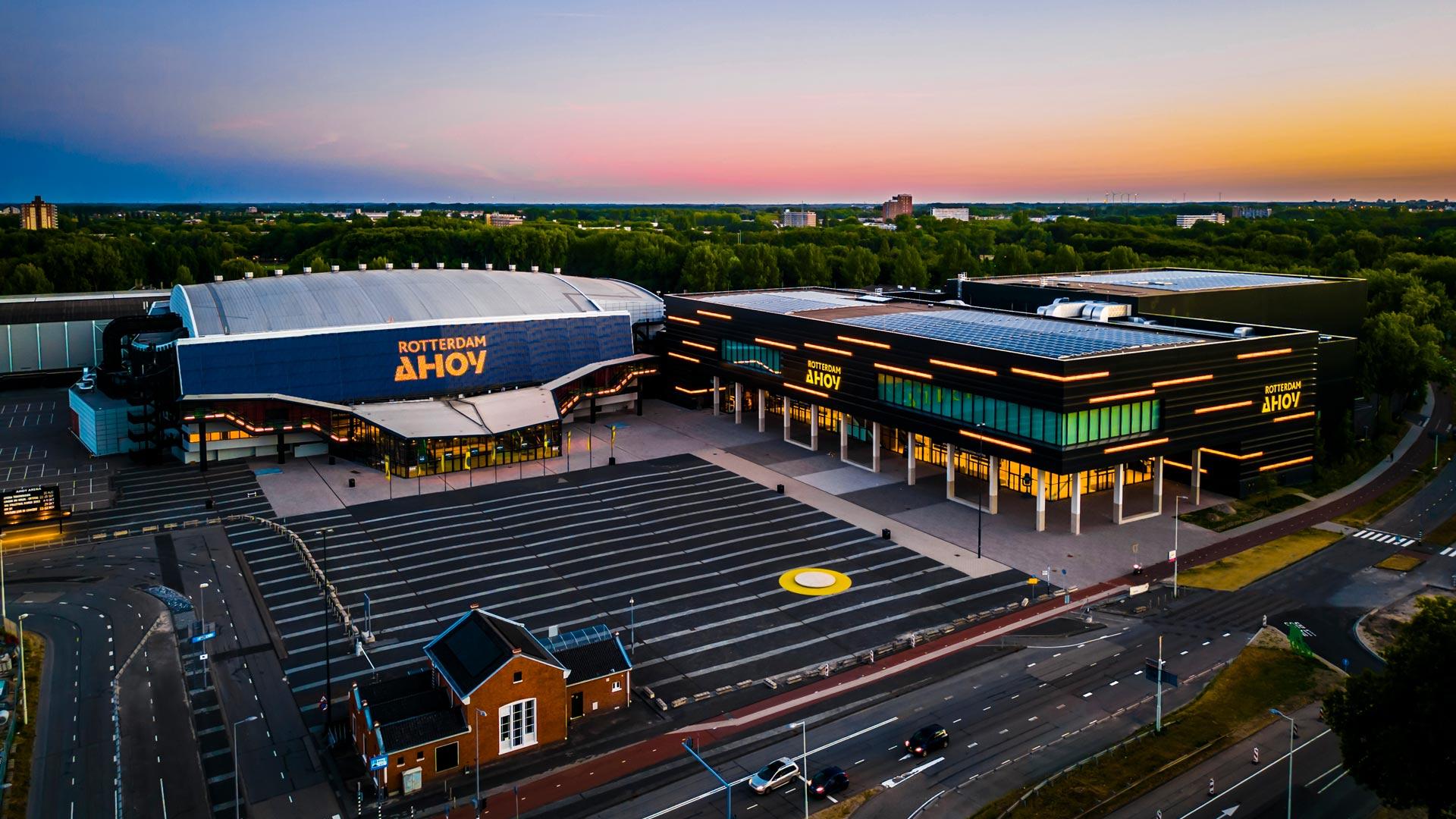 Photo: Rotterdam Ahoy
Over 150 galleries across 14,000 square metres, galleries arriving from Lisbon, Istanbul, Buenos Aires, Copenhagen, Johannesburg, Bratislava, London, Rome, Paris, Madrid, Vienna, and Riga. Not a list of art market capitals but one that puts Bratislava and Johannesburg in the same breath as Paris, which is either reckless curation or an honest account of where the conversation is actually happening.
Art Rotterdam‘s director Fons Hof has been making this argument across both Ahoy editions. The venue’s scale and openness, he noted, contribute to a visit where people stay on the floor longer. In 2025, 28,000 visitors came. The Wall Street Journal named Rotterdam one of the ten best places to visit in 2026. Neither the city nor the fair was waiting for that endorsement.
Unseen: The Merger That Changed What Art Rotterdam Was
The single most consequential decision in the 2026 edition was not a headline artist or a record sale. It was structural. Unseen Photo — the internationally recognised Amsterdam photography platform — merged with Art Rotterdam, and the merge was not gentle. Three dedicated photography sections — New Photography, Encounters, and The Past Present; were embedded directly into the fair’s 14,000 square metres. Not in a corner or in a satellite room. On the floor, beside the painting, sculpture and video that had always been there, curated to the same institutional standard as everything else. Hof’s framing: a complete experiential fair with all art disciplines under one roof; sounds like a press release, but what it produced was not.

New Photography brought Julien Mignot’s Screenlove — webcam images cast in semi-transparent blocks that appear or disappear depending on where you stand, built from questions about digital intimacy, loneliness, and the terms on which we permit ourselves to look at each other. Encounters, curated by Domenico de Chirico, pulled photography into conversation with other disciplines. Andi Gáldi Vinkó, one of the most probing voices in Hungarian photography, was in the room. So was Teresa Giannico’s dreamlike imagery interrogating how algorithms shape vision. Intervalle presented previously unseen works from the Screenlove series alongside new commissions.
And then there was The Past Present, directed by historian Hedy van Erp. The section moved backward — into pre-2000 analog photography, forgotten archives, rediscovered images. The anchor: platinum-palladium prints of negatives from Robert Falcon Scott’s Terra Nova polar expedition, photographed by Herbert Ponting between 1910 and 1913, some only recently rediscovered. Presented in a medium whose depth and tonal range silver cannot match, shown inside a contemporary art fair in Rotterdam in 2026. A fair stand is not the natural container for photographs that close a hundred-year gap. Art Rotterdam did not ask whether it should contain them.
De Grote Onbekende and the Monument Nobody Ever Drew
Folkert de Jong’s The Dance placed Spinoza, Balthasar Gerards, and Jan Pieterszoon Coen in the same choreography — colonialism, philosophy, and national mythology forced into an encounter that produces no resolution and is not designed to. Atelier Van Lieshout showed De Grote Onbekende — a colossal figure evoking Civilis, the Batavian Revolt’s leader, of whom no historical portrait has survived. The scale is the argument: make a monument to the man the Dutch never agreed on a face for, make it impossible to ignore, put it in the middle of an art fair.
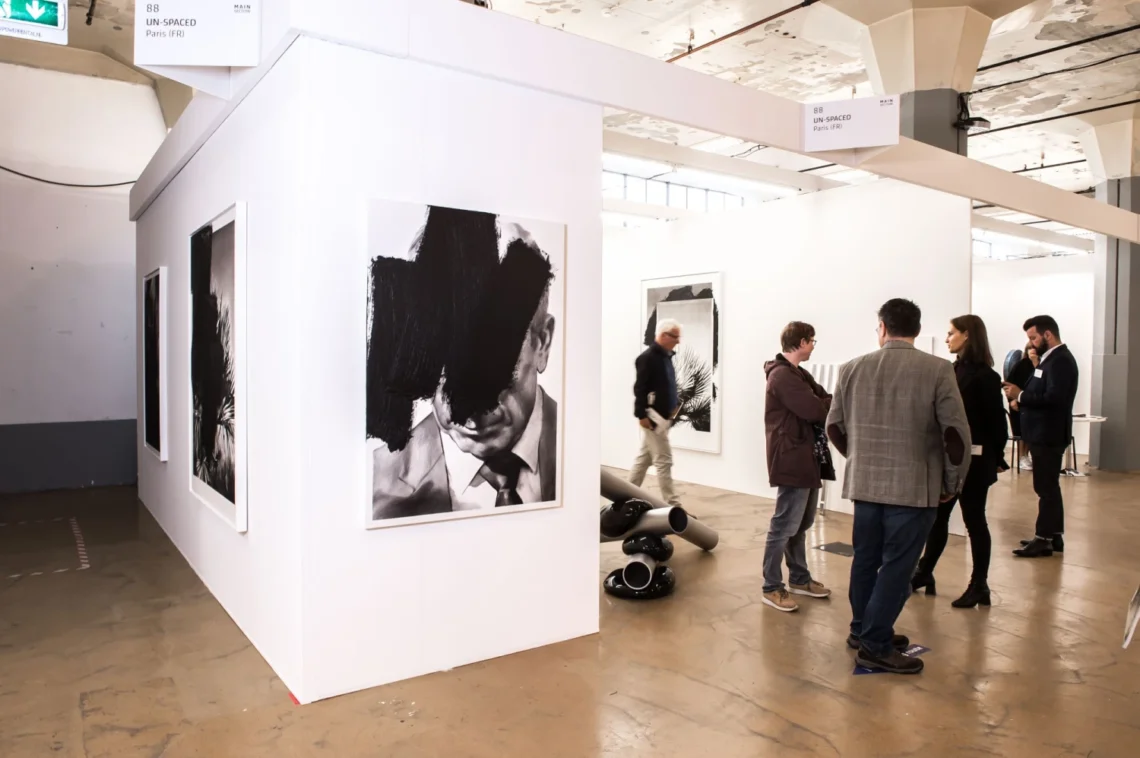
Studio C.A.R.E. completed the section by doing the opposite — inviting visitors to move constituent parts, to become implicated in whatever the work became. The Projections programme gave Surinamese artist Xavier Robles de Medina space for Ai Sranang, a film woven from 20th-century political archive footage processing the postcolonial trauma of a country the Netherlands spent three and a half centuries claiming ownership over. David Haines transformed the screening space into a queer sanctuary where identity is performed against the backdrop of the HIV crisis. These are not decorative additions to a sales floor, they are the fair insisting on something.
What the New Art Section Bets On and Why It Keeps Paying
The New Art Section returned with curator Övül Ö. Durmuşoğlu, whose first edition in 2025 was strong enough to bring her back. The section is built around a single disciplinary wager: that emergence is a practice, not a résumé, and that solo presentations by artists in the middle of forming something are more instructive than polished booth presentations by artists who have already arrived.
Shivangi Kalra, born in Delhi in 1998, showed canvases where personal memory and collective historical narrative interweave until the seam is invisible. Buhlebezwe Siwani, nominated for the Prix de Rome, occupied the same space without colliding with it. Thijs Segers was in contention for the Koninklijke Prijs voor Vrije Schilderkunst. The section produced what it was built to produce: the sense that something is being decided, not displayed.
Otobong Nkanga — whose practice connects raw materials, landscape, and colonial memory across media that include weaving, performance, and installation — presented new pieces. Boemo Diale wove the cultural inheritance of African women into a personal visual language that does not explain itself. Stephan Balkenhol’s human figures, carved from raw wood, almost archaic in their frontality, stood in the same building as work made in the last eighteen months. Art Rotterdam does not sort its decades.
Four Nominees, Six Weeks at Kunsthal, Three Days at Ahoy — in That Order
The NN Art Award reached its tenth edition at the 2026 fair. The four nominees — Fiona Lutjenhuis, Kyra Nijskens, Mandy Franca, and Tina Farifteh — were not introduced at the fair. They had been showing at Kunsthal Rotterdam from 14 March to 12 May, six weeks before and several weeks after the three-day event. The fair arrived in a city that had already had the conversation. That is a structurally different relationship between a fair and its nominees than the standard reveal-at-opening model — it presupposes that the collectors arriving on 27 March had done the reading.
The Rijksakademie van beeldende kunsten formalised its relationship with Art Rotterdam in 2026. That is not a footnote. It is the Dutch contemporary art establishment deciding, in writing, that this fair is worth institutional alignment.
Anton Corbijn on a Rotterdam Stage Is Not Neutral
Sixty-plus venues activated during Rotterdam Art Week around the three public days. Melly, Kunsthal Rotterdam, the Nederlands Fotomuseum — which hosted the Unseen Book Market at Pakhuis Santos — WORM, open studios, late-night openings across the city.
The Reflections Talks programme brought Anton Corbijn — who grew up in the Netherlands and built a visual language that became the aesthetic record of an era of music and film — onto a stage alongside visual artist Çiğdem Yüksel, painter Katinka Lampe, and Rotterdam writers Hugo Borst and Wilfried de Jong.
Corbijn’s presence at a Rotterdam fair is not neutral. It is a city claiming its own cultural authority through someone the international art world already respects, on a stage Rotterdam built itself. The March slot is not incidental. Rotterdam in late March is cold, specific and unapologetically Dutch. There is no prestige weather, no biennale shimmer. What the city offers instead is a fair that has spent twenty-seven editions deciding what it stands for and a collector base that has been making the trip long enough to know the answer. The fair does not perform accessibility, it simply assumes competence. Rotterdam, for eighty years of post-war rebuilding, has run on the same assumption. Art Rotterdam is the fair that city deserved.
Art Rotterdam runs every March at Rotterdam Ahoy — a city that does not soften itself for visitors and a fair that has never asked it to. Twenty-seven editions have built something the art calendar does not have elsewhere: a Dutch fair with genuine curatorial conviction, a collector base that arrives knowing what it wants, and a programme that treats photography, sculpture, video, and painting as disciplines with equal claim on the same floor. The 2026 edition raised the bar with the Unseen Photo integration, and the fair’s direction is clear — it is getting more serious, not more comfortable.
If you are a collector, a curator, or someone who has been meaning to make the trip, the right time is before the 2027 edition confirms what the 2026 edition announced. Follow Art Rotterdam for programme updates and exhibitor announcements, and get your tickets and mailing list registration at artrotterdam.com — the opening days move fast and the serious business is done before the public weekend begins.