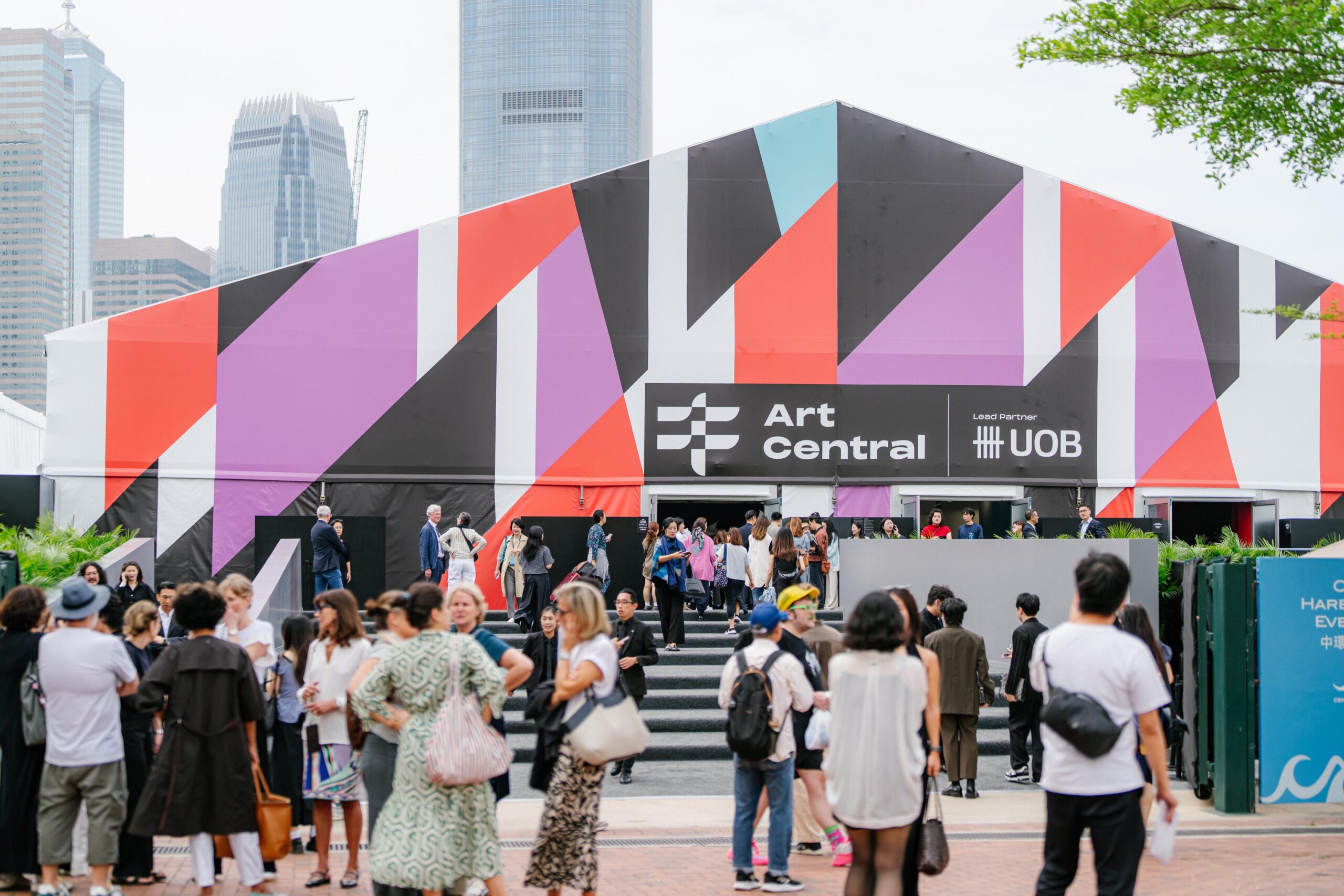
 Photo: Bakchormeeboy
In 1997, the handover agreement between Britain and China preserved Hong Kong’s legal and financial framework for fifty years under the principle of one country, two systems. What it could not preserve was certainty — and Hong Kong’s art infrastructure, more than any other sector, has spent the years since negotiating that gap. The city’s galleries stayed. Its auction houses stayed. Its collectors stayed. What shifted was the question of what kind of cultural platform Hong Kong could anchor in a climate where the answer kept changing.
Art Central launched in 2015 with a specific answer: not the biggest fair, not the most internationally dominant, but the one most willing to bet on what Hong Kong and Asia were producing right now. Eleven editions later, that bet has not softened.
A Decade of Partnership and Ling Pui Sze’s Largest Work Yet
Ten consecutive years of partnership between a major regional bank and a contemporary art fair is not a sponsorship record. It is a structural commitment — and UOB’s tenth anniversary at Art Central produced the most ambitious iteration of the UOB Art Space yet.
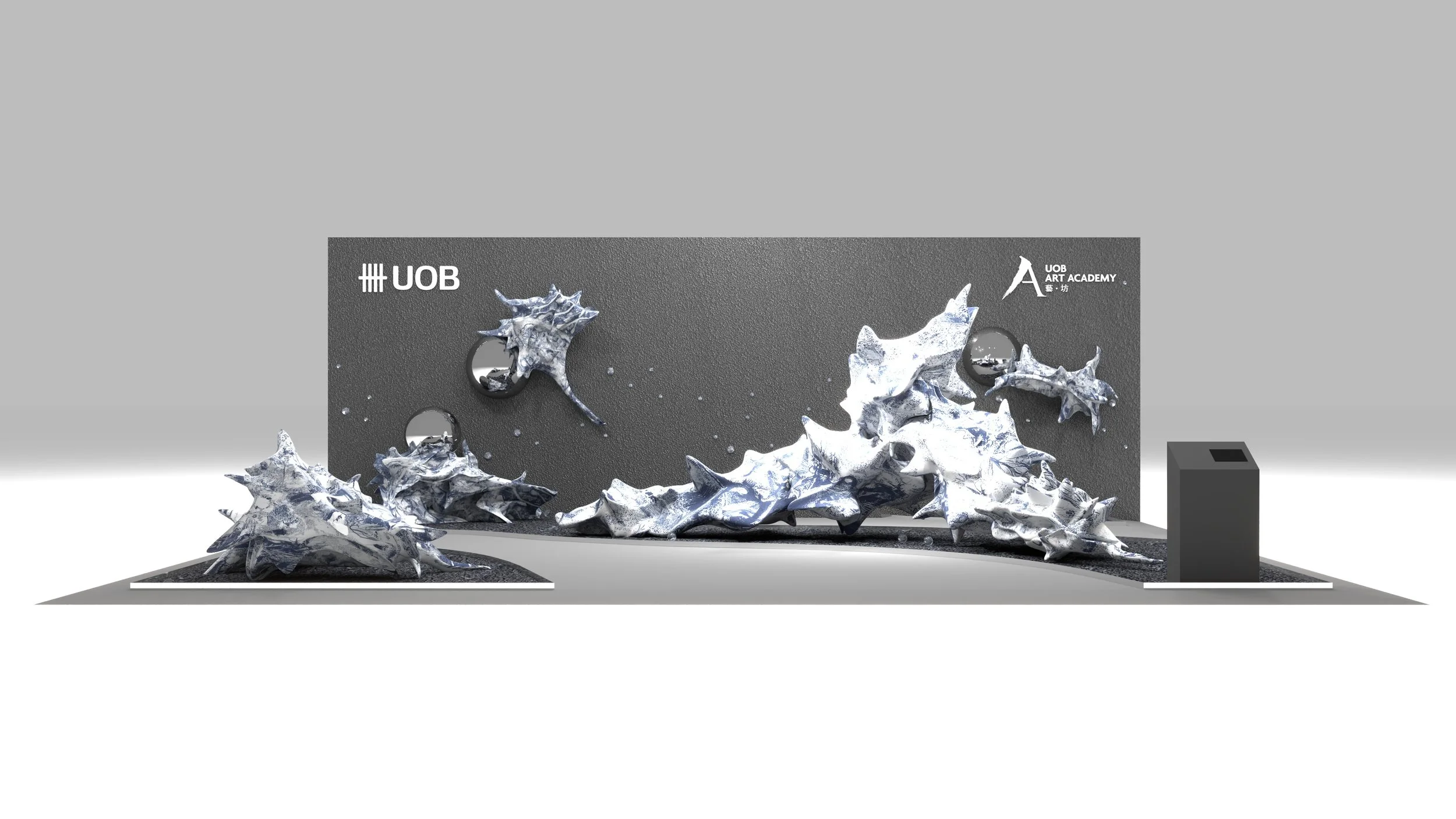
Hong Kong artist Ling Pui Sze received a new commission: White Mirror — The Vista of the Inner Worlds (2026), a large-scale ink installation drawing on cellular imagery from recent scientific research at the University of Cambridge. The work comprises hand-made paper sculptures and moving image, populating a walkable environment with abstract radiating forms inspired by neurons — cells responsible for information transmission within the nervous system — interwoven with collaged cellular patterns and projected footage of cellular movement. The scale matters.
This is Ling’s largest installation to date. A fair that is in its eleventh year and a bank that is in its tenth year of partnership commissioning an artist’s largest work yet is not routine. It is evidence that the relationship between Art Central, UOB, and the artists it supports has not calcified into a format. It has kept pushing.
Adaline Zheng, CEO of UOB Hong Kong, put the decade in plain terms: the programme advances artistic practice, supports art education, strengthens cultural connectivity, and contributes to social sustainability within Hong Kong’s creative ecosystem. When those words are backed by ten editions of material investment — workshops led by Eric Ho, Tony Ng Kwun Lun, Professor Tong Kam Tang, and Stephanie Yeung Chung Nga alongside Ling Pui Sze herself — they stop being a press statement and start being a record.
Indonesia Came to the Harbourfront to Assert, Not to Introduce
MTN Seni Budaya — Indonesia’s National Talent Management for Arts and Culture under the Ministry of Culture — brought Rising Currents to Art Central 2026. Eight galleries at the forefront of Indonesian contemporary art: EDSU house, Galeri Ruang Dini, ISA Art Gallery, Puri Art Gallery, RUCI Art Space, SAL PROJECT, SEWU SATU, and V&V.
The programme did not advance a single narrative. It mapped multiple registers simultaneously — research-based practices, institutionally grounded work, emergent experimentation, new visual languages from younger generations. That is not a showcase format. It is a curatorial argument that: Indonesian contemporary art is not one thing, its ecosystem has built enough internal complexity to resist reduction, and that the Central Harbourfront is the right place to make that complexity visible to an international collector base that has not had consistent access to it.
A public talk on 26 March — Rising Currents: Indonesian Contemporary Art in Motion — carried the argument beyond the booth. Indonesia did not come to Hong Kong to introduce itself. It came to assert a position.
Macao Brought Its Firecracker Industry to a Contemporary Art Fair
Sands Gallery, presented by Sands China, made its debut at Hong Kong Art Month as Associate Partner of Art Central — the first time a Macao-based integrated tourism and leisure enterprise had participated in the fair.
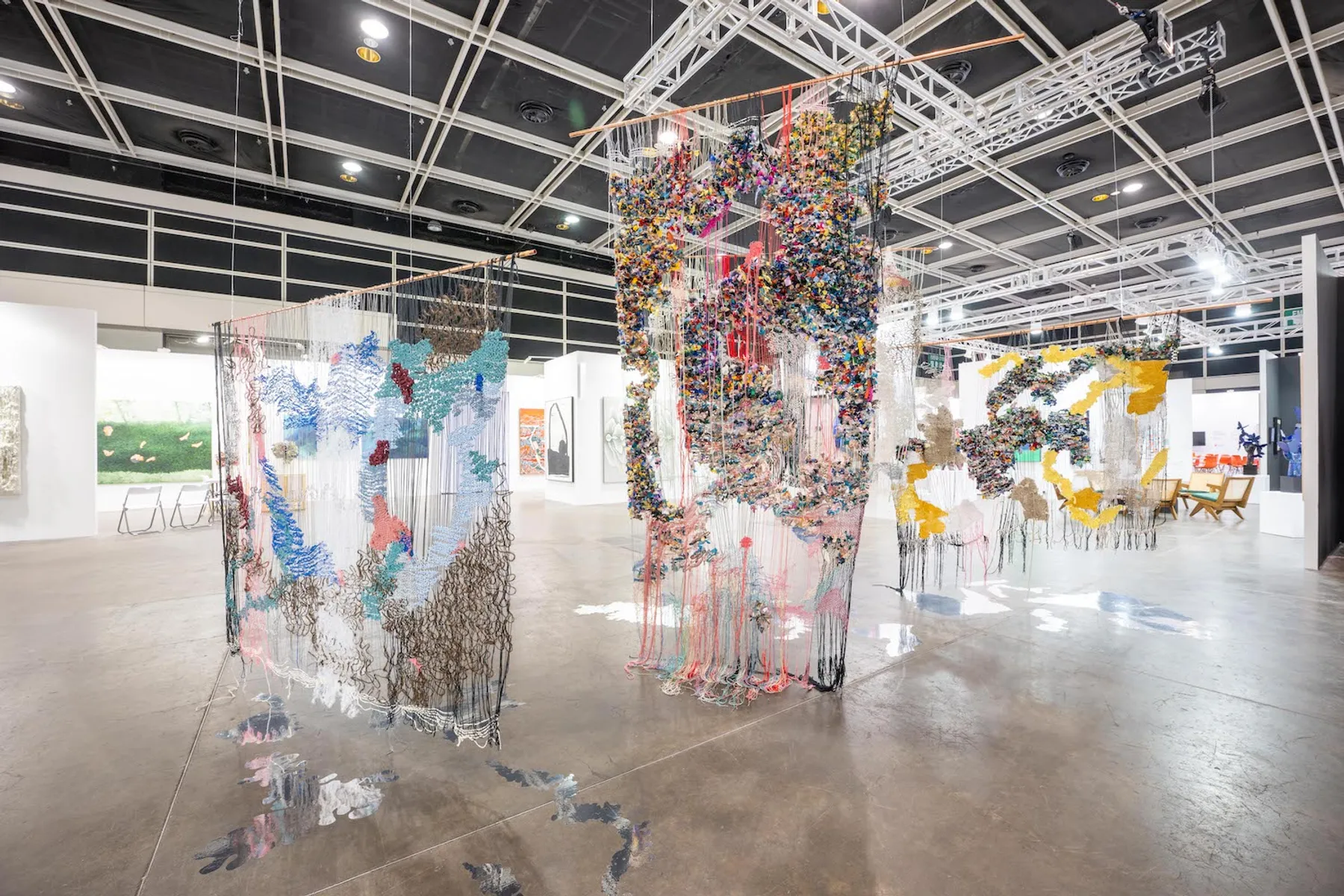
Three contemporary Macao artists carried the booth: Lei Ieng Wai, whose practice transforms scientific theory — artificial spectra, proportional values, geometric structures — into precise blocks of colour exploring urban life; Leong Chi Mou, whose painting and installation interrogates shifting notions of value and cultural identity through personal migration histories and Macao’s post-colonial context; and Dor Lio Hak Man, who channels Japanese manga and Western painting into a daily-observation practice shaped by philosophical openness.
The booth incorporated aesthetic elements of Macao’s century-old firecracker industry. That is a specific curatorial decision, not decoration. It connects the city’s vernacular craftsmanship directly to its contemporary art production and makes the connection visible to an international audience that would not encounter it in Macao’s domestic context. Sands China did not arrive at Art Central to represent tourism, it arrived to argue that Macao’s cultural identity has more layers than its casino reputation suggests.
Neo and Central Stage Do Not Separate Their Generations
Central Stage — Art Central’s section for artists with recent institutional recognition — does something that a standard gallery booth resists doing. It removes the commercial framing from the encounter. The artist is not presented as available. The artist is presented as recognised, as someone whose practice has already been validated by institutions operating outside the market, and whose presence at the fair carries that weight into a commercial context.
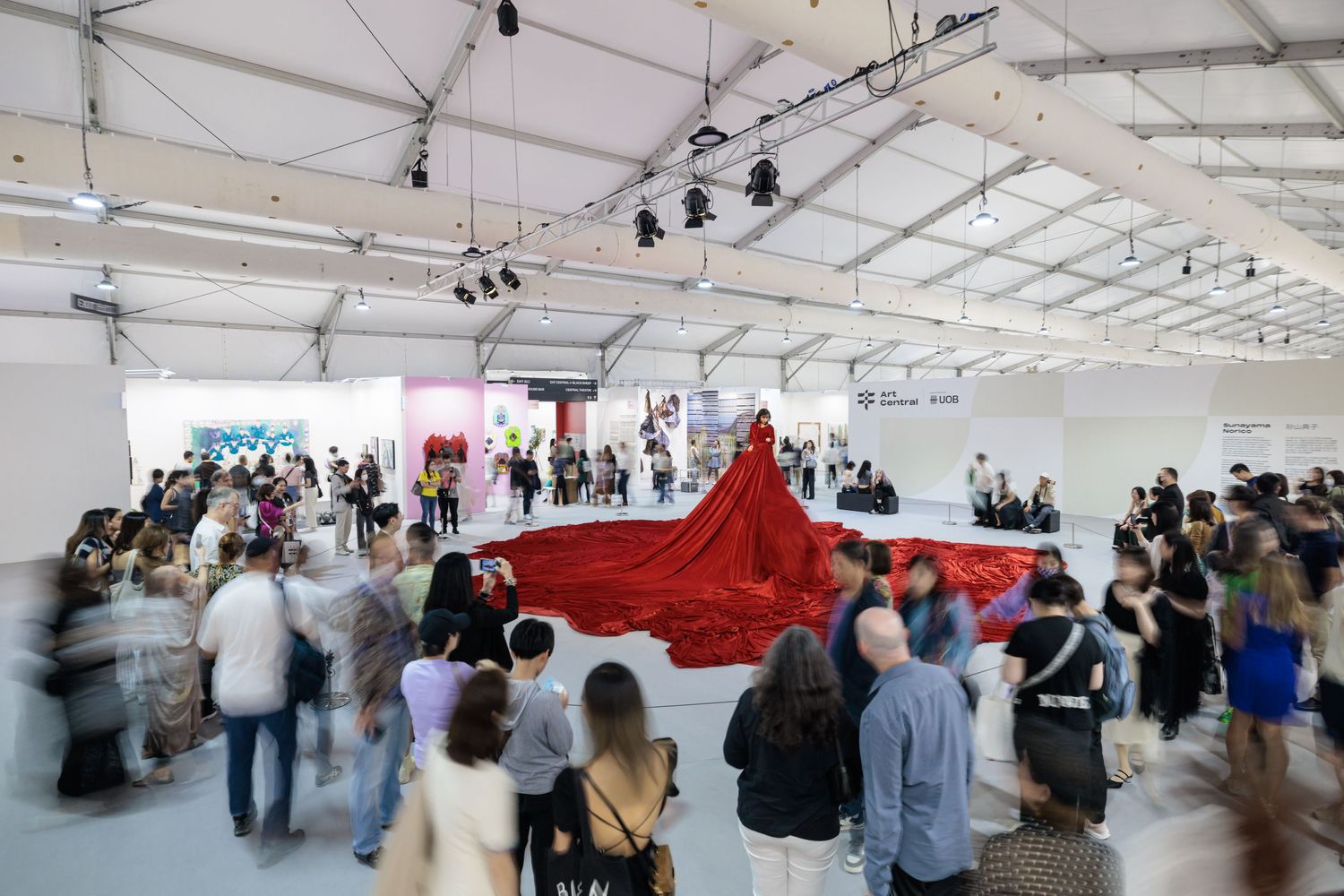
In 2026, Ling Pui Sze’s commission occupied this position most visibly. But Central Stage functions as a section-wide argument: that institutional recognition and fair participation are not in tension, that the same practice can belong to a museum programme and a collector floor without losing coherence in either direction.
Neo, the section reserved for galleries in their first and second years of participation, makes the inverse argument. Emergence belongs on the same floor as establishment. Art Central does not separate its generations into different buildings or different days. It puts them in the same space and lets proximity do what curatorial separation cannot.
2019 to 2026: Seven Years That Tested What Art Central Was Made Of
Andrew Barr joined Art Central in 2019 — weeks before a protest movement that would shut down the city’s public life for months, followed by a pandemic that cancelled the 2020 edition entirely. He brought over two decades of experience in the contemporary art world: Director at a Hong Kong and London gallery focused on contemporary Asian art, then Specialist and Head of Sales at Phillips in New York. The fair he has directed through those years has not contracted. It has expanded its programming, deepened its institutional relationships, and built a VIP structure that connects collectors across private, corporate, and institutional categories.
That is not the profile of a fair managing decline. It is the profile of a fair that decided what it was and kept building toward it regardless of what the city around it was negotiating.
Art Central returns to the Central Harbourfront in March 2027. Applications for the 2027 edition are open at artcentralhongkong.com. The VIP Preview moves fast and the public days fill faster — if you are a collector, a curator, or someone tracking where Asian contemporary art is producing its most serious conversations right now, Hong Kong Art Month is where those conversations happen in person, and Art Central is where they happen on the fair floor. Follow on Instagram for gallery confirmations, programme announcements, and the 2027 edition details as they land.