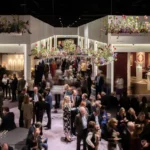
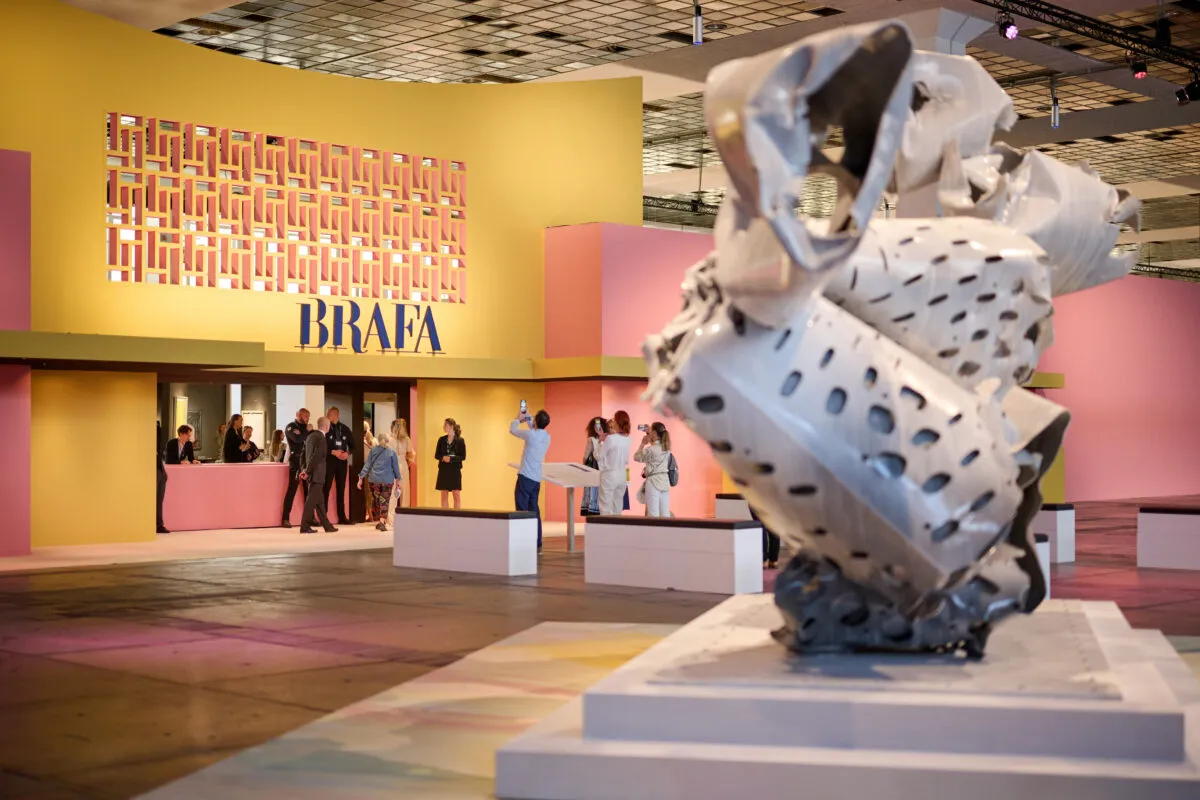
The art market had a bad year in 2025… Mega-galleries reported slower footfall with sales declining. Dealers at Frieze and Art Basel described a collector class that had become more cautious, more selective, longer in its decision cycles. Then January 2026 arrived, and 147 galleries filled Brussels Expo, registrations had come in faster than any previous year, and by the 27th of the month alone, 25,000 visitors had walked the halls. Beatrix Bourdon, BRAFA’s managing director, stood in the middle of it and said the quiet part loud: “The world is not turning as it should at the moment, but in here, it is like another world.”
She meant it as reassurance. It is also the challenge that BRAFA has been living with since 1956 — whether a fair that operates as another world is insulated from the one outside, or whether it has simply built something more honest than the market it is supposed to reflect.
The Numbers Did Not Lie, But They Were Not the Point
The record was not subtle. A record 147 galleries in 2026, up from 128 the year before. An entire new pavilion added to Brussels Expo‘s Halls 3, 4, and 8 to accommodate the expansion. A long sequence of restaurants and bars, oysters served by staff in livery during preview days. Red dots and major sales were reported at opening hours. By the end of January 27 alone — the fair ran until February 1 — 25,000 visitors had entered, a figure that reflects not just attendance but the particular loyalty of a collector base that comes back because the fair has never given them a reason not to.
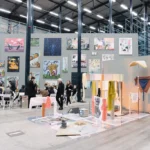
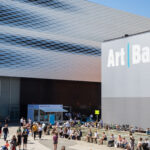
BRAFA has been operating at Brussels Expo since it outgrew its previous home at Tour and Taxis. The Heysel conference hall, where it now lives, is a building whose architecture is worth a detour in its own right. The fair fills it across twenty specialities: Old Master paintings, tribal art, jewellery, silverware, designer furniture, rare books, carpets and textiles, antiquities, contemporary art, and design, mixed in a way that no commercial logic would produce but that seven decades of curatorial conviction have made feel inevitable.
Old Masters, Brazilian Design, and One Undisclosed Skull
The 2026 edition put a Siberian woolly rhinoceros skull — sold by Stone Gallery on the first day, price undisclosed — in the same building as a Laure Prouvost tapestry commissioned with Flanders Tapestries, and a vast Max Ernst sculpture from Die Galerie, and a major Millares painting from Galería Jordi Pascual, and Germaine Richier figures from a mid-century French sculptor who is worth considerably more attention than she gets, and work by Ursula — the 1960s artist whose whimsical formal language drew Joan Mitchell’s devotion and whose stock, post a major Ludvig Museum show in Cologne, is currently rising. That list is not a catalogue of highlights. It is the argument BRAFA makes every January.
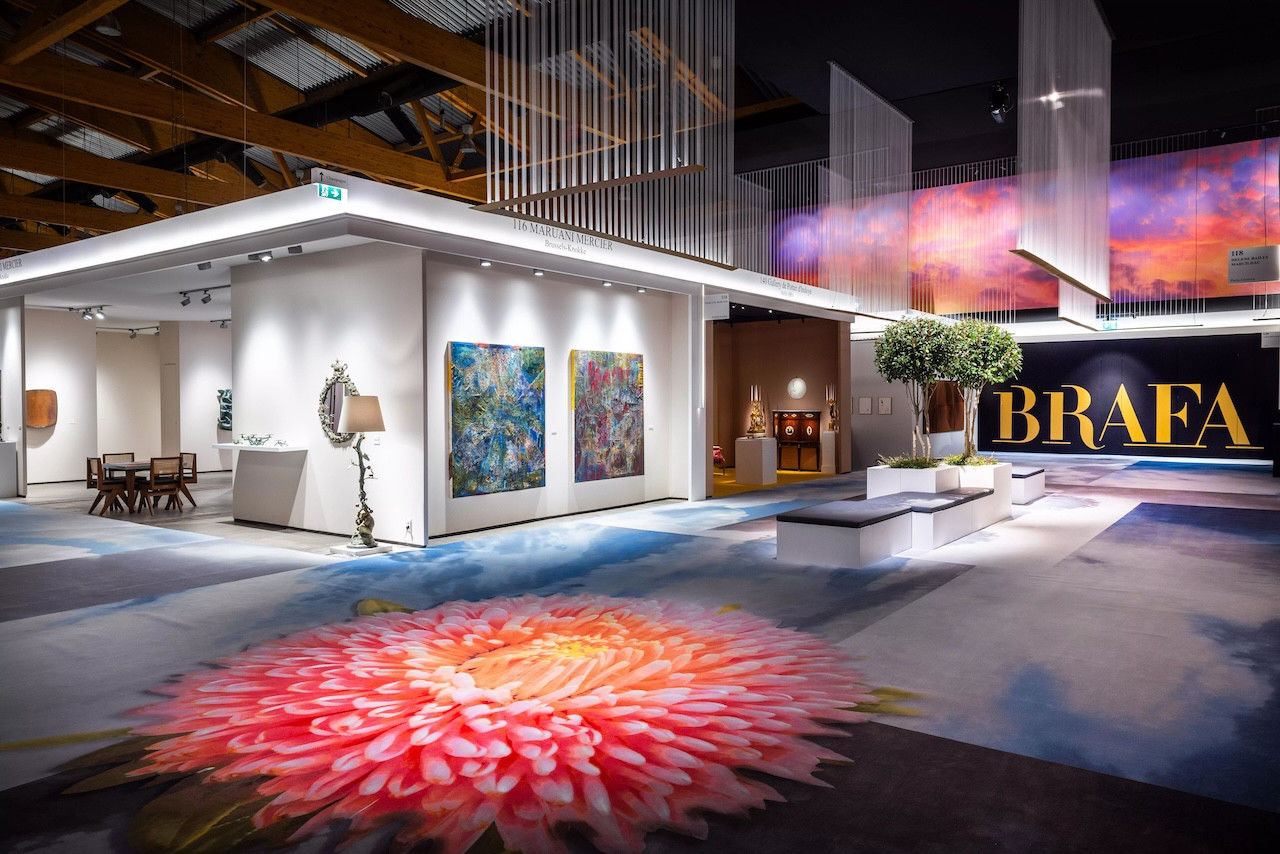
The argument is that, the compartmentalisation the market relies on is artificial… contemporary here, antique there, design in a separate fair, jewellery at auction. Bourdon put it plainly: “Now the art market is more contemporary, but we have managed to remain eclectic. Everything is mixed; we have Old Masters but also Brazilian design.” That mixing is the fair’s refusal to let market taxonomy dictate aesthetic reality. It is also the reason collectors who come for a painting leave having thought seriously about a piece of furniture, and vice versa.
80 Experts Before a Single Visitor
Before BRAFA opens, two full days are given over to what the institution calls its vetting process. More than eighty international experts examine works for authenticity, quality, and condition. A scientific laboratory operates on-site. The Art Loss Register checks every relevant piece. The result is that collectors buy without having to resolve questions the fair should have already answered. That is the deal BRAFA makes with its visitors, and it is a deal of more significance than it might initially appear.
In a market where provenance disputes and attribution questions have cost collectors and institutions considerable sums, a fair that takes institutional responsibility for the authenticity of what is on its walls is making a substantive claim. The vetting room is not a formality. It is the reason a collector can spend the preview evening in conversation rather than in verification.
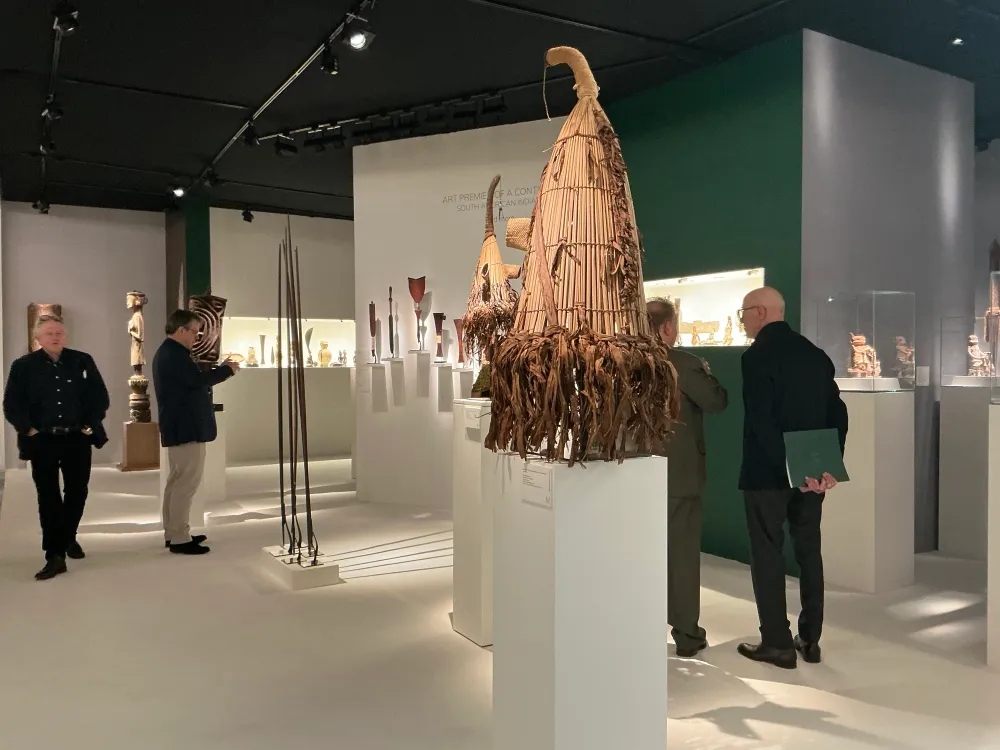 Photo: europe diplomatic
The 2026 highlights reflected the range the fair occupies. Christophe Gaillard showed work by Ursula, a wildly original artist from the 1960s whose formal language drew comparisons to Leonora Carrington and Frida Kahlo. Galería Jordi Pascual brought a major Millares painting and surrounding post-war French works. Die Galerie presented a large Max Ernst sculpture that stopped traffic in the second hall. Maruani Mercier showed a Laure Prouvost tapestry — created with Flanders Tapestries in a continuation of the French-Belgian artist’s immersive practice — that leaned deliberately into a tradition the host country has been perfecting since the mediaeval period. Loyal to Belgian artists in a way that is not provincialism but is instead something closer to curatorial honesty, BRAFA gave the work of Léon Wuidar, Pierre Alechinsky, and others the same wall space it gives international names
Brazil and America Coming to Brussels Meant Something
Among the galleries new to the 2026 edition were names from Brazil and the United States — markets typically oriented toward Art Basel and Frieze. Their presence at BRAFA was not accidental. BRAFA gives you eight days, a collector base with serious purchasing power and deep European cultural inheritance, as well as six thousand years of object-making in the same room as whatever you brought. That is a different conversation entirely.
The Belgian collector base — built on substantial family wealth with genuine cultural investment — is BRAFA’s foundation. More than 65,000 visitors attended the 2026 edition, from Europe and beyond. The fair is not a prestige gesture. It closes deals.
2027 Is Already Dated. Get Ahead
BRAFA draws more than 65,000 visitors per edition. Klaas Muller, Chairman of BRAFA, said that registrations for the 2026 edition had come in more quickly than in previous years. The late opening on Thursday evenings — the fair runs until 10pm — is a signal about what kind of fair this is. The 2026 edition was busy at 10pm on a January evening in Brussels… that kind of audience fidelity is not accidental. It is the product of a fair that has spent seventy years deciding what it is and not succumbing to becoming something else.
The case for January in Brussels is stronger than the market generally acknowledges. The city has its own institutional infrastructure — the Royal Museums of Fine Arts of Belgium, BOZAR, the Magritte Museum — and its own aesthetic inheritance that runs deeper than any fair can manufacture. BRAFA has been the annual activation of that inheritance for seventy years. Its loyalty to Belgian artists — to Alechinsky, to Wuidar, to Léon Spilliaert now showing at Patrick Derom Gallery, to Belgian-based international artists like Prouvost — is not provincialism. It is curatorial honesty about where the fair lives and what it owes.
The 2027 edition is already scheduled: 24 January to 1 February, Brussels Expo, Heysel. Seven decades in, BRAFA is not interested in changing the question it asks. The market, in its slow cycles of consolidation and crisis, keeps finding that the question is worth returning to.
Follow on Instagram and secure your place at their website. The 2027 Collector’s Preview opens noon on 22 January. Book early — the fair’s opening days have consistently sold their serious business before the public weekend begins.