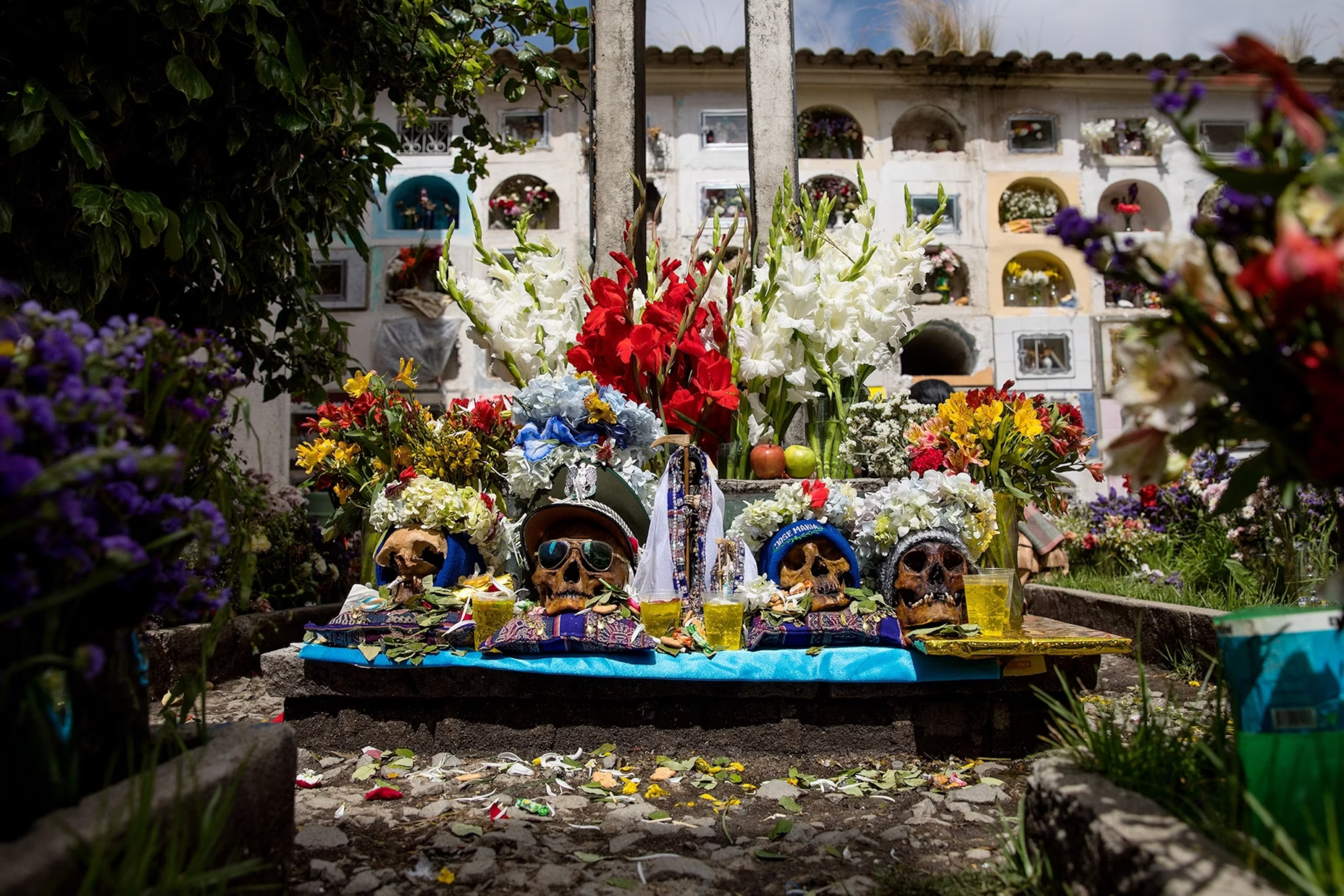
Madrid’s Virgin of Almudena, said to have been found inside a city wall in 1085, never left her cathedral today. Rain forced the suspension of the procession after Cardinal José Cobo’s mass, and her bearers swayed the image indoors to marches and the national anthem while pastry makers outside gave away a 300 kg Corona de la Almudena. In La Paz, the municipal cemetery authority had reported on Saturday that it exhumed more than 60 ñatitas, the skulls Aymara families treat as household protectors, ahead of Sunday’s festival. One protector stayed indoors. The others went to a cemetery.
The festival weekend opened in La Paz on Saturday 7 November, when the municipal authority that runs the General Cemetery reported the exhumation of more than 60 ñatitas. Workers cleaned the skulls for Sunday and devotees brought them out on 8 November with flowers and cigarettes. Madrid took its turn on Monday 9 November, and the weather ended its plans. Rain stopped the Virgin of Almudena from leaving her cathedral, and a cardinal promised the city many processions in place of one.
Madrid’s Own Council Calls the 1085 Wall Story Popular Tradition
The tradition says the image was sealed inside Madrid’s walls in 712, before Muslim forces took the town. Alfonso VI’s men later searched for it, and after days of prayer the wall crumbled and the Virgin appeared. Local tradition dates the find to 9 November 1085 and adds two candles that supposedly kept burning for centuries. The Madrid City Council itself describes the story as popular tradition and not fully documented history. A rival version has the apostle Santiago bringing the statue from the Holy Land in the year 38.
The weekend started with paperwork and prayer. On Saturday, the municipal authority that runs La Paz’s General Cemetery reported a liturgy, prayers, blessings and the traditional exhumation of more than 60 ñatitas, according to ABI. Workers cleaned and prepared the skulls for the next day. Red Uno called the exhumation, known locally as the desentierro, the opening of the festivities. Many of the skulls belonged to relatives or to people whose remains had been forgotten, including people who died in tragic circumstances.
On Sunday 8 November, devotees arrived early at the cemetery to decorate their skulls, pray and make requests or give thanks for favours received during the year. Masses and gatherings followed. Families also visited other cemeteries in the city, according to the EFE report carried by Metro Puerto Rico. The festival fell one week after All Saints, as it does every year.
Her Cathedral Was Still a Building Site When Pope Pius X Made Her Patroness
Madrid had no cathedral until the late nineteenth century, so worship stayed in the old church of Santa María de la Almudena. Serious planning began in 1879, the first stone went down in 1883 and construction started in 1885. Money ran short and the original architect died. The crypt opened in 1911, then the Civil War stopped work entirely, and a new architect restarted it in 1950. The cloister followed in 1955 and the façade in 1960. Pope John Paul II consecrated the finished cathedral in 1993, according to Culture Trip‘s history.
The Vatican settled the paperwork much earlier. In 1908 Pope Pius X recognised her as patroness of Madrid, three years before the crypt opened. The same history says a mosque once stood on the site until Alfonso VI retook the city in 1083. That date falls two years before the traditional wall discovery, which sits awkwardly with the neat 1085 story. Madrid has not let the awkwardness slow the festival.
The Archdiocese Said Bury Them, The Municipal Authority Now Calls Them Heritage
In 2008 the Archdiocese of La Paz called the veneration un-Christian, prohibited masses celebrating the skulls in its churches and urged that the skulls be buried, according to Wikipedia. EFE reported in 2023 that the Church had suspended blessings and masses for the skulls in the cemetery chapel. Cemetery administrators then placed barrels of holy water at the gates, and some families hired priests unaffiliated with the Catholic Church.
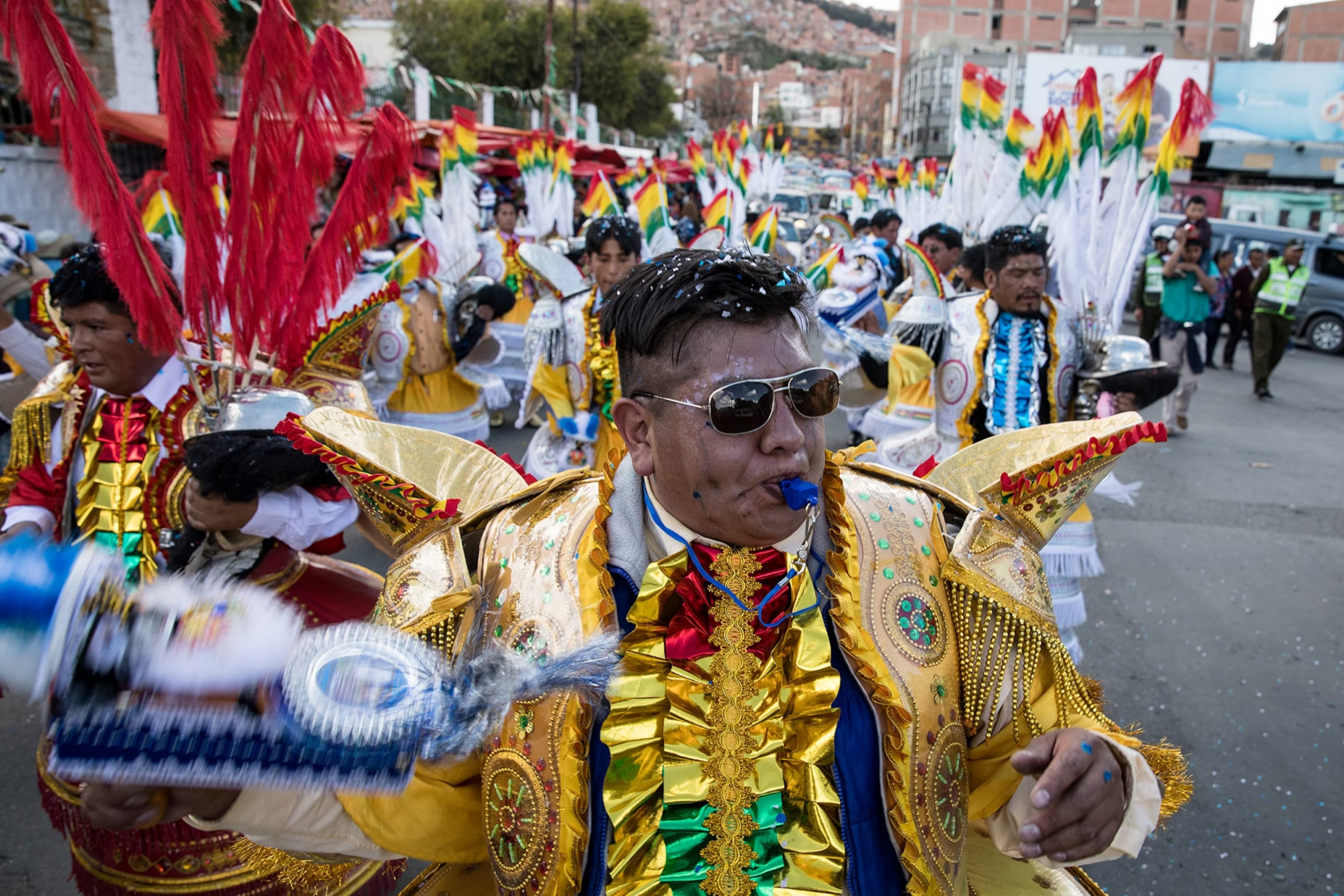
In 2026, ABI reported a liturgy and blessings on Saturday and a mass in honour of the ñatitas. The municipal cemetery authority also said the festival belongs to Bolivia’s intangible cultural heritage. Eighteen years after the archdiocesan statement, the office reporting the exhumation of more than 60 skulls was a city one.
Families Thank The Skulls for Cleared Debts
Plácido Loza brought four ñatitas named Andrés, Caldito, Santiago and Norberta, and he called them his compadres. He told EFE that having them was a blessing, that they shield him from curses sent by other families and that they appear as a guardian angel when a relative is robbed.
Inés Suxo had cared for two skulls since the previous year, after what she called a miracle for her family. She said they look after the household’s health, food and luck and keep strangers away.
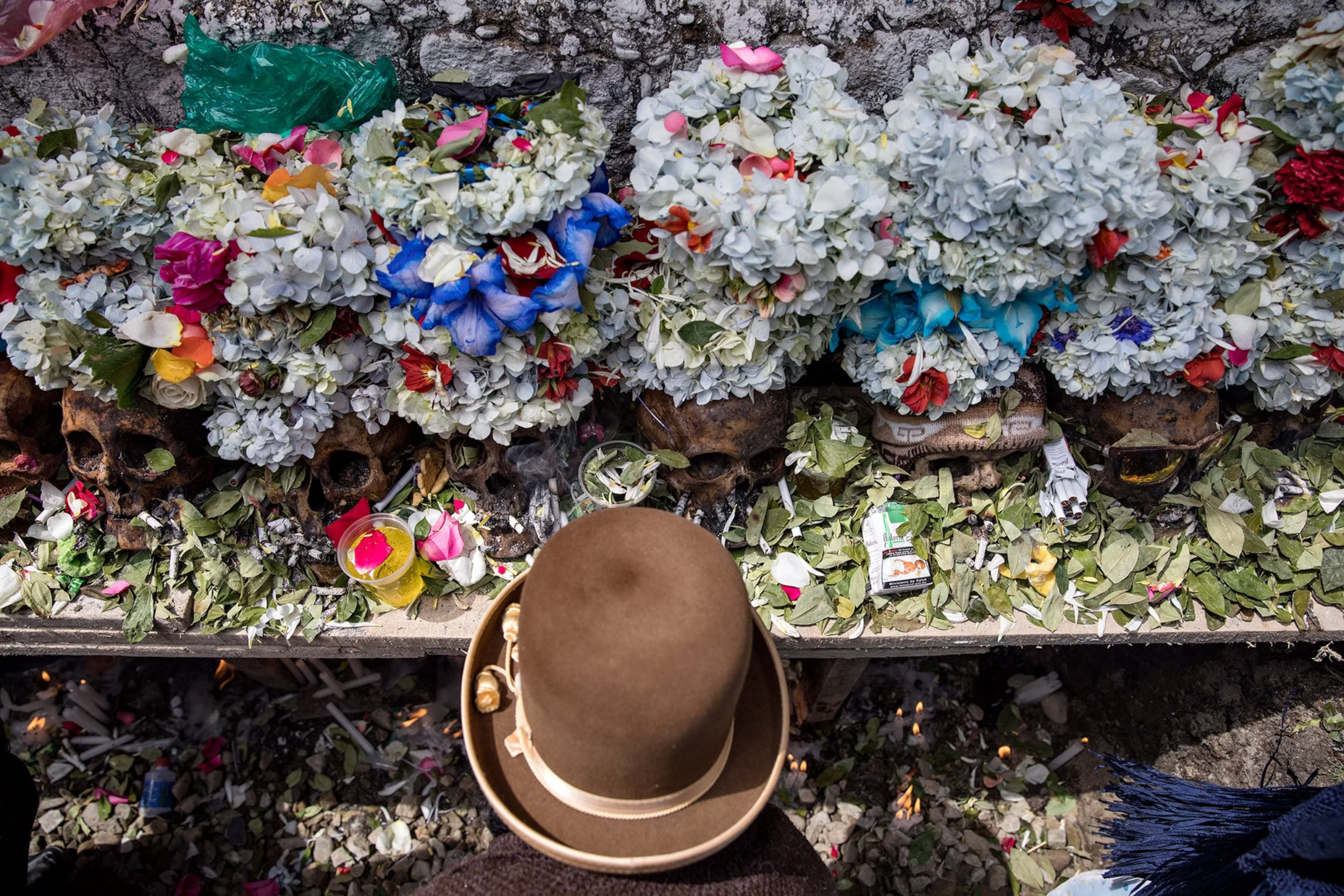
Devotees thanked the skulls for health, money and protection. They also offered thanksgiving for miracles in court cases and relief from debts. Most skulls sat inside glass cases. Those believed to be women’s wore ribbons and flowers, and those believed to be men’s wore wool or flannel caps and held cigarettes. Owners packed cotton into the eye sockets and placed coca leaves around each skull.
Small altars held food, drink and the music the person had liked in life. Folk bands played serenades, and candles burned along the narrow cemetery alleys. ABI reported that some believers hired mariachi musicians. Early 2026 reports described dozens of devotees and gave no total, however, Smithsonian and Wikipedia cite 5,000 to 12,000 for earlier years.
The Mayor Renews a Civic Vow Inside a Church Mass
The 2026 programme read like a council project with a church at its centre. The cathedral ran a three-day triduum from Friday to Sunday. The council’s Patronas cycle added 21 concerts by women artists in Madrid venues between 5 and 8 November. Veterans of the armed forces paraded on Saturday, and about 300 pipers and dulzaina players gathered on the Paseo del Prado on Sunday. A floral and food offering for Cáritas, soup kitchens and parishes was set to run through Tuesday via Calle de Bailén.
Monday’s centrepiece began with the 11:00 mass, where Mayor José Luis Martínez-Almeida was due to renew the Voto de la Villa, a civic vow. The procession then followed Calle Mayor, Calle de Santiago and Calle de Requena before returning along Bailén, with Madrid groups performing in the Plaza de la Villa as the image passed. Meanwhile the Plaza Mayor filled with zarzuela from noon. At 12:30 the Madrid cooks’ and pastry makers’ association ACYRE assembled a giant Corona de la Almudena and handed out about 1,000 free portions while supplies lasted. Folk dances ran from 17:00 to 19:00.
The legend was more than 900 years old. The pastry that anchored the Plaza Mayor party dated from 1978. The holiday also stopped at the city limits, because El Diario de Madrid noted that other towns in the region followed their own calendars.
A 1978 Pastry Outlasted the Rain
Outside, the Plaza Mayor ran its own festival. The Corona de la Almudena weighed about 300 kg and measured 25 m across, Libertad Digital reported. The Madrid cooks’ and pastry makers’ association ACYRE made it, with crema pastelera and Anís de Chinchón, and prepared to give away more than 5,000 free portions. COPE reported that Madrileños finished all 5,000 portions. Queues formed, and some people wore the traditional chulapa costume. The pastry dates from 1978, when Madrid’s pastry guild created it as a tribute to the patroness.
The legend is more than 940 years old. The cake that anchored the Plaza Mayor party is 48. Rain cost the Virgin her streets, and the cardinal answered with a homily about columns. In La Paz the same weather sits inside the skulls’ own calendar, and nobody had to cancel anything.
The Madrid City Council’s full 2026 programme scheduled the schoolchildren’s floral offering for Tuesday 10 November, moved because of the Ibero-American Summit. The cathedral’s address is Calle de Bailén 10, with Ópera on Metro lines 2 and 5 the nearest stop. The Day of the Skulls falls on 8 November every year, so anyone planning a visit to La Paz should confirm the date locally, arrive early at the General Cemetery and ask permission before photographing any family’s skulls.