
In April 1996, a modest art fair opened at the Fieramilanocity exhibition centre in Milan. It was called miart. Nobody predicted it would last thirty years, let alone that its thirtieth edition would announce itself by quoting John Coltrane, moving to a new building, and daring the galleries to keep up. That is exactly what happened this April, and the results were as complicated as the ambition was large.
Ricciardi’s Final Edition Did Not Play It Safe
Nicola Ricciardi — in his sixth and final year directing miart — framed the 2026 edition around a single provocation: at a time marked by political, technological, economic, and perceptual transformation, a fair can no longer simply function as a marketplace. The title New Directions drew from Coltrane’s 1963 recordings — the year he was pushing modal jazz toward something the genre had not yet named — and from the fact that 2026 marks a hundred years since the birth of both Coltrane and Miles Davis. Jazz became a curatorial metaphor for improvisation, controlled risk, and the tension between tradition and departure.
The analogy ran deeper than naming. Intesa Sanpaolo, the fair’s main partner, curated a vault exhibition at Gallerie d’Italia pairing Robert Ryman and Mario Schifano — an American minimalist and an Italian pop artist — under the framework of modal jazz, arguing that their shared discipline of rigour and variation made them kindred practitioners across different mediums. The same internal logic Coltrane was working in 1963 before either movement had fully named itself.
That kind of programming is what separates miart from the broader European art fair circuit. Most fairs offer sections, miart offers a curatorial argument. This year it was structured across three sections — Emergent, Established, and Established Anthology — designed to put historical weight in direct conversation with living practice. The fair did not treat the past as context. It treated it as interlocutor.
The New Venue Promised Everything and Delivered Half of It
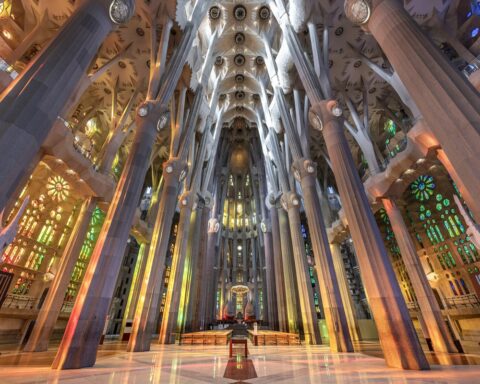
The move from Fieramilanocity to the South Wing of Allianz MiCo, overlooking the CityLife park, was the most visible structural decision of the 30th edition.

The three-level layout was conceived as a progressive path. In practice it generated reactions that were polarised but consistent: appreciation for the architectural quality, frustration with the exhibition itinerary’s legibility, and galleries that said so directly when asked.
Alfonso Artiaco, returning to miart from Naples after three years, praised the second floor’s large spaces, parquet floors, and effective lighting — then called the connection between levels confusing and the pathway unintuitive. Cadogan Gallery praised the flexible spatial scale while flagging the vertical fragmentation as a problem that slowed visitor flow between stands. Carlo Virgilio & C. described visitors appearing disoriented and often unable to complete all three levels, the ground floor carrying the weakest energy of the three. Repetto Gallery identified Level 2 as cut off from the entrance flow, aggravated by inadequate signage — a situation that dispersed the audience before they arrived on the most commercially important preview day.
The market read was cautious but not damaging. Sales concentrated in the medium-high and medium-low price ranges. Cadogan reported works moving between 5,000 and 50,000 euros. Carlo Virgilio & C. sold five works between 6,000 and 12,000 euros, including a Tullio Pericoli painting and three Luis Serrano pieces. Dep Art presented works priced between 100,000 and 700,000 euros — no sales at the fair, but negotiations underway. Arcangelo Sassolino, Alessandro Piangiamore, Michelangelo Pistoletto, and Bruno Munari all moved at Repetto. The international audience was thinner than previous editions across nearly every account. The domestic collector carried the week.
Ryman and Schifano Were the Cleanest Sentence the Edition Wrote
The Ryman/Schifano installation in the vault of Gallerie d’Italia — ten works from the Luigi and Peppino Agrati Collection, organised by Ricciardi as a companion to the fair — was the most coherent single argument the 2026 edition made.

Photo: Maurizio Tosto
Robert Ryman’s Winsor 20 (1966) and Mario Schifano’s Analogo (1961), shown at the fair itself, extended the comparison into the exhibition halls. The pairing was not a historical exercise. It was a structural claim: minimalism and post-informalism share a deeper logic — repetition, variation, restraint — that jazz had been making since before either movement had a name.
Milan Art Week extended the argument across the city. At Triennale Milano, Don Bronstein’s photographs of Miles Davis, Nat King Cole, and the Chicago jazz and blues scene between 1953 and 1968 made their European debut — twenty-five images from Chess Records’ house photographer, shown for the first time on this side of the Atlantic. At PAC, Marco Fusinato’s The Only True Anarchy Is That of Power prosecuted a different kind of perceptual argument entirely — immersive, high-intensity, audiovisual, and deliberately uncomfortable. The fair was never just the fair. Ricciardi understood that in 2021 when he took the job, and in 2026 he built the edition around it more completely than any previous one.
What the 30th Edition Confirmed About Milan
Ricciardi closes his tenure having done what outgoing directors rarely do: initiated the change rather than preserved the legacy. The venue transition, the Coltrane and Davis framework, the structural rethink — none of it was conservative. Some of it did not land cleanly in this first iteration, and the galleries said so without softening the verdict. The three-level format needs better signage, clearer routing, and stronger connectivity between floors before it does what it was designed to do.
What the 30th edition confirmed is what miart has been proving since 1996: Milan is the only Italian city with the gallery density, institutional seriousness, and collector culture to anchor a fair of real international consequence. The new venue is not the problem. It is an unfinished answer to the right question. The next director inherits a fair mid-transition — which is, by any measure, a more interesting inheritance than a fair that had already decided what it was.
Full programme information and exhibitor details are available at miart.it and on Instagram.