 Photo: artequeacontece
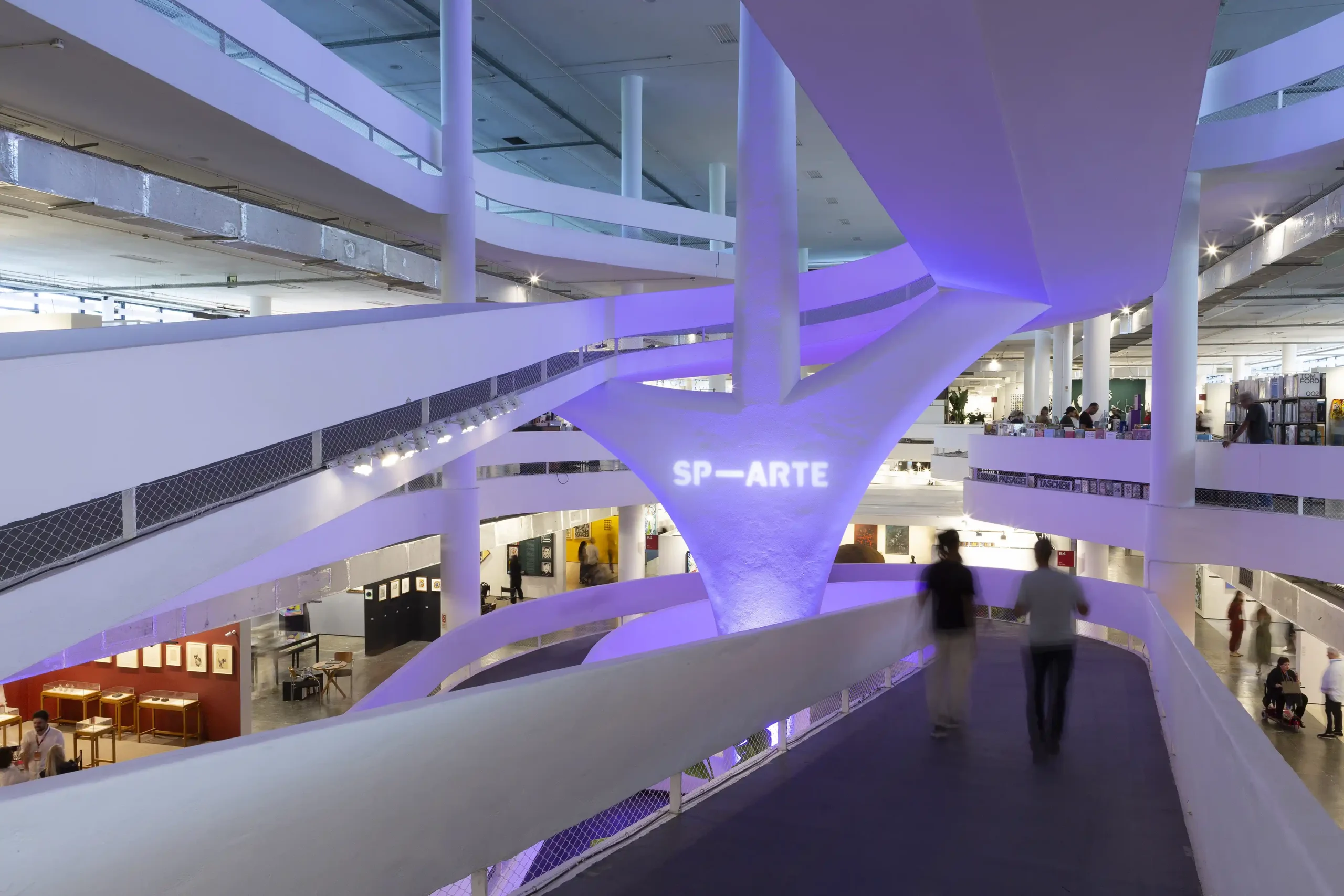
In 2007, Fernanda Feitosa launched a small art fair inside a shopping mall in São Paulo. There was no Brazilian art fair of international consequence at the time. No infrastructure connected local galleries to the international collector class. No annual moment forced the international art world to look south. Nineteen years later, that fair fills the Oscar Niemeyer-designed Bienal Pavilion at Ibirapuera Park with over 180 galleries, design studios, and cultural institutions.
The shopping mall is long gone but the argument Feitosa made with that first edition has only gotten stronger.
The Crisis Made Them, So the Crisis Cannot Break Them
SP-Arte‘s 22nd edition ran April 8 through 12, 2026, against a backdrop of global art market contraction. Major Western fairs spent the season recalibrating in the face of softening demand. Brazilian galleries did the opposite. Art dealers across South America reported strong sales through 2025, driven by a 21% year-on-year increase among Brazilian galleries specifically, according to the Art Basel and UBS Global Art Market Report. Cycling Industry
Feitosa does not treat that resilience as luck. Latin America’s art market was built inside repeated political and economic crisis, and that history produced endurance rather than fragility. Ricardo Gonzalez Ramos, founder of Mexico City’s Galería RGR, traces the same strength to a different root: regional galleries never carried the overhead that weighs down their counterparts in the US or Europe, so global shocks land softer here. Juan Luis Balarezo, director of Lima’s Crisis Galería and a first-time exhibitor this year, takes the argument one step further. The correction underway is not Latin American art catching up to a Western standard. It is the West finally pricing work that was never inferior to begin with.
A Brazilian Fair, Not a Global One Pretending Otherwise
What separates SP-Arte from Art Basel or Frieze is not scale. It is intention. Feitosa describes the fair as built specifically to anchor Brazilian production — international in participation, but unmistakably Brazilian in identity, the same way Zona Maco carries a distinctly Mexican one. That specificity is not a limitation she apologises for. Many of the world’s largest fairs, in her account, have traded away personality and local rootedness for scale. São Paulo, Mexico City, Bogotá, and Buenos Aires already carry the collector sophistication to anchor major international hubs of their own. What holds them back is not talent or demand. It is political and structural friction that keeps their fairs locally rooted rather than globally diffuse. Cycling Industry
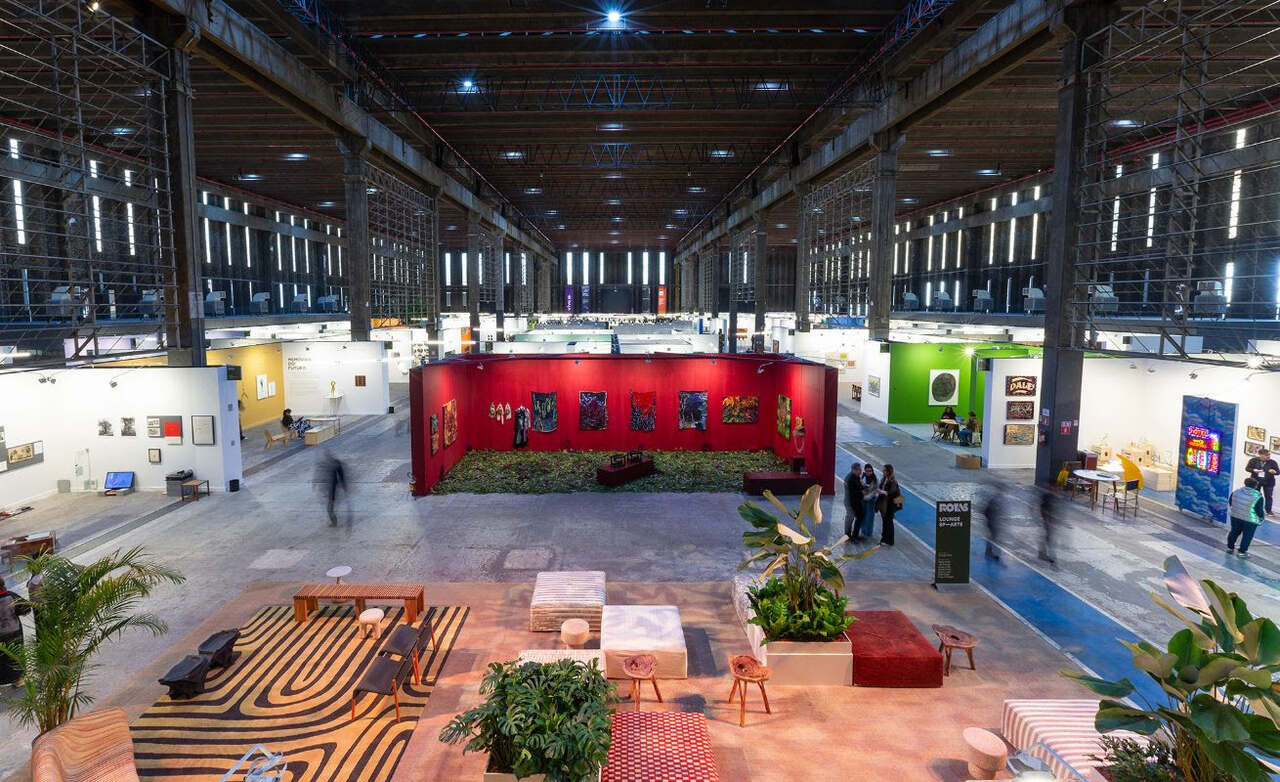 Photo: Casa a Mercado
Fiona McIntosh, the Australian art advisor leading a delegation through São Paulo, Rio de Janeiro, and the Inhotim Institute, draws the comparison plainly: Basel and Frieze reflect the international art scene at large, while SP-Arte’s refusal to dilute itself into something more globally legible is exactly what made the trip worth taking. The specificity is the asset, not the deficiency.
The Global South Was Never Waiting for an Invitation
Jennifer Inacio, associate curator at Pérez Art Museum Miami, has watched the appetite for Brazilian and Latin American programming grow steadily among American and European museum curators — interest she connects to a basic truth: no contemporary art conversation can claim to be global while sidelining the Global South. Feitosa ties this directly to a broader rebalancing already underway across the art world, toward deeper inclusion of women, Indigenous, Black, and street artists, with Brazil positioned as a natural protagonist in that shift rather than a late arrival. “We have all of this; we check all the boxes,” she says. Cycling Industry
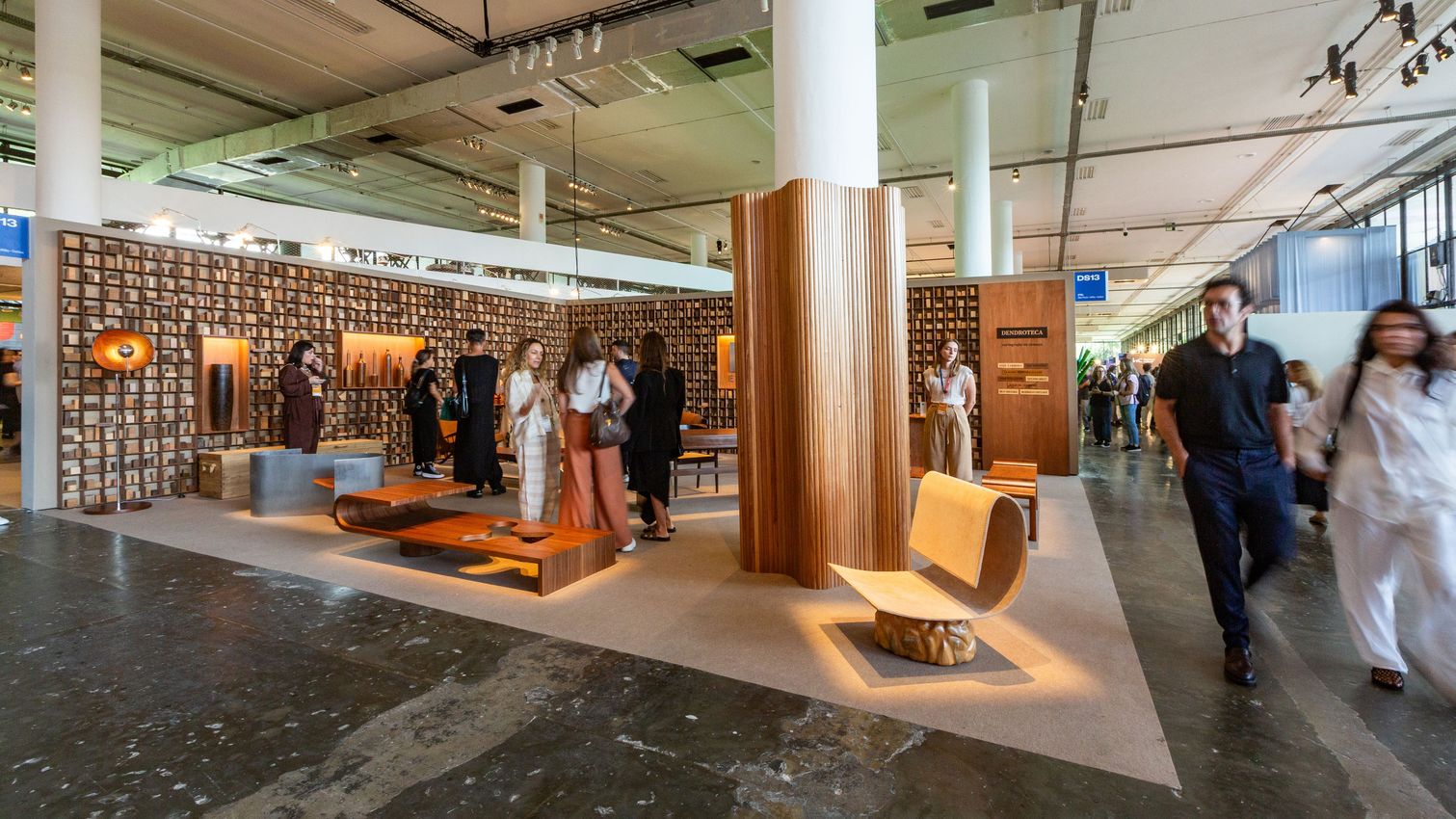
The artists who have passed through SP-Arte’s history support the claim. Vik Muniz, the Brazilian photographic artist whose compositions have drawn serious collectors across multiple editions, built real international visibility through this room. Adriana Varejão’s work interrogating colonialism and Brazilian identity has commanded six-figure sales here. Lygia Pape’s geometric and conceptual pieces drew institutional attention from inside Brazil and beyond it. The Museum of Modern Art and Tate Modern have both acquired works through the fair — proof that SP-Arte’s local specificity has never been a ceiling on its international consequence.
Droga5 Took the Argument Past the Pavilion Walls
SP-Arte’s design sector launched in 2016 with 23 stands. It now runs 64. This year introduces DesignNOW, a new section built around ten independent Brazilian creators working without affiliation to major design houses — a deliberate counterweight to the assumption that serious design only happens inside established institutions. Feitosa’s reasoning is structural rather than sentimental: Brazilian design was already powerful, it had simply been waiting for an event built to match its output, and a proper calendar for the sector is what let it finally thrive.
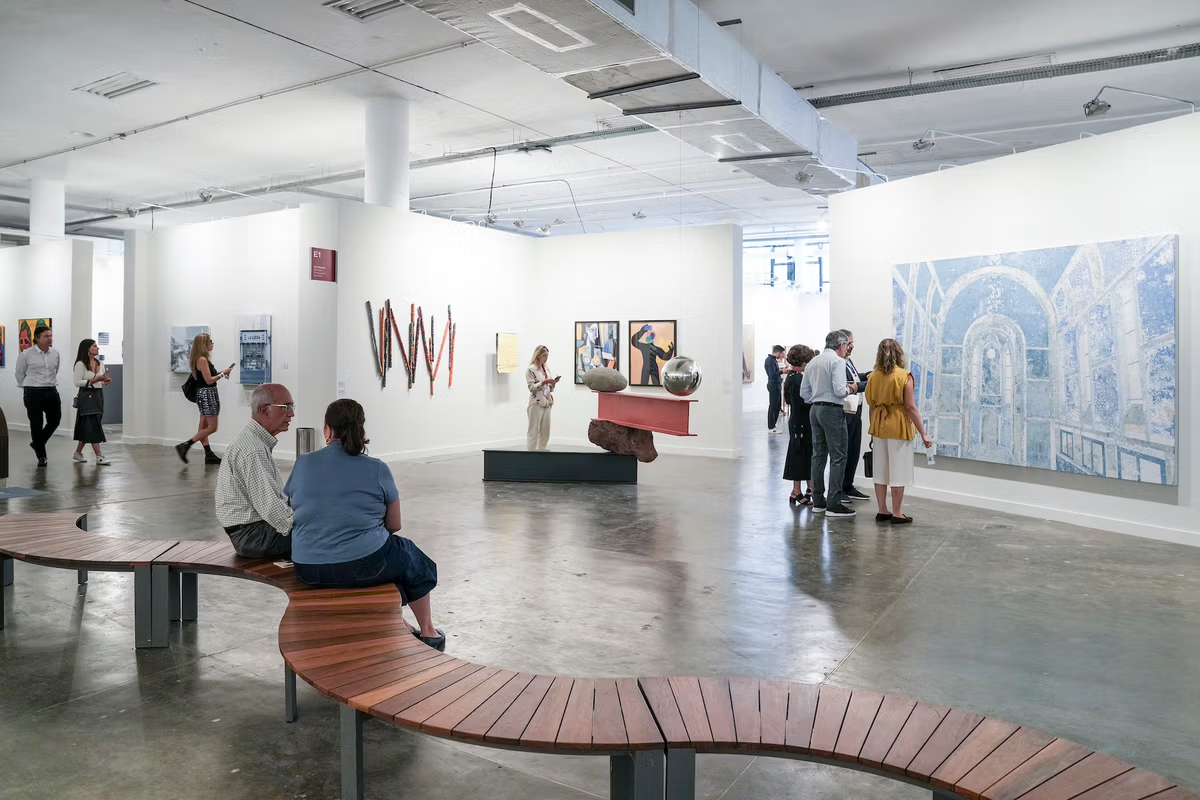
The Droga5 São Paulo campaign running concurrently across Brazilian billboards and print made the country’s design conversation legible well beyond the fair walls. The agency’s “No Blue, No Green” series for SOS Oceano deconstructed the Brazilian flag into six handcrafted screen prints, pairing marine and rainforest iconography to argue that stripping the ocean from national identity collapses the land that depends on it. The original works showed at Plano Estúdio in Barra Funda — a reminder that São Paulo’s design moment in April 2026 was never contained to one pavilion.
São Paulo Knew What It Was Before the World Noticed
Feitosa built SP-Arte on the conviction that São Paulo did not need to imitate Basel to matter. Nineteen years and twenty-two editions later, the fair has not become a smaller version of the international circuit. It has become the argument for why that circuit needed a Brazilian room in the first place. The work is Brazilian. The collectors increasingly span the globe. The conversation, deliberately, has never tried to be anything other than what it is.
SP-Arte returns each April to the Bienal Pavilion at Ibirapuera Park in São Paulo. The fair’s full exhibitor list, ticketing, and programme details for future editions are available at the website with updates also posted to Instagram.