Photo: Psymedia
In 1997, a man called Swarup — Juarez Petrillo, a producer from the Brazilian interior — started organising a small New Year’s Eve party in the mountains of Planalto Central. A few hundred people came from across the country, drawn by word of mouth and the specific pull of something, yet to be named. Three editions ran in the magical highlands of Chapada dos Veadeiros, each one soaked through by the intense rains that mark that region at the turn of the year, each one harder than the last for organisers and crowd alike. After the third, Swarup looked at what he had built and decided it needed water, wind, and Bahia. The fourth edition of Universo Paralello on the beaches of Pratigi was, by the accounts of everyone who was there, one of those rare moments when a new world announces itself quietly. The almost 2,000 people present that year were witnessing a turning point in Brazilian electronic music culture, and most of them felt it in the moment. That was over two decades ago. The next edition runs December 27, 2026 to January 4, 2027, and 25,000 people are already planning how to get there.
Before Pratigi, There Were the Mountains
Universo Paralello was not designed in an office or pitched to investors. It grew out of a community of young Brazilians in the late 1990s who had encountered the psychedelic trance scene — a global electronic music culture with roots in Goa, Israel, and the UK — and wanted to build their own version of it in Brazil, on Brazilian terms, shaped by Brazilian sensibility. Swarup was the organiser, but the festival belonged to everyone who came, which is why it was called Universo Paralello in the first place: a parallel universe, a separate reality that existed for the duration of the gathering and then dissolved back into ordinary life, leaving something behind in everyone who touched it.
The first three editions in Chapada dos Veadeiros were genuinely difficult. The terrain was remote, the rains were relentless, and the infrastructure was minimal. But the difficulty was also part of what made it feel real — not a commercial festival but a gathering, the kind of thing you had to earn your way into by actually getting there. When Swarup moved the festival to Pratigi in the early 2000s, the fourth edition became, in the words of those who were there, a mutation point. Everything that had been building in the mountains found its proper home on the beach, with the Atlantic Forest behind it and the sea directly in front of the main stage, and the festival became what it has been ever since: the heart and soul of the Brazilian psychedelic trance community, and the most international festival in the country.
Since 2011, Universo Paralello has run as a biennial event, always straddling New Year’s Eve, always at Pratigi Beach in the small municipality of Ituberá in the southern coast of Bahia. It has 15 editions behind it. The most recent editions have drawn around 25,000 people from across the globe, with attendees arriving from Europe, the United States, Israel, Japan, and dozens of other countries, making it one of the most internationally attended festivals in all of South America.
72 Kilometres From the Airport and Worth Every Minute
Praia de Pratigi is not easy to reach. The beach sits roughly 72 kilometres from Valença Airport, accessible by charter bus from both Valença and Salvador Airport, or by car along roads that cut through the Atlantic Forest coastal zone of southern Bahia. There is no shortcut. You commit to the journey, and the journey is part of the experience — by the time you arrive at the festival site, you have already crossed into a different relationship with time and ordinary life.
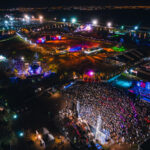
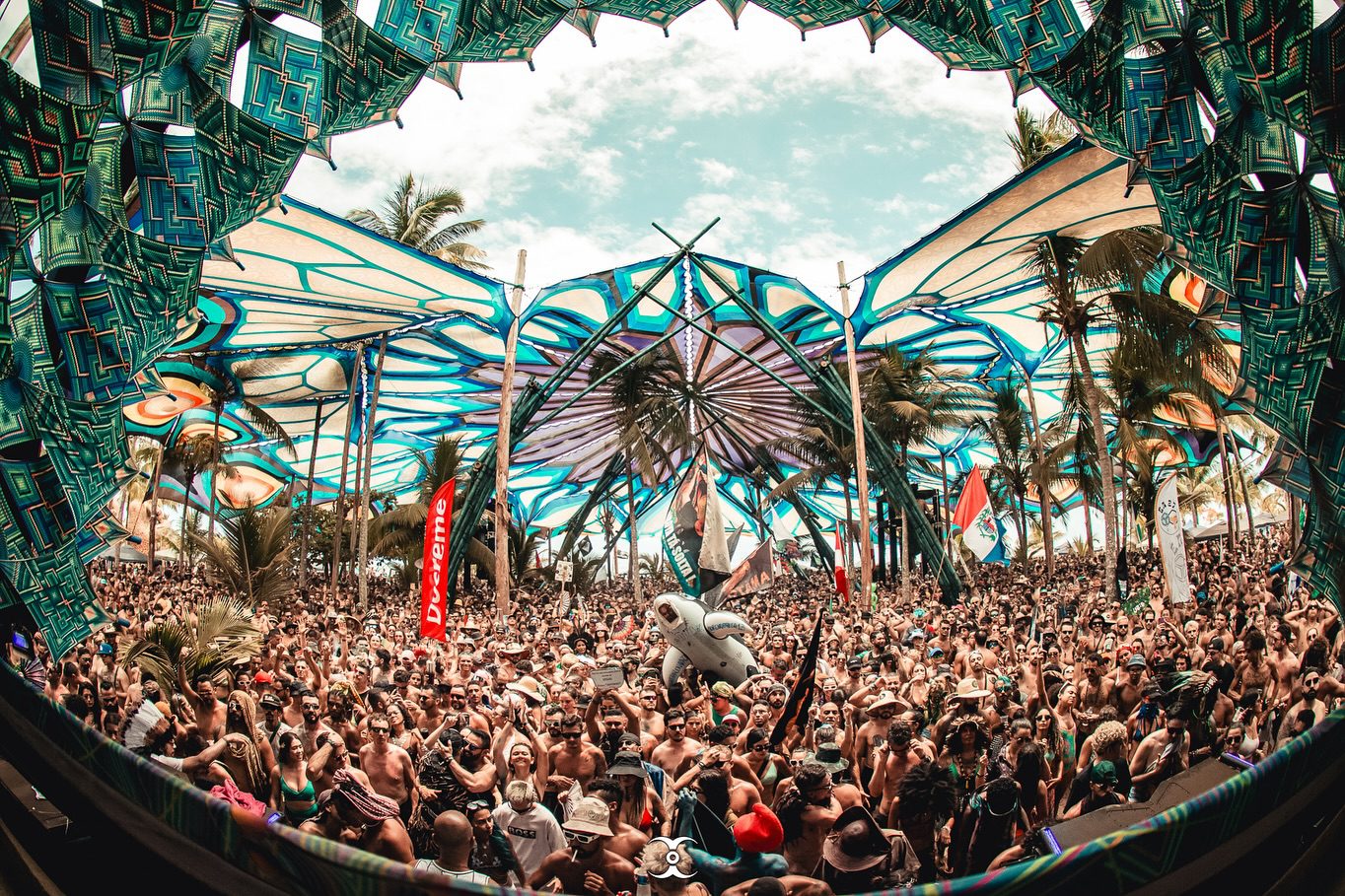
The beach itself is what the festival’s location has always been about. The 303 Stage sits directly at the shoreline, with the sea a few steps away from the dancefloor, and the breeze coming off the Atlantic cooling a crowd that would otherwise be dissolving in Bahia’s summer heat.
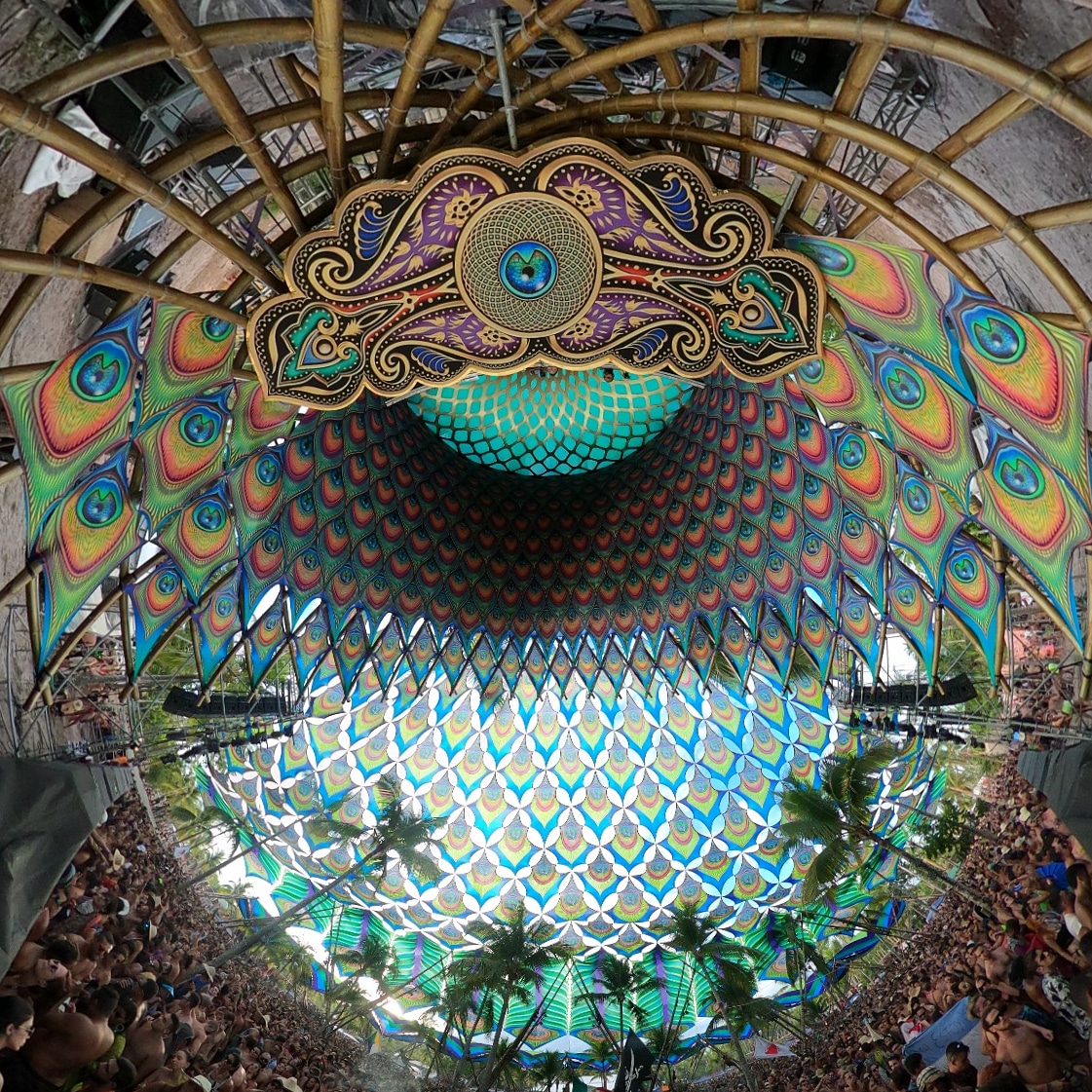
The Main Floor, the festival’s centrepiece, has taken different forms across editions. One of the most celebrated was shaped like a giant boat, its stage design constructed by the South African decoration crew Artescape, a structure that people who were there still describe with a particular kind of reverence. The Atlantic Forest presses in from the landward side, with the sounds of the festival absorbed by the trees and returned to the crowd softened and changed.
The municipality of Ituberá, the festival’s nearest support town, holds the practical infrastructure: ATMs, banks, a hospital, pharmacies, supermarkets, and accommodation for those not camping on the festival grounds. The festival itself provides medical posts operating 24 hours, a lifeguard service, showers with treated water, toilets serviced around the clock, restaurants, bars, a pharmacy on site, storage facilities, and shuttle trucks running between the beach and the wider region on a scheduled timetable. Premium camping at Espaço Nativos, located 100 metres from the main stage, offers ready-to-camp structures ranging from individual igloo tents to luxury gazebos, with full motorhome support and a dump station — the only facility of its kind in the region. The festival’s infrastructure has grown with each edition to serve an increasingly international crowd that arrives for nine full days and does not leave lightly.
Six Stages and Nine Days of No Ordinary Time
The structure of Universo Paralello is one of the things that sets it apart from every other large festival in Brazil. There are no day tickets. You buy for the full duration or you do not come, which means the people around you have also committed to nine days together, and the social fabric of the gathering develops over that time in a way that a three-day festival cannot produce. Friendships start on day one and survive beyond the festival’s end. People return edition after edition and recognise each other across years.
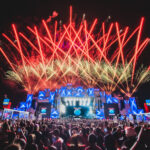
The music runs without interruption across six stages. The Main Floor is the festival’s spiritual centre, where the full-power psychedelic trance runs from sunset to deep into the morning and beyond. The 303 Stage at the beach carries the same energy but under open sky with the sea behind it, a setting that has produced some of the most documented crowd moments in the festival’s history. The UP Club Stage, also at the beach, runs a clubbier programme — techno and house, a different temperature from the main stages, for when the crowd needs to move differently.
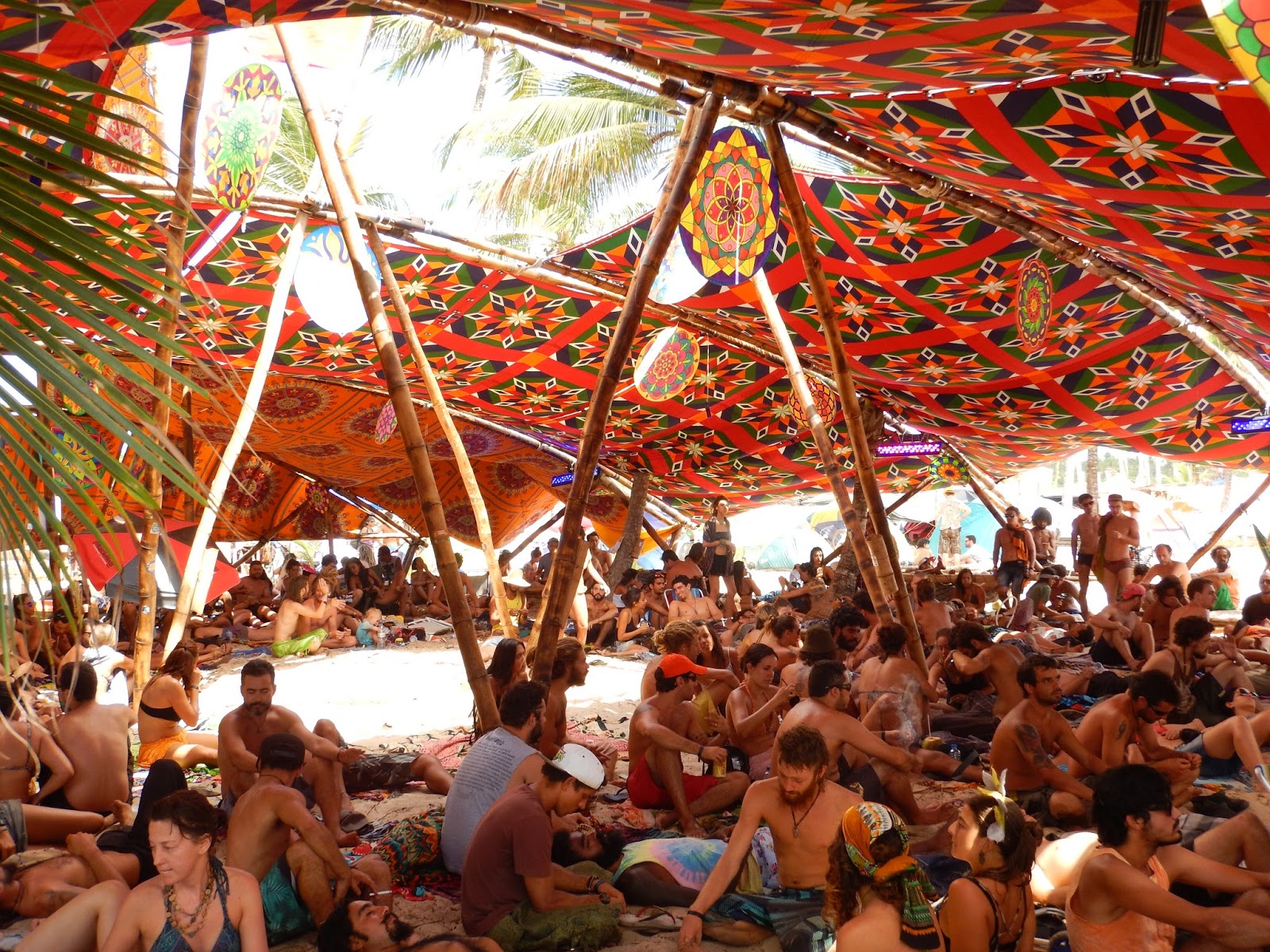
The Chill Out Stage carries reggae, world music, and ambient sounds, a slower space where the intensity of the main floors can be metabolised. The Tortuga Stage runs its own programming. And the Paralello Stage, which has grown in prominence with each edition, hosts live music from outside the electronic world entirely — Caetano Veloso opened one edition on this stage, one of the most celebrated figures in the entire history of Brazilian music, performing for a psytrance crowd in Bahia at New Year’s.
Beyond the music, the Circolou space runs activities throughout the nine days: slackline, yoga classes, juggling, drug awareness sessions, a healing space with holistic therapies, cinema, theatre, art exhibitions, workshops, talks. The festival’s visual and decoration arts are treated as seriously as the music — artists like Carin Dickson from Artescape have transformed the festival grounds into layered psychedelic environments that function as immersive worlds rather than backdrop. The food stalls and community kitchens operate with a stated environmental ethic, and the festival’s sustainability commitment extends to active measures to protect the surrounding Atlantic Forest and beach ecosystem. The organisers have described their philosophy simply: “We don’t stick to rules, we stick to what our heart tells us.”
25,000 Strangers Who Become Family
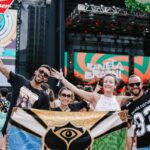
Universo Paralello is genuinely international in a way that most festivals are not. The last editions have drawn 25,000 people from across the globe, with conversations on the festival grounds happening simultaneously in Portuguese, English, Spanish, Hebrew, German, Japanese, and languages that first-time attendees cannot immediately identify. Veterans of the scene who have been coming since the Chapada dos Veadeiros editions in the late nineties attend alongside people for whom this is their first festival of any kind. Families come with young children. The age diversity is wide and the crowd culture is deliberately inclusive, shaped by the festival’s founding ethic of peace, love, unity, and respect, which is not marketing language at Universo Paralello but something that the crowd actively maintains together across the nine days.
The Reddit communities that discuss the festival describe it consistently in terms that are hard to separate from the language of life-changing experience. People write about arriving as strangers and leaving as family. About the specific quality of dancing on a beach in Bahia at sunrise on New Year’s Day, the sea turning gold, the music not stopping. Nine days of full immersion in a community built around freedom, connection, and music changes your relationship to ordinary time when you return to it. The festival has produced this effect across more than two decades and 15 editions, and the biennial rhythm. The fact that you cannot go every year, you wait for the next one which is always two years away; gives each edition a weight that annual festivals cannot carry.
December 27, 2026 and Nine Days After That
The 16th edition of Universo Paralello runs December 27, 2026 through January 4, 2027, at Praia de Pratigi, Ituberá, Bahia. The festival’s Instagram announced ticket sales on hold with more availability expected before the edition opens. Tickets, when available, are sold exclusively through the festival’s official website and cover the full nine-day duration — single-day passes are not offered. Prices for previous editions have ranged from R$1,300 to R$2,600, with a solidarity half-ticket option including a donation of one kilogram of non-perishable food, available to Brazilian students, teachers, and military personnel with proof of ID.
The lineup for the 2026 edition has not yet been fully announced. Past editions have brought Infected Mushroom, Astrix, Shpongle, Grouch, Electrypnose, Dickster, ManMadeMan, Pspiralife, and dozens of the most significant names in global psychedelic trance, alongside beloved Brazilian artists across every stage. The Paralello Stage has consistently hosted figures from outside the electronic world whose presence at Universo Paralello says something specific about what the festival represents in Brazilian cultural life — a space where genres and worlds collapse into each other, where Caetano Veloso can perform for 25,000 people who came for psytrance and where that feels completely right.
Twenty-six years after a few hundred people drove through the rain to a party in the mountains of Planalto Central, the festival Swarup built is still running on the same principle it started with: freedom of expression, respect for difference, and the conviction that nine days on a beach in Bahia, dancing at the edge of the Atlantic Forest with people from every corner of the world, is one of the most important things a person can do.
The next edition is in December. If you have not been, you have been missing something.
Tickets and information at the official Universo Paralello website.