 Photo: Comunidad Deezer
In 1950, two musicians from the state of Bahia named Dodô and Osmar mounted a band on a flatbed truck, wired it for sound, and drove it through the streets of Salvador during Carnival. The crowd followed… and seventy-five years later, the idea of a sound truck, on the street and crowd moving behind it, is still the structural logic of the largest street party on earth. The truck got bigger and the crowd has jumped to 2.5 million. The logic still stays exactly the same.
What Salvador Is Not
The easiest way to understand Carnaval de Salvador is to start with what it isn’t, because almost everything people imagine when they hear “Brazil Carnival” is the wrong picture. Rio de Janeiro’s Carnival takes place in a sambadrome. A purpose-built parade ground with grandstands, a fixed route, a judging panel, and a separation between the performers and the crowd that is architecturally enforced. You watch the show as it happens in front of you.
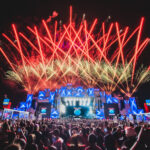
Salvador does not do sambadromes and there are no floats carrying performers past a seated audience. The circuits: Dodô along the Barra/Ondina seafront, Osmar through Campo Grande, Batatinha threading through the Pelourinho — are not parade routes. They are the city itself, transformed temporarily, with the Trios Elétricos moving through it at walking pace and the crowd moving with them, behind them, around them, in a mass of bodies that stretches for kilometres in every direction. The distinction between a performer and the audience dissolves somewhere in the first two hours, and it doesn’t come back for six days.
This is why the Guinness World Record for the largest street party belongs to Salvador and not to any other Carnival city on earth. The certification, formalised in March 2025, confirmed what Bahians have known for generations: nothing else in the world assembles this many people in shared kinetic experience, in an open street, with no barrier between the music and the crowd.
Three Storeys High and Moving
The Trio Elétrico is not a float… the distinction matters more than it initially sounds. A float carries something past you. The Trio Elétrico — a custom-built sound truck, typically three storeys high, equipped with a full live stage and a sound system powerful enough to be felt in the chest three blocks away — leads a procession with you inside. Brazil’s biggest artists spend these six days on top of these trucks, playing to crowds they cannot entirely see the edges of, in a city that hands itself over to the music.
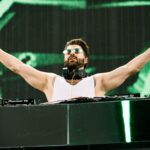
Ivete Sangalo, Daniela Mercury, Léo Santana, Carlinhos Brown, Margareth Menezes — these are not artists who occasionally play Salvador Carnival. They are artists whose identities are partly constituted by it. The 2026 edition’s opening night at Barra-Ondina featured Margareth Menezes in a return that the Bahian press treated less as a booking announcement and more as a homecoming. Brown commanded the closing Arrastão on Ash Wednesday — the traditional finale that moves the last of the crowd down the seafront and into something that feels, briefly, like silence after six days of continuous sound.
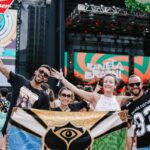
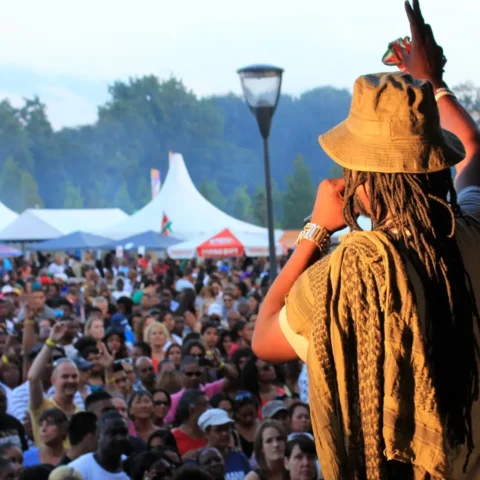
There are three modes of participation and they involve completely different relationships to money, space, and belonging. The pipoca — the word means popcorn, and describes how the crowd pops and moves freely — is the democratic one: no ticket, no wristband, your body in the street and the music doing the rest. Photo: G1-Globo
The blocos de abadá organise you into a group identified by a purchased costume shirt, kept inside a rope boundary that moves with the Trio Elétrico as it travels. The camarotes are the elevated private viewing spaces, with open bars and reserved positions above the crowd. All three coexist in the same street simultaneously, and each one is a different Salvador Carnival.
The Roots the Trios Grow From
Something important gets lost when Carnaval de Salvador is described primarily as an axé music festival or a Trio Elétrico spectacle. The Afro blocos — Ilê Aiyê, Olodum, Filhos de Gandhy, Muzenza — are not supporting acts to the main event. They are the reason the main event means what it means.
Ilê Aiyê was founded in 1974, the first Afro bloco in Brazil, created explicitly to celebrate Black Bahian culture and identity at a moment when that celebration was not guaranteed a welcome. Olodum’s drumming became internationally known through Paul Simon’s Rhythm of the Saints and Michael Jackson’s “They Don’t Care About Us,” both recorded in Salvador. Filhos de Gandhy processes through the city in white and blue tunics at the pace of a spiritual ceremony, playing afoxé rhythms with the composure of people who understand that what they are doing is older and heavier than a festival. These groups do not need the Carnival to legitimise them. They are what gives the Carnival its roots.

The 2026 edition formalised this alongside the Trios Elétricos with dedicated stages: the Palco Axé Pelô in the Pelourinho carrying Afro-Brazilian rhythms across the six days, the Arena do Samba at Campo Grande, the Palco Multicultural. The three main circuits were running simultaneously throughout, each carrying its own character, its own temperature, its own crowd — Batatinha in the colonial quarter running at an intensity that the seafront circuits, for all their scale, do not quite replicate.
Six Days, Then the City Forgets to Stop
Six official days with the Pre-Carnival running the weekend before with Fuzuê — brass bands, fanfarras, free access along the Barra seafront and Furdunço bringing the names out early: BaianaSystem, Daniela Mercury, blocos without cordas, the kind of crowd that shows up not because they need a wristband but because they can feel the shift in the city. Post-Carnival runs into the Ressaca— the hangover days, where the programming continues across the city and the question of when Carnival actually ends becomes genuinely unclear.
With over 2.5 million people and 750,000 visitors from outside Bahia, the city does not merely host an event, it becomes one, for six days, as it does every February for the better part of a century — before the Guinness certification, the international travel guides and any language to describe what was already happening in those streets.
Salvador does not explain itself. It opens its streets in February and lets the music explain.