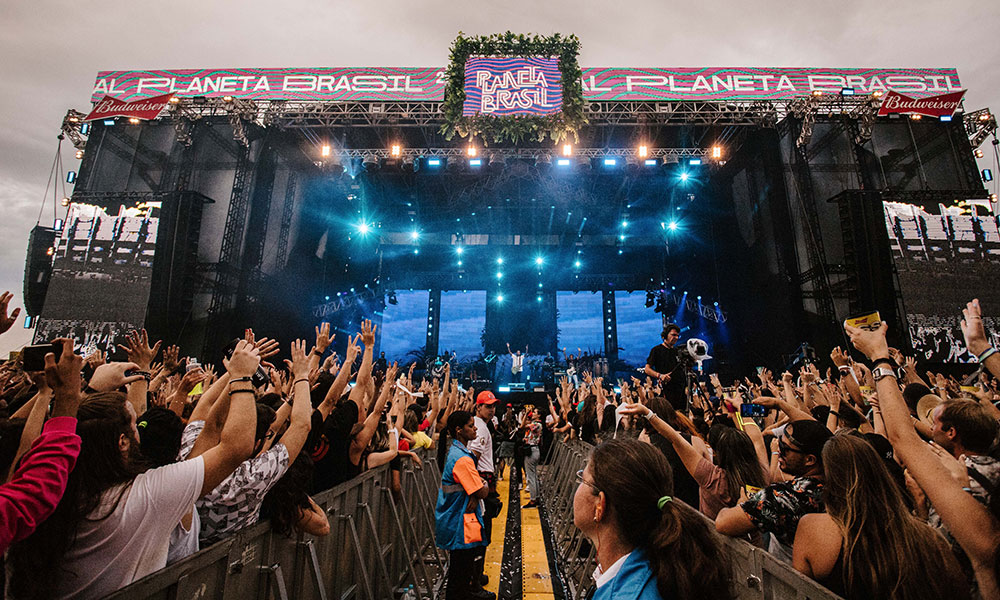
 Photo: Site RG – UOL
In September 2022, after two years of pandemic absence, Festival Planeta Brasil returned to the Esplanada do Mineirão in Belo Horizonte with 100 artists across six stages and the largest lineup in its thirteen-year history. 50 Cent headlined Saturday. Lauryn Hill headlined Sunday. Djonga, Criolo, Iza, Matuê, Vintage Culture, BaianaSystem, and roughly eighty other acts filled the space between them. The festival that had started in 2009 with 8,000 people beside a lake in the Lagoa dos Ingleses had become, over the course of a decade, the largest music festival in Brazil outside of the Rio-São Paulo axis. Belo Horizonte had been making this argument for years. 2022 was the moment it stopped being an argument.
8000 People and a Decision That Changed Everything
The beginning is modest enough that it reads, in retrospect, less like an origin story and more like an accident that kept happening on purpose. Planeta Brasil Entretenimento — a Curitiba-based events company founded in 1986 by people with decades of cultural production behind them, festivals, theatre, concerts, exhibitions, FIFA Fan Fests — launched the first Festival Planeta Brasil in 2009 beside Lagoa dos Ingleses in Belo Horizonte with Lulu Santos, Monobloco, and O Rappa. Eight thousand people showed up and the promoters looked at that number, decided it meant something, and came back the following year.
The 2010 edition added Skank, Maria Gadú, Pato Fu, and Jorge Ben Jor. The 2011 edition brought the first international acts — Donavon Frankenreiter, Slightly Stoopid, Playing for Change — alongside Nando Reis and a Seu Jorge show that included a guest appearance from Gabriel Pensador. By then, the festival had begun investing seriously in stage design and scenography, which changed the crowd experience in ways that pure lineup announcements cannot, and signalled that the people running it understood the difference between booking acts and building a world.
The years between 2012 and 2014 were structural. Mineirão was under renovation for the 2014 World Cup, so the 2012 edition found a solution in a Pampulha plot secured with city support — four stages, a format that had not previously existed in Belo Horizonte, a demonstration that the city could absorb a festival of that scale. When Mineirão finished its renovation and Planeta Brasil moved to the Esplanada permanently in 2014, the Guns N’ Roses show that headlined that edition announced the festival’s intentions clearly: it was competing with the biggest events in Brazil, on its own terms, in its own city.
What Belo Horizonte Understood That Rio and São Paulo Didn’t
There is a version of the Brazilian music industry story in which everything happens in Rio de Janeiro and São Paulo, with everywhere else existing in relation to those two cities. Rio has the Sambadrome and Rock in Rio including a century of music mythology. São Paulo has Lollapalooza Brasil, Primavera Sound and the largest concert economy in Latin America. These are real facts and they have real weight. Belo Horizonte’s counterargument — made quietly and consistently across a decade of Planeta Brasil editions — is that the largest festival outside the Rio-São Paulo axis is not a consolation prize. It is its own category and belongs to a city that produced Sepultura, gave Brazil Djonga, one of the country’s most important contemporary rappers, and that has a hip-hop scene of genuine national significance. A city that has supported a festival capable of booking 50 Cent, Lauryn Hill, and Djonga on the same weekend — and making all three feel like they belong there.
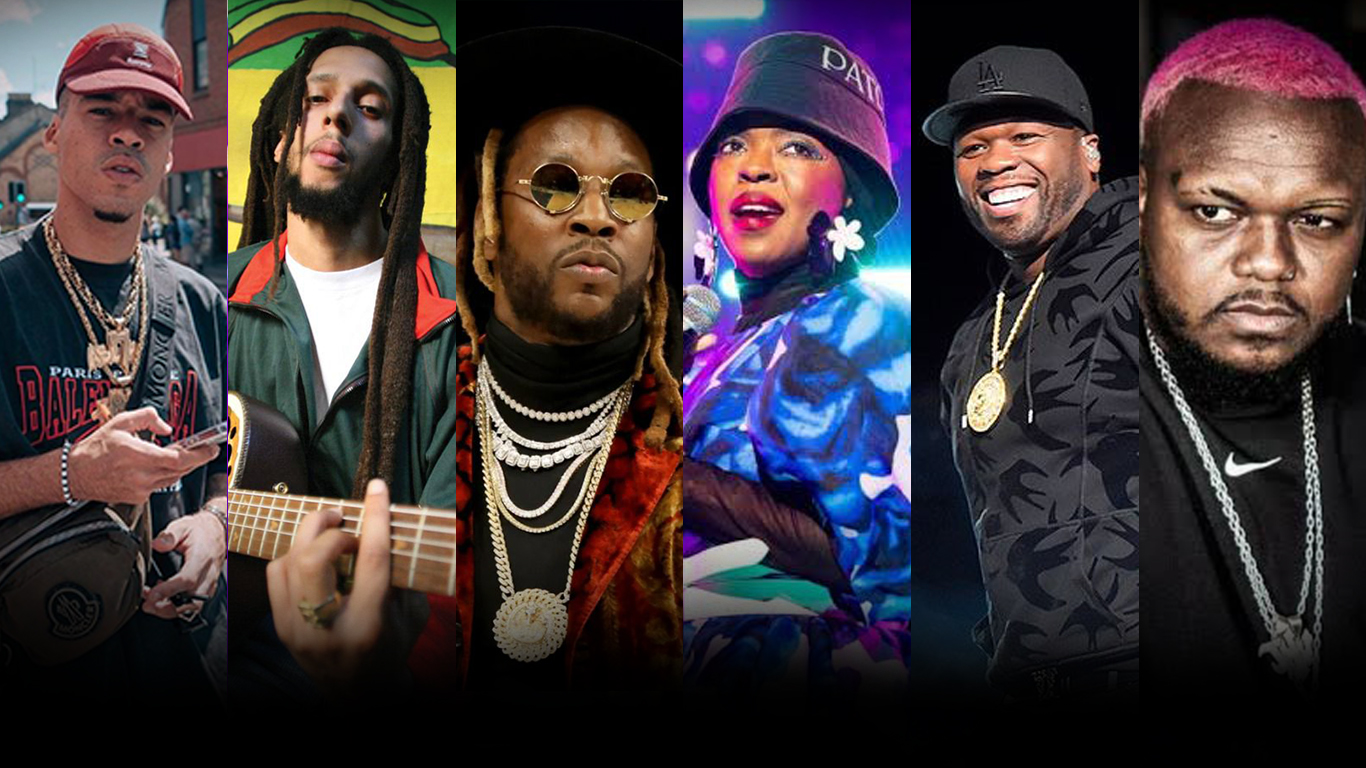 Photo: Rap Dab
The 2022 lineup made that argument with unusual clarity. The hip-hop weight of 50 Cent, Lauryn Hill, 2 Chainz, Ty Dolla Sign, Julian Marley, Djonga, Baco Exu do Blues, Criolo, Matuê, Orochi, Black Alien was not accidental. It reflected something true about Belo Horizonte’s cultural centre of gravity and about what the festival had become over thirteen years: a place where the meeting of American hip-hop and Brazilian rap felt natural rather than imported, because the city that hosted it had been living that conversation in its own streets for decades.
Six Stages and the Logic of Wandering
The structure Planeta Brasil has developed across its editions is recognisably Lollapalooza’s in its basic logic — multiple stages running simultaneously, audiences constructing their own experience by moving between them — but applied to a crowd, a city, and a musical culture that produces different results from Chicago’s Grant Park or São Paulo’s Interlagos.
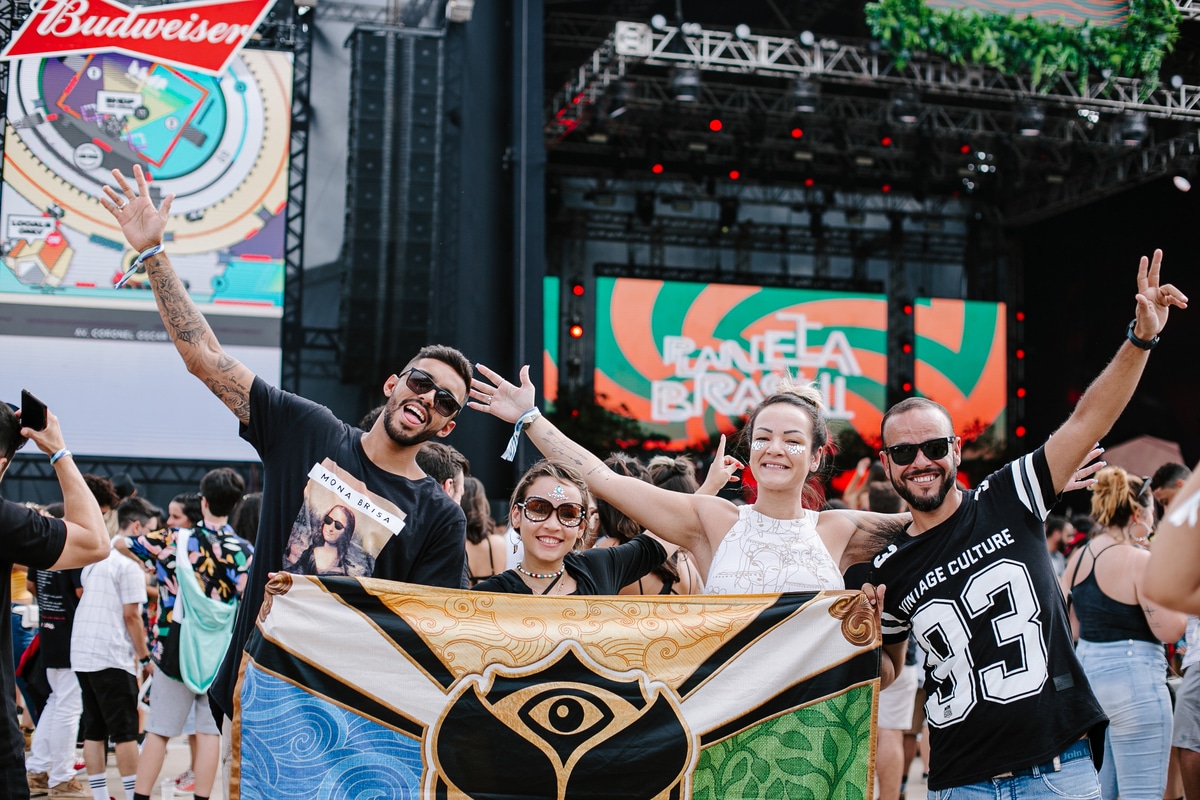
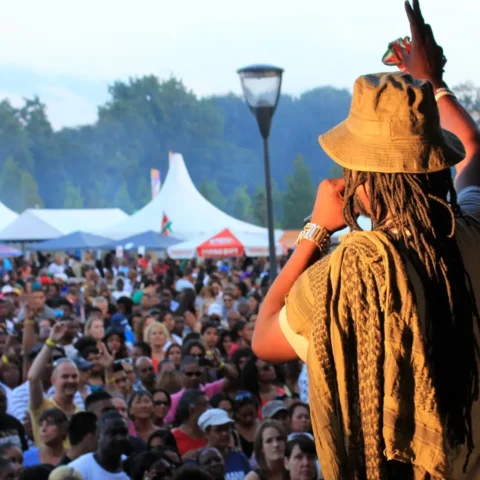
The 2022 edition ran six stages, with the main stages carrying the international headliners and the secondary stages. Among them, the How Deep Stage for electronic music and the Locals Only Stage for Belo Horizonte and Minas Gerais talent all running programmes that rewarded the people who chose not to stand in front of the biggest names. This is the practical mechanism by which a multi-stage festival does something that a single-stage concert cannot: it forces accidental discovery. You come for 50 Cent and leave having found Sidoka. You come for Iza and spend half the evening at the electronic stage because the sound was pulling you in that direction and you followed it.
The Esplanada do Mineirão, the venue that has anchored the festival since 2014, is well-suited to this. The forecourt of one of Brazil’s most important football stadiums — a 2014 World Cup venue, already loaded with the specific kind of collective memory that only a stadium carries — provides the scale and the flat footprint that a multi-stage festival needs to breathe, with the stadium itself as a backdrop that gives the site a visual weight most festival grounds cannot manufacture.
The Case Belo Horizonte Has Been Making Since 2009
Planeta Brasil Entretenimento’s catalogue of productions has continued to expand beyond the festival itself — the Morretes Blues Festival, Curitiba Jazz Sessions, Curitiba Blues Festival, the Santuário Nhundiaquara, Oktober Curitiba — but Planeta Brasil remains the company’s signature event and Belo Horizonte’s claim on the national festival conversation. The festival’s pattern has been to return when the conditions are right rather than to maintain an annual calendar at the cost of the event’s quality, which is a philosophy that produces gaps but also protects the weight of each edition when it comes.
The 2022 edition’s scale — the reunion after two years of absence, the collaboration with the Festival Verão BH and the BH Dance Festival, the 100-act lineup across six stages — set a benchmark that any subsequent edition will be measured against. What Planeta Brasil has built over fifteen years in Belo Horizonte is not just a festival with a track record but a proof of concept: that a city outside Rio and São Paulo can build something of genuine national significance on its own terms, without waiting for the industry to arrive from elsewhere.
It started with 8,000 people and a decision to come back. Every edition since has been Belo Horizonte making the same decision, louder.