In 2002, Zélika García ran a small art gathering called La Muestra in Monterrey. It was modest enough that the international art market did not notice. That was the point. García was not making an announcement. She was making a wager — that Latin America had a collector base, a gallery infrastructure, and an artistic tradition that deserved a serious fair, and that if you built one, the world would eventually have to come to it.
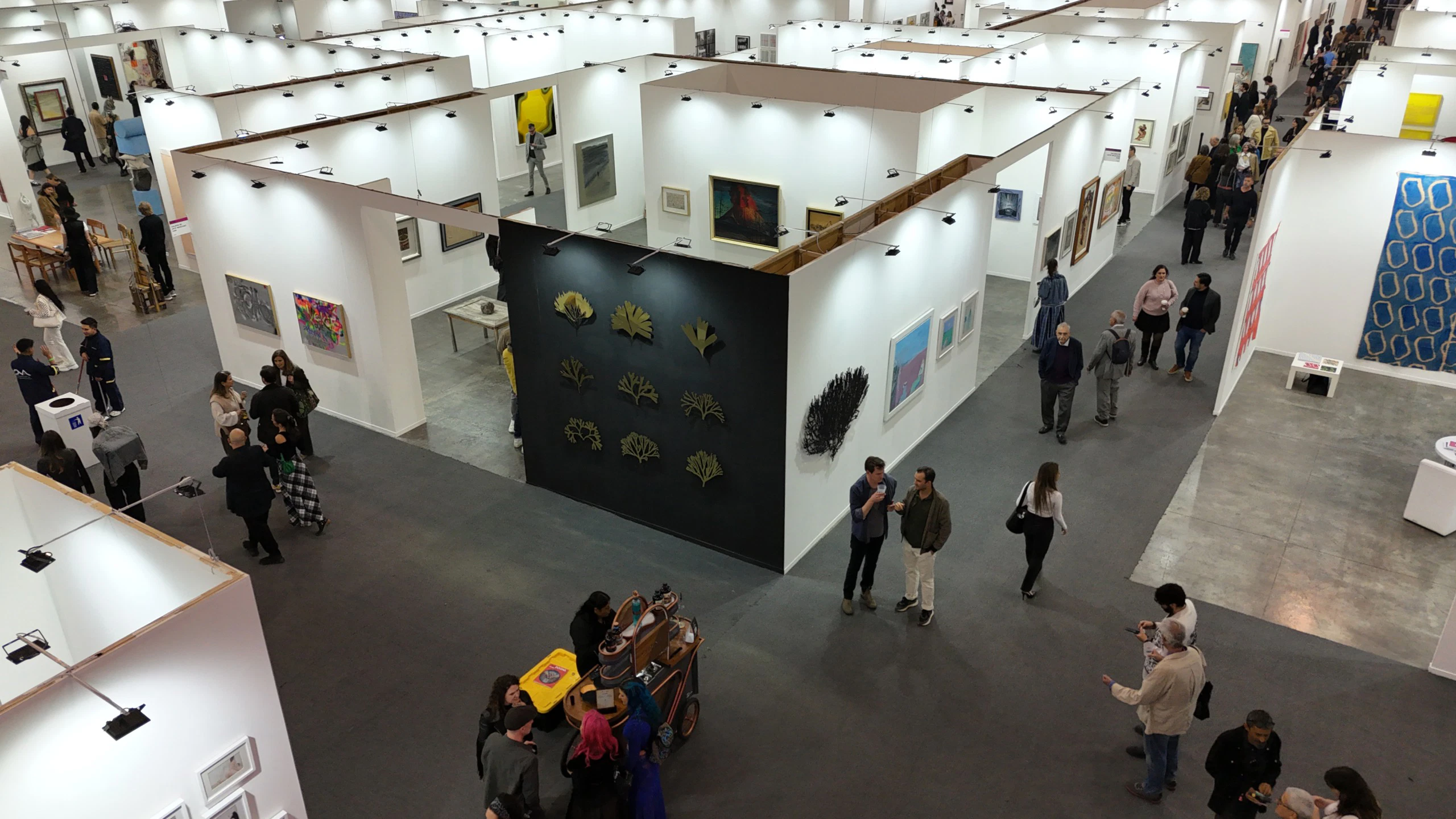
Twenty-four editions later, Zona Maco runs February 4 to 8 at Centro Citibanamex in Mexico City with over 200 galleries from Mexico, Latin America, the United States, Europe, and Asia. More than that, García has said plainly that the fair has moved beyond being perceived as a fair at all. “Zona Maco has moved beyond being perceived solely as an art fair,” she told W Magazine in 2026, “to being understood as the catalyst for a key moment in the cultural calendar.” That is a specific claim and it is also accurate.
2002 Was a Wager. 24 Editions Later, It Has Paid.
There is a version of this story in which Zona Maco succeeded because Mexico City is a great city. That version sells the fair short. Mexico City became what it is for the international art world substantially because Zona Maco made it legible. The museums that open major shows each February, the galleries that roll out their most ambitious programmes during the same week, the collectors and curators who arrive from New York, Munich, and Buenos Aires — none of that is organic. It is the accumulated pressure of a fair that refused, across two decades, to accept that Latin America’s artistic production needed a European or North American intermediary to be taken seriously.
García’s framing in 2026 captures the result: “Mexico City functions as a cultural and market node, where local and international audiences converge and where the experience extends far beyond a single venue.” She earned the right to say that because the fair built the condition she is describing.
The 2026 edition felt this convergence acutely. Geopolitical turbulence across the Western Hemisphere registered in conversations and on some gallery walls — but not in the attendance. Collectors arrived from Munich with museum groups. A prominent New York curator spent ninety minutes on Sean Kelly’s stand during the VIP preview. Kelly noted this would have been structurally impossible at any other fair. The crowd was large, energy was high, and the depth of encounter remained available in a way that the Frieze sprint or the Art Basel Grand Prix does not permit. “This fair is different from every other fair,” said Teófilo Cohen of Proyectos Monclova. “People come here because they want to discover something new.”
FORMA Answered Something the Market Was Already Saying
The 2026 edition introduced FORMA, a new sector dedicated to work that sits between art and design. The premise: that the fiction separating a handcrafted ceramic object from a gallery painting reflects market taxonomy, not aesthetic reality. Carpenters Workshop Gallery — a London institution that first opened in a Chelsea carpenter’s workshop in 2006 before expanding internationally — made its Zona Maco debut in FORMA, showing Maarten Baas, Nacho Carbonell, Wendell Castle, Vincenzo De Cotiis, Studio Job, and the Verhoeven Twins, among others.
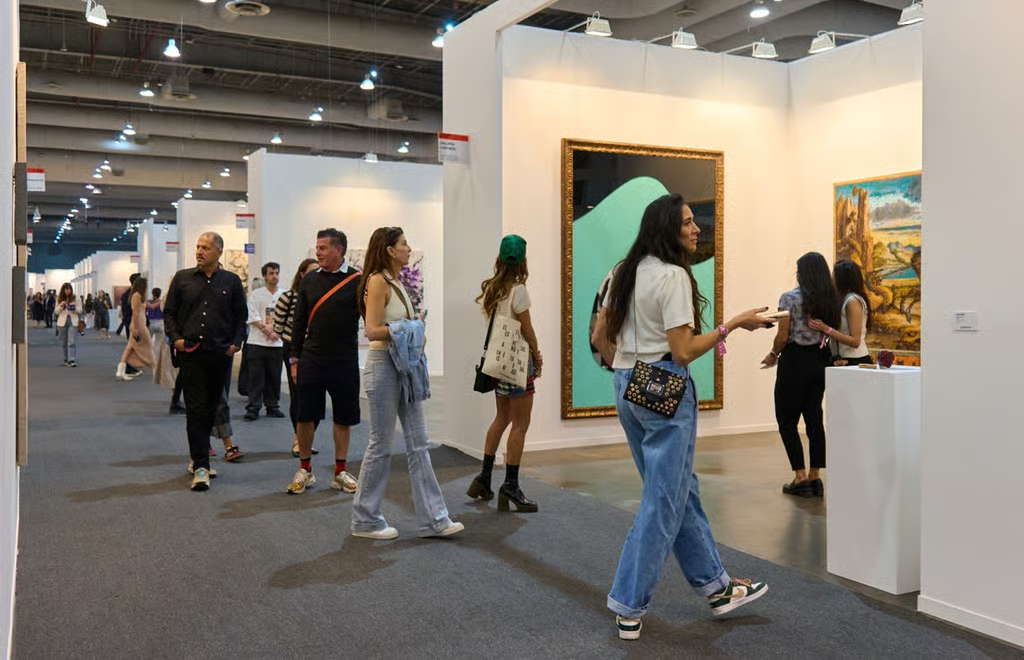
FORMA did not appear without context. It responded to something dealers had been observing for several editions. “There’s a very strong response to materiality at Zona Maco, which is quite distinct,” Sean Kelly said. That response makes sense in a city where craft lineages run as deep as Mexico City’s — where Víctor Hugo Pérez can show ceramic sculptures at Proyectos Monclova that are contemporary reinterpretations of pre-Hispanic forms using traditional Guadalajara processes that are actively disappearing, priced between $3,000 and $6,000, and find a serious audience for them. FORMA is the fair formalising what the fair already knew about itself.
Remove the Local Anchors and You Remove the Point
Zona Maco’s international galleries — Sean Kelly, Kouri + Corrao from Santa Fe, Mariane Ibrahim from Paris and Chicago — arrive and depart. The fair’s permanent argument is made by its local anchors: Kurimanzutto, OMR, Proyectos Monclova, Labor Gallery, Galería de Arte Mexicano. These galleries are not peripheral to Zona Maco, they are why Zona Maco is legible as a Latin American fair rather than an international fair that happens to be held in Latin America.
The distinction matters. Proyectos Monclova’s 2026 stand included dystopian science-fiction paintings by Havana-based Brenda Cabrera; intricate gouache and pencil compositions by Mexico City-born Circe Irasema; and Pérez’s ceramics. None of this was decorative regionalism… It was work emerging from specific cultural inheritances that the international art world was being asked to take seriously on its own terms — not as exotic context but as aesthetic practice.

Mariane Ibrahim, who runs the most consistently rigorous programme of African and diasporic art at any international fair, used Zona Maco 2026 to present the first Zona Maco showing of paintings by 91-year-old Uruguayan painter José Gamarra alongside the first Latin American presentation of Carmen Neely, and works by ruby onyinyechi amanze, Raphaël Barontini, Salah Elmur, Maïmouna Guerresi, and Peter Uka. That is a gallery doing what it does everywhere — finding the fair’s audience ready for it, which tells you something about what twenty-four editions of Zona Maco have built.
Mexico City Is the Context, February Is the Activation Show Up.
García, in every public statement about Zona Maco, returns eventually to the same register. The fair has an online component in 2026 — not as a substitute for physical attendance but as a natural extension, broadening reach, allowing closer engagement with works. The curatorial structure across its multiple sections — contemporary art, modern art, FORMA, photography, antiques, publications — is designed to reflect the breadth and complexity of today’s art ecosystem. Each section has a clearly defined focus, yet all of them are connected by a shared logic: how different practices, temporalities, and models of collecting coexist.
But the formulation she returns to most honestly is the quietest one: “I’m always interested in moments of encounter — when a work finds its audience, or when an artistic practice becomes activated within a new context.” Zona Maco, for twenty-four editions, has been engineering that condition. Mexico City is the context. The February week is the activation. Show up.
Follow them on Instagram and plan your next visit at their website. The fair runs annually in the first week of February. If you are a gallery, applications open months in advance — the most competitive booths are determined well before December.